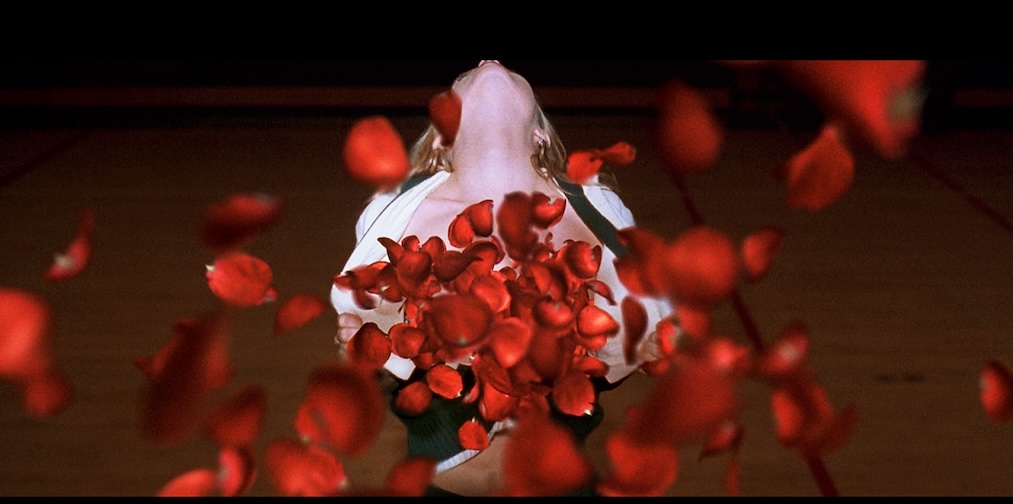
Dan Jinks is an Academy Award-winning film producer celebrated for championing bold, visually daring, and character-driven storytelling in Hollywood. He cemented his legacy in cinematic history by recognizing the genius of Alan Ball’s spec script for American Beauty (1999), ultimately shepherding it to become one of the most celebrated Oscar-winning movies of late.
Known across the industry as a champion of original voices, Jinks has cultivated a reputation among writers as a collaborative producer who protects an authentic creative vision while elevating it into a global critical and commercial success. Beyond his signature Oscar win, Jinks’ career is defined by his versatility across genres and platforms.
From the whimsical, deeply emotional southern gothic fantasy of Big Fish to the vibrant, hyper-stylized storytelling of the cult-classic television series Pushing Daisies, his work serves as an enduring blueprint for original world-building and unique stories.
Pursuing on a career in film and television via theater
I wanted to be in show business from the time I was very young.
I was always fascinated with movies, television and theater, but anything behind the scenes, how things were made. I thought I would be an actor because that’s all I knew. I went to NYU drama school.
While I was there, I ended up producing an original theater show in a black box space that the school had. I did it because I thought it would be fun. I came out of it feeling very gratified. I liked putting all the pieces together.
It was very successful and I realized I didn’t need to be an actor to get my creative and producorial juices running.
I worked in the theater right out of college. I learned that you had to be able to raise millions of dollars. I didn’t come from a rich family nor did I have rich friends. So that seemed pretty foreign.
One of my best friends had a development job in film and television. I thought that seemed interesting. I could do that. So, I found one in New York working for a producer. He moved me to LA and then I went to work for another film producer named Martin Bregman.
It was while I was working for Martin Bregman that I found the screenplay of Nothing to Lose, which eventually became the first movie that I had a full producing credit on. That was a bit of a journey to get there.
After Nothing to Lose came out, I decided to start my own company with a producing partner. We were just trying to find things that we really liked that we could get made. And I found the screenplay of American Beauty.
American Beauty was the best screenplay I had ever read and we were just so hoping to get it made. The last thing I was thinking about was winning an Academy Award. There was one point where I thought if we’re really lucky, Alan Ball will get recognized for his remarkable screenplay.
We were a small scrappy movie. It was under-budgeted by the studio. Fortunately we had a great godfather in Steven Spielberg who really came through, but it was some tough going there.
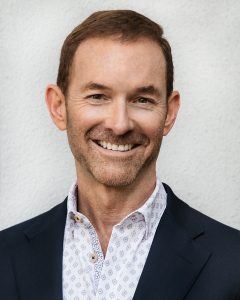
Dan Jinks
How do you want to be known in the film and television business?
I would love it if people thought of me as someone who had a good, smart, commercial taste. I was never interested in making a movie that was lucky enough to get into Sundance and then never saw the light of day again. It was always important to me that audiences go to see the movies that I work very hard on.
But that said, I’ve always wanted to do interesting pieces. I’ve been very fortunate to do a number of things that have been pretty interesting and original. That’s harder now.
I have found my slate and the scripts that I’ve been developing, I still try to do things that are interesting and original, but I definitely find myself pushing myself in a more commercial direction purely for survival.
I want to keep making movies for a long time. But I understand that this is a moment in time where if something doesn’t have some kind of a commercial patina about it, it’s harder than ever to figure out how to get something like that made.
We just need to look at just different distribution models. And we’re breaking a lot of ground on that.
How do you attract the types of projects you might like?
It’s a great question. And, you know, success begets success.
There was a period where I was getting a number of really interesting movies made. And during that time, I was being approached about more interesting scripts and books. Then there was a while where I was focusing so much on television that I wasn’t focusing as much on my film career.
And I kind of fell off some of those lists. Now I’m at a point where I have a lot of things that I’m developing. I need to get some more really interesting, cool movies made to be on everybody’s list.
A lot of the things that I’m doing right now are things that are self-generated. I have ideas that I have brought to writers that I’m very fond of. Sometimes writers have brought things to me.
Usually they’re things that still need some development work. And I love doing that. Nothing makes me happier than sitting with a talented writer and helping them to see their vision in as clear a way as possible.
I started off in this business as a development executive, but I still feel like a lot of my time I spend doing the job of a development executive, just at a higher level. Calling agents, calling writers, sitting down with writers, pitching ideas. Fortunately, I still really enjoy all that.
How do you assess the viability of a project?
I don’t just look for commercial viability because I like to think that I have taste. I don’t just put my name on something. I’m a producer who’s in the trenches.
I’m on the set every day. I’m very much part of casting and putting the whole thing together and part of post-production. I love all that, but it’s also a huge amount of work, I can’t see myself doing that for something that I don’t believe in.
If I’m reading a script and I’m on page 10 and I know exactly where I’m going to be on page 110, that’s less interesting to me.
That’s a script that is so formulaic that it doesn’t have anything about it that’s going to surprise me. I love originality in a screenplay.
People can disparage superhero movies, and some of them deserve to be disparaged. But we’ve had some phenomenal superhero movies in the last 15, 20 years. We’ve also had some terrible ones.
The first Tobey Maguire Spider-Man broke the mold in a lot of ways. Iron Man, even the first Ant-Man, look at something from such a different way.
Guardians of the Galaxy was a movie that surprised me. Then there are others that feel a little bit like we’re just destroying the world. It feels so CG generated and it becomes less about great writing.
But the ones that are great are really great. I think that’s why superheroes became so successful. Audiences like to be taken out of our world and be surprised. A great writer will take us to places that we did not imagine we were going to go to.
Was your foray into television deliberate or did the opportunity simply arise?
I really owe the beginning of my TV business to a former agent, now a terrific producer, a woman named Sue Naegle.
She was Alan Ball’s TV agent when we were making American Beauty. She was hitting me and Bruce Cohen, my producing partner, about doing TV. At the time, we had just started our movie company.
American Beauty was the first movie we made with our own company. We really wanted to focus on that for a while. Several years later, we had a movie deal with DreamWorks. And DreamWorks had stopped making movies for a period of time. But we were under a deal there. So, let’s try TV.
We reached out to Sue and she helped us get a deal at Warner Brothers Television. Our first TV series was a script, a project called Traveler. It was a series that was on ABC starring Matt Bomer, Logan Marshall Green, and Viola Davis before all her Oscar glory.
About a year later, I met Brian Fuller, the creator of Pushing Daisies, at a Party. I thought this guy’s really interesting. And what an incredibly original writer.
He told me the germ of the idea for Pushing Daisies. So I brought him into Warner Brothers. That was such a fun show to develop and to sell. It was hard because there were all these rules, but it was also fun in that it was so wildly original. It still had a procedural element, which was comforting to ABC.
I felt very lucky that we were able to get a show that felt so original onto broadcast TV because there just aren’t a lot of those.
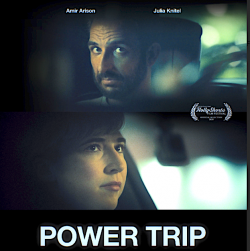
Power Trip on Nebula
How did you end up as a producer on the short film Power Trip on the Nebula platform?
I have worked a lot with a terrific writer and director named John August.
And John called me up one day saying that a guy he knows owns a platform called Nebula, a guy named Dave Wiskus. Dave wanted to do, whether it was going to be called an anthology TV series or a series of short films, but that had some interconnected themes. But he didn’t know how to go about doing it.
He needed a non-writing showrunner to come on. I met with Dave and I thought this is really interesting. And it was using talent, writers and directors, all from the content creator world, which is a world that I only knew just a little bit about, but certainly wanted to know more.
We made of six short films and they all came out very well. But one of them, we were so excited about, called Power Trip got accepted into HollyShorts Film Festival.It was written by Matthew Kelly, directed by Patrick Willems, and stars Amir Arison (The Blacklist), Julia Knitel (Dead Outlaw).
It got a very nice reception and has since been shortlisted by the Hollywood Reporter as a potential Oscar contender. I’ve never done a short film before, but I made it as part of an anthology series for this platform, but I’m very proud of it.
How has your role as a producer changed over the course of your career?
The biggest difference from a producer’s point of view is that it used to be that finding a great script, finding a great book, finding a great pitch was the hardest part of my job.
If you found one of those, there was a very good chance that you were going to find a buyer for it. It started to change with Netflix and House of Cards when they bought a whole package.
Not that there weren’t packages previously, but studios and streaming services became afraid of development. They didn’t want to have things on their slate that weren’t getting made. They would only pay attention to a script if there was a director, a star, or both attached.
The tricky thing is that the really meaningful directors and movie stars don’t want to read something if there’s not an actual offer. So it’s made the job of an independent producer much difficult. Netflix is now evidently more open to buying something without attachments.
I spend a lot of time waiting for a director or an actor to read something which feels like time wasted.
How should screenwriters strategize their careers?
One of the changes is that I’m old enough to have been around when there were several big spec screenplays sales a week. Some people bought them just for the idea. That time has long passed.
I think that studios and streaming services do not want to do a lot of development. They want that script to be in as great a shape as it possibly can be. So I really encourage writers to polish as much as they can on their own, use their other writer friends, and work with a really good producer who’s good at giving notes, to make sure their screenplay is as undeniable as it can be.
So when a producer or a studio is going out to directors and actors, it’s a great piece of material.
How do you categorize the current state of the film and television business?
I feel like there are definitely signs of optimism. Certainly the movie business is doing better now than it has been for the last few years. People are getting more in the habit of leaving their homes and going to see a movie in a theater.
I always think if a writer tries to give audiences what they want, it’s never gonna come out great. In most of the best scripts I’ve ever read, a writer has something they really want to say.
There has to be something original about it. Obviously, there needs to be some kind of a commercial patina about it. Certainly, this is a moment where people are excited by IP, and pitches used to be a way a lot of movies were sold. That’s very rare now.
In a way, short stories have replaced that. You read a short story, and it’s kind of the equivalent of reading what used to be a pitch in the old days.
It is written in a little bit more prose form. I would say about as many short stories are selling as pitches were back in the day. It was always a smaller percentage in the whole of the movies that were made. With short stories right now, there’s been a big push for people looking at YouTubers more than ever.
The movies that have come out of this, like Backrooms and Obsession, are made by very talented filmmakers and may not represent the platform as a whole.
But to find people of that caliber, I think is harder. And my guess is there’ll be some mistakes made when people will go after a YouTuber who’s not as talented as those guys, and the movie won’t work in the same way.
Everybody has to learn somewhere. They were learning their craft on YouTube, the way that other people, you know, 20 years ago, people would make a movie for Sundance. That still happens, but I think that people are certainly looking to YouTube more than they were a year ago.