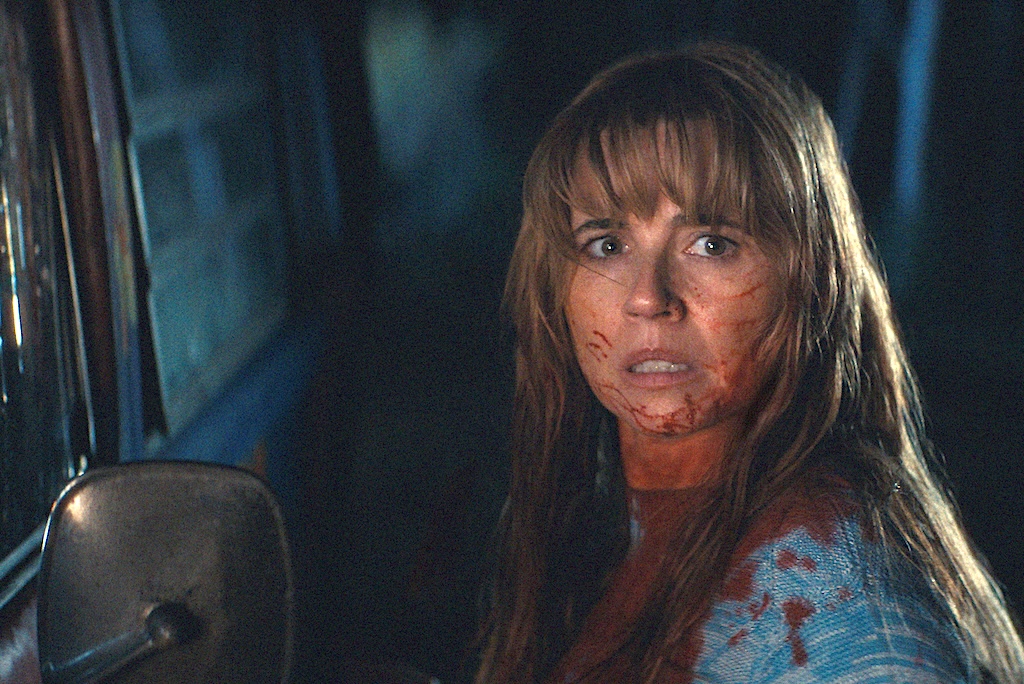
In 1980, Friday the 13th, written by Victor Miller and directed by Sean S. Cunningham, helped define the modern slasher genre and has had an enduring influence on horror movies ever since. The story took place at the reopening of a cursed New Jersey summer camp called Crystal Lake, where, years earlier, a boy named Jason Voorhees drowned because of distracted camp counselors.
In a shocking turn of events, it was revealed that it was camp cook and Jason’s mother, Pamela Voorhees (Betsy Palmer), seeking revenge on the people who had decided to reopen the camp as if nothing tragic had ever happened there. After Pamela was ultimately killed by Alice (Adrienne King) in the final moments of Friday the 13th, the sequels shifted focus to her son, Jason.
The Friday the 13th films are massive box-office successes, and beyond the movies, the franchise also expanded into comics, novels, and video games.
Crystal Lake, Peacock’s nail-biting long-form prequel to the Friday the 13th films, was created by showrunner, writer, and executive producer Brad Caleb Kane (It: Welcome To Derry, Tokyo Vice).
The series gives fans and newcomers alike a suspenseful, all-new mystery as it expands the lore surrounding one of horror’s most infamous stories, following single mother Pam Voorhees (Emmy nominee Linda Cardellini) in the time after her young son Jason’s drowning in the town lake, a catalyst for her elusive past to return.
At the center of this heart-stopping thriller is a story of a mother grappling with a volcano of complex emotions and going to gory lengths to protect herself and those she loves. While Crystal Lake forges its own identity on screen, the series will delight fans of the franchise by paying homage to the original Friday the 13th with recognizable Easter eggs throughout.
Brad Caleb Kane spoke with Creative Screenwriting Magazine about bringing one of his childhood favorite formative franchises to the screen.

Brad Caleb Kane. Photo by Araya Doheny/ Getty Images
What excites you most about Friday the 13th?
Oftentimes, it’s the time in our lives when we are first introduced to these kinds of horror movies and franchises.
Kids in general are told what to do and they don’t have a lot of freedom. The cheap thrills of these slasher movies of the 70s and early 80s imprint themselves upon us. This sense of seeing the forbidden, the sense that you’re being a voyeur in a world of dark delights and comeuppances that you’re not supposed to be looking at is alluring.
I grew up watching these movies in theaters and the crowd whooped and hollered at everything and yelled at the screen. They gave directions to the teenagers running this way and that way on screen. Audiences often cheered the kills and you look around and wonder, ‘Are all these people completely psychotic?’
They’re not. They’re being entertained. They know it’s pretend. They know it’s all special effects makeup. They just get excited watching something that feels a little bit forbidden. You’re entering this sanctuary of dark delights and we all leave safely. You can watch these horrible things happening to people and leave safely and say, ‘I made it through it.’
These horror movies are like roller coasters and you get that shot of adrenaline. It’s really chasing the dragon of childhood. These movies are very Proustian (memories triggered by sensory experiences).
I became obsessed with fake blood and special effects when I first saw these movies. The first Friday the 13th movie I saw in theaters was with my sister, who’s seven years older than me. She took me to see Friday the 13th Part Three in 3D in the summer of 1982 when I was eight years old. It was the first real slasher I’d ever seen. I knew I shouldn’t have been going to slashers, but I walked out with a lot of questions.
How did they do that? How did they do those kills? How did they do the eyeball popping out of the socket? I just wanted to know. I wanted to be part of that world. It created this lifelong obsession with special effects makeup. I did the deep dives on the special effects makeup creators Rick Baker and Tom Savini and Rob Bottin. I know all of those people.
I was the kid with the monthly Fangoria subscription, Starlog and Cinefantastique. I was the kid buying Spirit gum molding putty and going into grammar school with little blood lesions on his hands that I made the night before. It opened up a whole new world for me.
I can’t count the number of times I went to school with a bloody pencil through my hand.
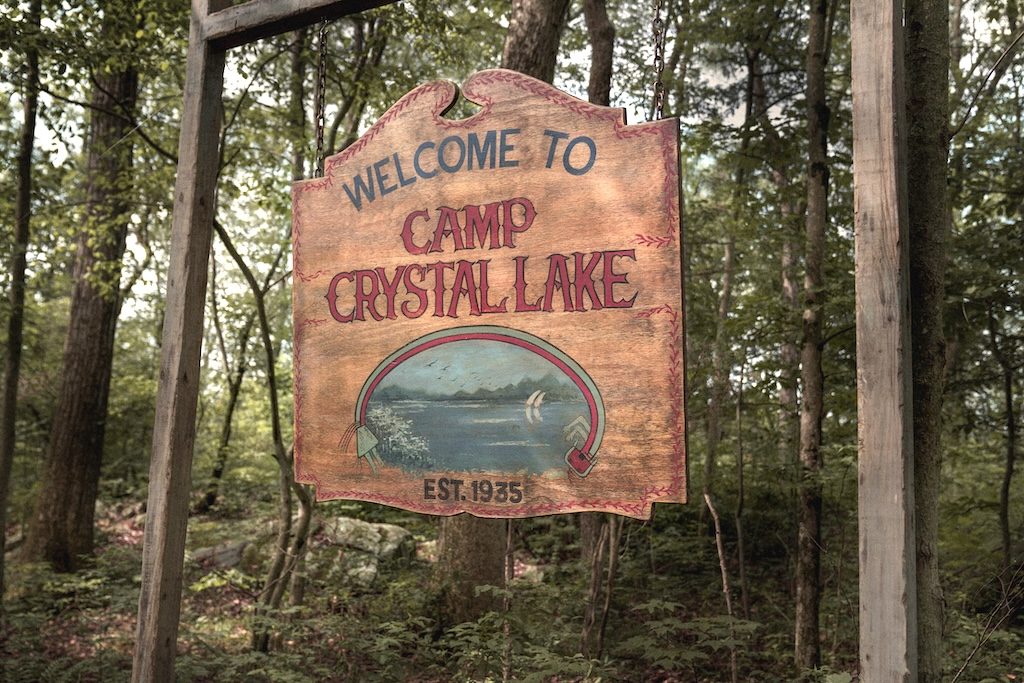
Crystal Lake. Photo by Matt Infante/ Peacock
How did you tackle adapting the Friday the 13th film franchise into a television series?
I never met Sean Cunningham to my eternal sadness. I never met Victor Miller before he recently passed.
Crystal Lake is a show that’s lovingly crafted by a longtime fan. So, I hope that longtime fans recognize that and see all of the breadcrumbs and Easter eggs that I put in there.
We recreate certain things from the movies almost shot for shot as you get deeper into the season. I hope that excites and delights people who love that first movie. But the series is long-form storytelling.
In the 90-minute slasher movie, you’re running and gunning. It’s a little bit wham-bam, thank you, man. Do the body count, do the creative kills and get out. With long-form storytelling, it’s really about character and diving deeper into character.
I approach the series from that point of view. Even though I am a longtime Friday the 13th fan and an even deeper horror and slasher fan, I’ve done TV for a number of years. You have to marry the genre to the medium.
You have to go deeper and create characters that people can really latch onto and take a journey with. Mrs. Voorhees, as exciting as she is in the film, is only on screen for a few minutes and you get a very quick backstory. Betsy Palmer’s performance is indelible and casts a large shadow over the series and the genre.
But we don’t know that much about her. It really was fresh snow and fertile ground to explore who this woman was and what made her come back to this place to create this sacred ground for her son in the series. I wanted to make something that people who don’t have a familiarity with Friday the 13th can come in and enjoy a story unfolding about a very unique character.
But at the same time, I wanted to make it exciting for the fans too. It was a hard needle to thread, but I think we did it.
What are the main themes in Crystal Lake?
You can’t talk about ‘70s and ’80s slasher film without talking about paranoid ‘70s thrillers and what was going on at the time. We wanted to give the series a feeling of being immersed in that time of looking over your shoulder and wondering what’s behind you.
There’s also an element of revenge because Jason drowned because the camp staff weren’t paying enough attention.
I have to elevate it into some kind of psychological horror. We’re not really in Buffalo Bill territory [The Silence Of The Lambs], because that’s just too much of a mind screw. But we do need to understand where these characters are coming from, so that at least it plays as a drama.
All the blood and the non special effects are just really cosmetic and garnishing.
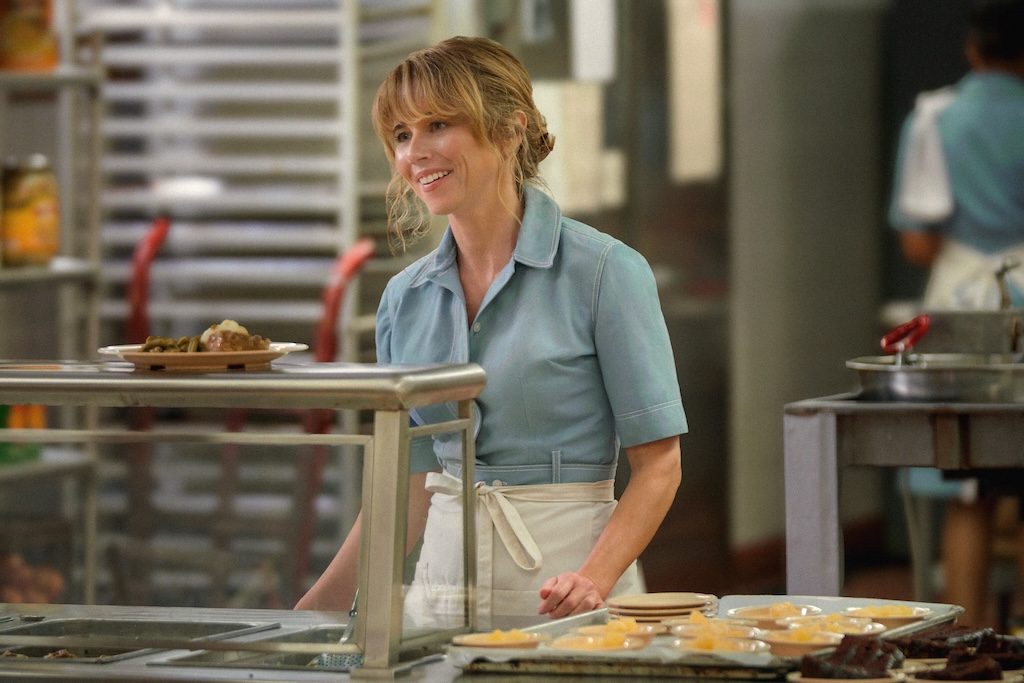
Pamela Voorhees (Linda Cardellini) Photo by Matt Infante/ Peacock
What did you want to explore in Pamela Vorhees’ character?
The show is about a woman of her time. It’s the early 70s, which means that Pam was a woman who came of age in the 50s and the early 60s. We all know the Mad Men era, the limitations and strictures that were put upon women during that time.
When you came into the late 60s and the early 70s, we all started testing the boundaries of our own identities, especially women. You had the dawn of the feminism movement and the Betty Friedan National Organization for Women. But also in the air, was a mistrust of institutions. We had Watergate and the whole country becoming disillusioned with who we thought we were.
There was a real crisis of identity that we had as a country. And Pam is undergoing that crisis of identity in real time, along with the country in Crystal Lake. So it was important that we took that journey of Pam trying to figure out who I am separate from these things that used to be my identity.
There is the embodiment of female rage where women are supposed to simply smile and accept everything.
Jason, family, home, all the things that women were told they were, has been taken away and wrenched away from you. Who am I now? I want people to go on that journey with her and see that it’s a deep and spiraling psychological journey that she makes that ultimately results in the Pamela Voorhees that we know.
I wanted it to feel like this great jagged juxtaposition of peak television, a real deep dive into a character, but then every once in a while when you’re saying, ‘This is really interesting. I’m glad I’m learning about this character and the mother of all slashers.’
Discuss the relationship between Pamela and Jason.
Pam really needed the camp because of Jason’s socialization. Jason was physically different.
You learn certain things about Pam and Jason and their past, where Jason comes from, and who he is. And for her, it was that mother’s instinct of making sure that regardless of his past, she wanted her son to grow up with as normal a life as possible – with friends, with summer days, with socialization.
Maybe she pushed that too hard because Jason is in many ways a normal little boy. But at that time in America, and I think even today, kids and even adults have a problem with people who are different. People who seem like they’re outside the herd. They make fun of them. They push them away.
Pam didn’t see that there were other things going on, or at least she didn’t want to recognize that Jason might never fit in to small town American society. She really tried to push that through with him at the summer camp with a tragic end.
You might even say how responsible is Pam for creating the conditions that led to Jason’s death?
Discuss the dual mystery of Crystal Lake – who is chasing Pamela and whether Jason might still be alive.
It’s very much a Pamela story more than a mystery.
We operated on that in the writers’ room from that point of view. This is a woman coming into her own power, shedding her old identity, and deciding she wasn’t going to take it anymore.
In a larger sense, it’s small town America story.
A lot of good people are being kept in the dark about what’s really being done all around them in secret. How long are we willing to be manipulated? How much are we going to stand for?
At the end of the day you can only push people so far before violence erupts. It’s very much Pamela story, but it’s a story about the larger story of institutional squashing of the little man and how long you’re willing to go before you break in the face of that and push back.