
Austin Kolodney on Bringing the 1977 Tony Kiritsis Hostage Crisis to Life in Gus Van Sant’s Dead Man’s Wire

The Gus Van Sant-directed crime thriller, Dead Man’s Wire, is a gripping film based on the bizarre true story of the 1977 Indianapolis kidnapping that captivated the nation – live on air. The story centers on Tony Kiritsis (Bill Skarsgård), a desperate entrepreneur who, feeling cheated out of his property by a mortgage company, takes its president, Richard Hall (Dacre Montgomery), hostage with a sawed-off shotgun wired to the victim’s head — a mechanism dubbed the “dead man’s wire.” As police surround the scene, the situation escalates into a public spectacle, with Kiritsis manipulating the media, including his favorite radio D.J. Fred Temple (Colman Domingo), to air his anti-capitalist, anti-common man grievances, while also dealing with Hall’s unfazed father, M.L. Hall (Al Pacino). Screenwriter Austin Kolodney shares his experiences with Creative Screenwriting Magazine.
Your background seems to be in that comedy space and Dead Man’s Wire seems to be anything but a comedy. Talk about the process of writing in that dramatic space.
I think I was raised on all genres. My mom showed me Pulp Fiction when I was like nine years old. I saw Magnolia when I was 10. I like it all, but obviously grew up on SNL. My grandpa showed me a lot of Monty Python, Three Stooges and what have you.
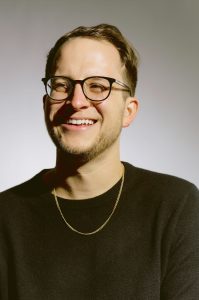
Austin Kolodney. Photo by Erica Urech
Comedy is always a genre I did gravitate towards, and especially within film school and right out of it. I saw a lot of people go a couple different routes as writer/ directors, whether it’s music videos or horror films.
The lane I felt that was most suited for me was sketch comedy. I grew up loving Key and Peele and Good Neighbours stuff and dark comedy. I felt that if I could start a sketch comedy channel with some friends, that would be a great way to hone the skills of writing and directing and putting stuff out with your own money and with your own resources. That is my background for a lot of the past decade or so, but was always writing feature scripts in varying genres. I have a coming-of-age sci-fi dramedy that I’m also trying to get made.
When I set out to write Dead Man’s Wire, I was looking for a story that could be made with a bigger director, a director that I could learn from. Someone like Gus Van Sant was the dream scenario when setting out to write this film.
The archival footage that I saw of Tony Kiritsis and Richard Hall was very dramatic. It’s very tense. It’s very gripping. I also did see the dark comedy from the start. I saw moments of Tony slipping on the hype and cracking these jokes to the cops and the jokes not landing. That is a funny aspect. Tony getting thirsty during the press conference and asking for a sip of water and seeing a police chief having to feed it to him like a baby bird is filmed just the way I described it in the script. It’s performed in our film as it was on the day. It’s somewhat absurd imagery with a gallows sense of humour, which is what first responders and people in the military and everyone surrounding Tony to survive.
I was suited to write this because of my influences in the films. My mom showed me Dog Day Afternoon when I was quite young, and that really left a mark on me. I think a director like Gus Van Sant, similar to Sidney Lumet, has the ability to walk that tightrope and not dull the tension or the stakes, but also lean into that darkly comedic space. I think about Gus’ To Die For and Drugstore Cowboy era. I think that’s very much of what we accomplished with Dead Man’s Wire. I don’t think the comedy overcrowds or overshadows the stakes.
It’s been argued that dramatists write the best comedy and comedians write the best drama. Agree or disagree?
I’ll answer from the perspective of performers. I do think that often is the case for actors. I think some of my favourite dramatic actors often started out as comedians, and it’s a being able to tap into that nature that often results in a very tragic and very poignant performance.
I love a deadpan sense of humour. When someone goes against the grain, it’s fantastic. I love the new Naked Gun film. I love Uncut Gems, seeing Adam Sandler, Jack Black and Benny Safdie. That to me is what I’m chasing as a storyteller.
Describe the research phase of Dead Man’s Wire.
Prior to any producer or director attaching to it, I wrote this on spec. The research that I did into the film was necessary because I wasn’t alive or in Annapolis in 1977, so I didn’t speak from a place of personal lived experience. But I’m a student of history.
I tried to listen to as many podcasts on the subject, watch as much archival footage, and consult the foremost historians on the subject who are Alan Berry and Mark Enochs. They wrote the 2018 documentary film on this. They live in Indianapolis, interviewed with everyone that they could involve with this case, and had a plethora of research that they shared with me. It was a 16 GB file that had newspaper clippings of the air, very meticulously organized newspaper clippings, police interviews, with debrief interviews with Richard the moment he’s been released from Tony, and all this archival imagery. I was able to pore over police reports, FBI reports, schematics, 911 calls and blueprints of Tony’s apartment. All of these things were a menu or a buffet from all the little wrinkles. I’d see something interesting and wrote it into the characters.
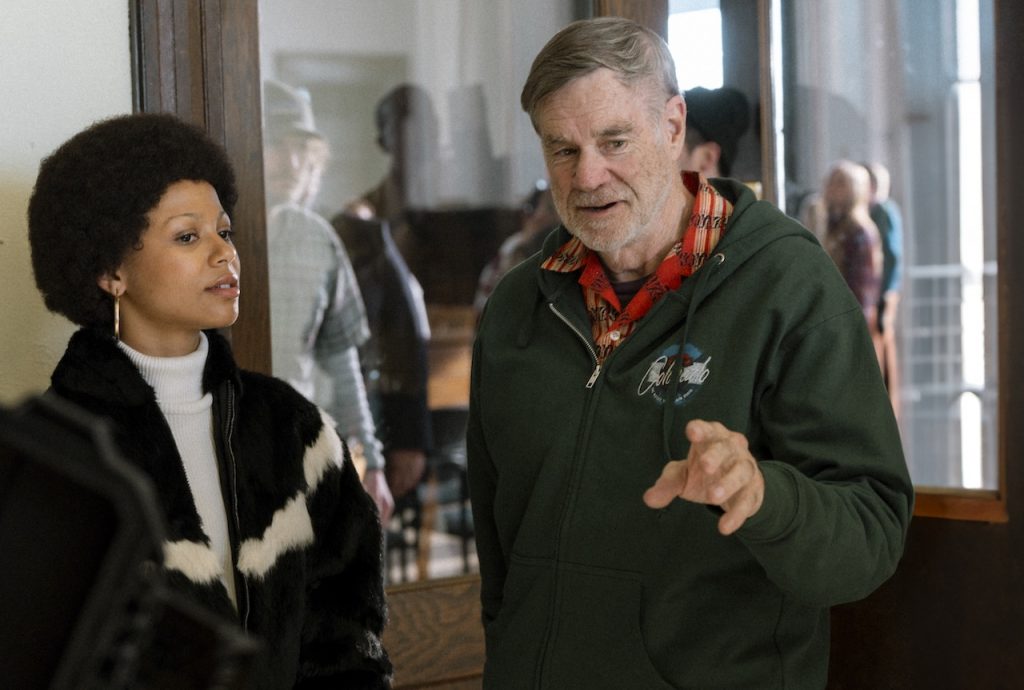
Gus Van Sant Linda Page (Myha’la) on set. Photo courtesy of Row K Entertainment
Doing that research was also important because with our story, it doesn’t necessarily end with a gigantic explosion and bloodletting. It’s actually a testament to the power of negotiation and the power of the media and journalists. I think the temptation to sensationalize things and alter history dramatically to serve the purpose of the film is there. I felt there was a duty as a historian, and as someone who was fascinated by this case, was to try and stay true to the core themes of the case and the core results of the case in that Richard wasn’t killed.
Tony was arrested, he went to trial and was found not guilty by means of insanity. That footage in the courtroom was unbelievable when this crime took place live on the airwaves. And in that moment, in the courtroom archival footage, Tony starts running his mouth again, and his own lawyer and brother have to cover his mouth because he got away with it. There’s the button to the movie. It’s almost a punchline. That to me was a satisfying conclusion I felt I didn’t need to stray from. It translated quite literally from a three day event to a three act structure. I didn’t want to see the biopic, the, multi-year journey of Tony taking out a mortgage and the months of court trials later. I wanted to see the three days that he and Richard were in this situation.
What was the script development process like?
I would share YouTube videos with my manager in 2020 of Tony marching down the street with Richard. I said, “I think there’s a movie here. He says, ‘I think so, too.'”
I shared early outlines. I started with a two or three page outline which became a 10 page outline of the scenes. And he would give me notes on all of those. Eventually when we had a full script, he sent it out to probably over 200 places, studios, and companies.
There was a lot of the “Hollywood pass,” which is, “Hey, we love it. Maybe not for us right now, maybe on the next one. So it was a lot of that or no response at all.”
It’s a lot of rejection. It’s a lot of other scripts getting made and you believing in yours and it taking years before someone can say the same thing to you.
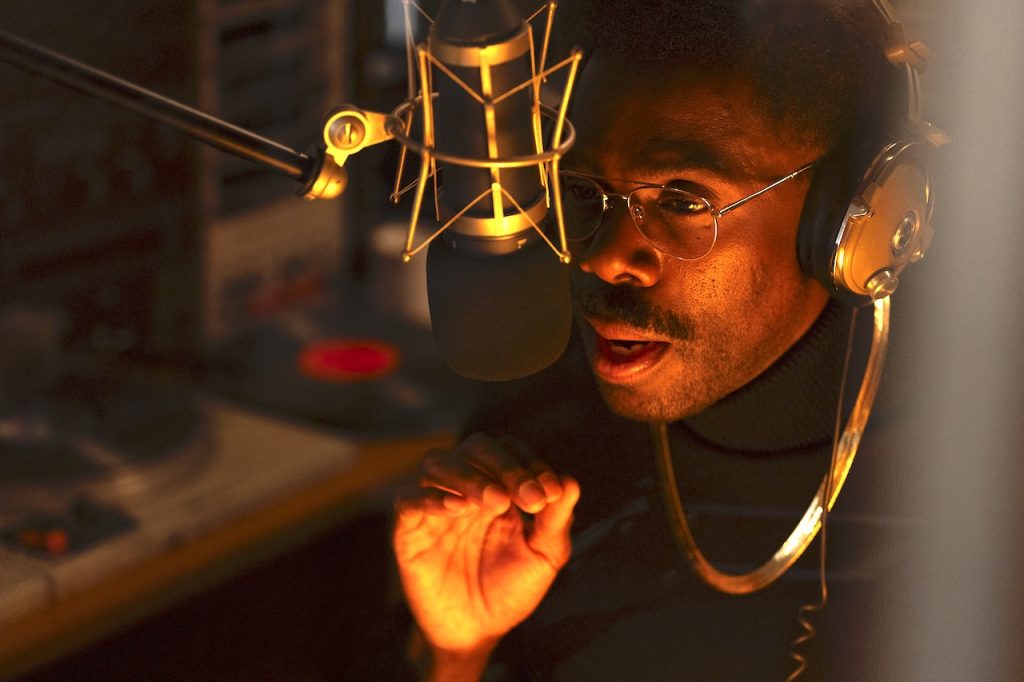
Fred Temple (Domingo Coleman) Photo courtesy of Row K Entertainment
Describe Tony Kiritsis’ character.
Tony is a man that’s been pushed over the edge. He’s not your typical crackpot. He’s not a Jack Nicholson type of character. That to me is a very interesting character space, because when he was let free for reasons of insanity, I almost scratched my head and said, what? Okay, he’s not quite normal. He’s not a danger to anyone else. And even at the end where he won’t sign his release papers because he doesn’t think he’s crazy and would rather be in an institution for 30 years.
I would venture to guess that Tony was probably on the bipolar spectrum. He clearly was manic at times and he had severe uncontrollable rage, delusions of grandeur, and paranoid delusions. He had undeniable charisma.
I don’t know what legitimate proof he had that Meridian Mortgage had done him wrong. I think it’s a grey area. He was espousing was a rage against a property system.
There’s this immense wealth in the country and you have a chip on your shoulder when you’re surrounded by people who come from money and are afforded opportunities that you don’t perceive as having. I think it’s really relevant today.
I think Tony had rejected his religious upbringing. I think he had kind of gone through some trauma with his mom passing and a few other things in his life and became very isolated. He claimed that his businesses are his children. He didn’t have a wife. He had this loner lifestyle. And he just snapped. Tony also had a violent streak.
How was the project set up?
At one point, when we did have producers attached to this project, I tried to get it to Gus Van Sant attached prior to anyone. It didn’t get through the first try.
The producers attached another director, who said this to me on one of the first script meetings, “I’m going to wean you off of the facts and bring you closer to the truth.” That line itself felt like a duty to maybe alter some names here, amalgamate some characters there, and alter some timelines to make sure that the themes and the truth of what I’m trying to say about America and the American dream and the socioeconomics between these two men are still there and alive on the page and on the screen. I didn’t want to do a documentary or a book report. I wanted to write a movie.
I’m going to wean you off of the facts and bring you closer to the truth
What did you learn most after making this film?
I learned a lot from Gus, especially seeing him on set, collaborate with his department heads and his actors and remain calm and and collected amidst a whirlwind set because I direct too. He was so open to collaboration and really trusted his department heads and storytellers. He wasn’t prescriptive with his ideas.

Join the Discussion!



Browse our Videos for Sale
[woocommerce_products_carousel_all_in_one template="compact.css" all_items="88" show_only="id" products="" ordering="random" categories="115" tags="" show_title="false" show_description="false" allow_shortcodes="false" show_price="false" show_category="false" show_tags="false" show_add_to_cart_button="false" show_more_button="false" show_more_items_button="false" show_featured_image="true" image_source="thumbnail" image_height="100" image_width="100" items_to_show_mobiles="3" items_to_show_tablets="6" items_to_show="6" slide_by="1" margin="0" loop="true" stop_on_hover="true" auto_play="true" auto_play_timeout="1200" auto_play_speed="1600" nav="false" nav_speed="800" dots="false" dots_speed="800" lazy_load="false" mouse_drag="true" mouse_wheel="true" touch_drag="true" easing="linear" auto_height="true"]






You must be logged in to post a comment Login