
Understanding The Symbolism and Character Archetypes In Zach Cregger’s “Weapons”

The film Weapons, directed by Zach Cregger, intricately weaves together a layered narrative in rashomon format that examines personal and societal fears through its nuanced and troubled characters. Following the sudden death of a close friend, Cregger turned to his beloved craft to manage his pain and somehow find answers. Much like Weapons, there are no answers to trauma; only a path to peace.
Cregger invites audiences to delve into a complex canvas of themes related to addiction, manipulation, and the loss of childhood innocence. The film’s deliberate opaque symbolism, often left open to interpretation, serves to highlight the pervasive impact of generational trauma and the ease with which individuals can become instruments of harm. He did not aim to craft an allegory about school shootings or communal trauma (although several images in the film suggest it), but rather created a story rooted in deep personal anxieties and subconscious fears.
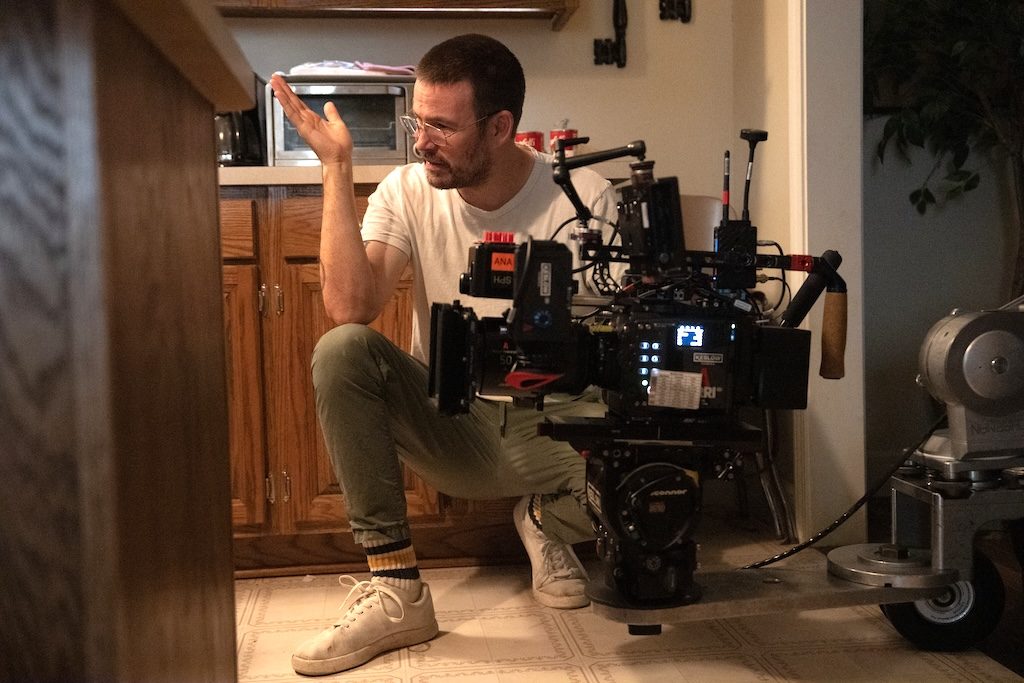
Zack Cregger. Photo courtesy of Warner Bros. Pictures
Weapons draws stylistic influences from Paul Thomas Anderson’s Magnolia in its broad canvas told in chapters to depict multiple points of view, David Lynch by his use of subliminal messages which are deliberately never fully explained, George A. Romero’s zombies (are we living or are we just alive?), John Carpenter’s examination of social unease, and David Cronenberg’s hallucinogenic scenes bordering on absurdism.
The story begins nearly a month after the chilling incident in Maybrook, where, on a Wednesday at 2:17 am, all but one child in a classroom left their homes and disappeared into the night. It opens as a fairytale narration voiceover and introduces its characters in terms of their moral dark sides and wounds. All the while, assuring its audience that Weapons is based on a true story. The question is, “Which one?”
Justine Gandy: The Witch
The “witch” is teacher Justine (Julia Garner)—labeled by paint, rumor, and manic panic. She’s not a literal witch, or even a metaphorical one for that matter. Justine has just been branded with the convenient moniker until answers are found. She is the scapegoat to which blame is assigned when the unthinkable and inexplicable happen.
She’s the anchor for the town’s burning need to direct their uncertainty in the absence of any hard evidence. We are assured that law enforcement is doing everything in its power to find the missing children.
Justine also reflects the communal anxieties and fears of the people of Maybrook. She specifically imbibes the economic uncertainty of the community where a day off or extended leave will lead to a financial catastrophe.
Nonetheless, Justine carries on despite carrying the spiritual burden of the town. She loves all her students.
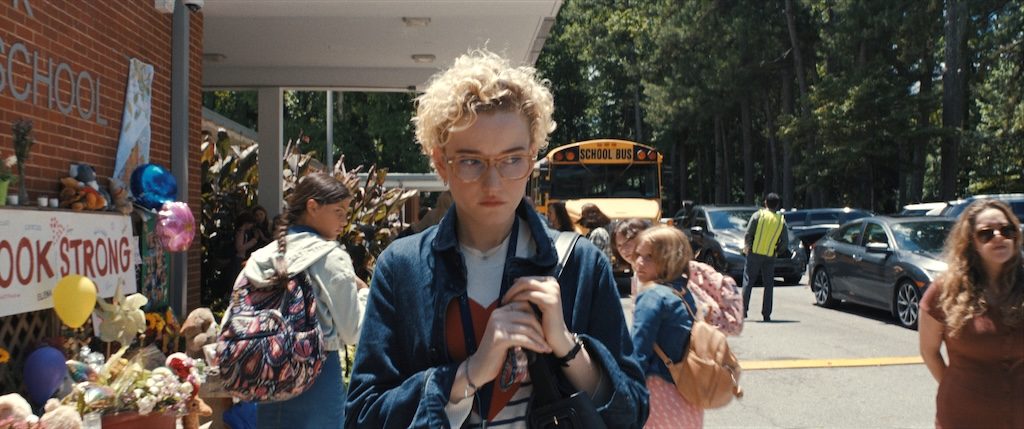
Justine Gandy (Julia Garner) Photo courtesy of Warner Bros. Pictures
Aunt Gladys Lilly: The Puppetmaster
At the heart of Weapons is Aunt Gladys (Amy Madigan), a character depicted as a sorceress who uses blood rituals, a snip of hair, and a twig to exert control over those around her while masquerading as a doting carer and loving aunt. She’s insidisous, quiet, manipulative. She is the puppetmaster orchestrating her social symphony. The ultimate anti-fairy godmother.
Gladys embodies a malevolent force, whose need to drain vitality from others to sustain her own life using via her curse. The film reinforces this idea by referencing the cordyceps fungus, known for hijacking the behavior of its host.
Galdys’ bright, almost clownish makeup and unnaturally vibrant hair serve as a façade, masking the decay that lies within.

Aunt Lilly (Amy Madigan) Photo courtesy of Universal Pictures
Paul Morgan: The Fallen Guardian
Paul Morgan (Alden Ehrenreich), the troubled cop recovering from alcoholism, and Justine’s former lover, illustrates the film’s exploration of addiction, hopelessness, and manipulation amid a backdrop of instutional erosion. His fragile plight highlights the hollowing out of relationships and identity, transforming a once-loving individual into tools for another’s ends. He knows the righteous path out of his predicament, but isn’t yet ready to take that first step.
Paul cuts corners, lashes out, mishandles James, a vulnerable witness representing the internal disintegration of his self control.
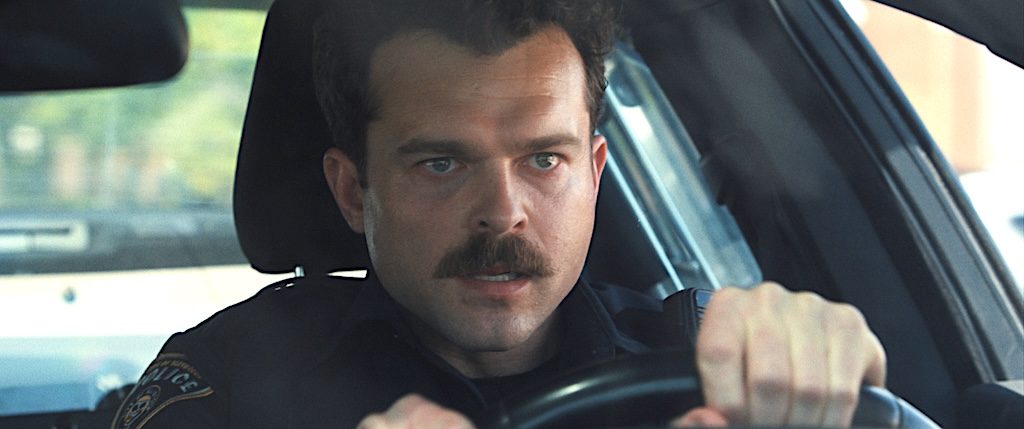
Paul Morgan (Alden Ehrenreich) Photo courtesy of Warner Bros. Pictures
James: The Outcast
James (Austin Abrams) is the homeless drug addict and burglar who Maybrook doesn’t value. He’s ignored even when he stumbles on the location of the missing children. James is the town’s blind spot, the one everyone knows about, but wishes they didn’t. He sees what no-one else sees, but can’t acknowledge it through low self-worth.
He discovers the children, but is more interested in his reward than their safety. As an outsider, he’s more interested in personal survival. His apparent indifference is a product of his mistreatment.
The town has banished him and his personal interactions are transactional through necessity than desire.
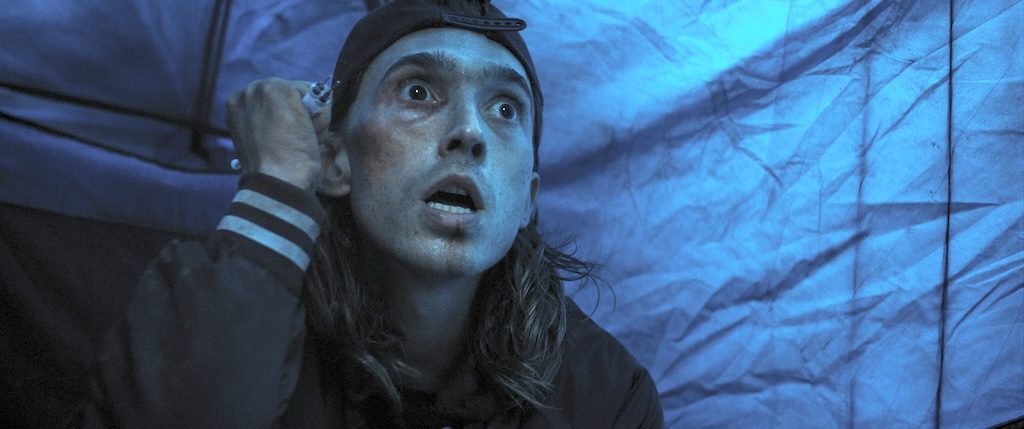
James (Austin Abrams) Photo courtesy of Warner Bros. Pictures
Alex Lilly: The Innocent
Alex (Cary Christopher) is the only child who doesn’t vanish from his classroom. His survivor’s guilt is exploited by his Aunt Gladys who usurps his love for his parents, and she eventually recruits him for her means. Alex is the film’s emotional and thematic nucleus. The divine child is forced to become an adult to calm his parents.
He’s also the metaphorical lone gunman. He’s represents social failures and acts as both child and parent, the protector of his classmates. He becomes the regulator of society’s ills.
Archer Graff: The Aggressor
Archer Graff (Josh Brolin) is the grieving dad who lashes out, often with violence. He paints “WITCH” on Justine’s car, bullies the police, and ignores his own son’s cruelty because he can’t control his rage.
Underpinned by his guilt for not being able to protect his own son, he crumbles under the emotional weight of the unknown evil forces tormenting Maybrook. He’s an investigator demanding answers, even if it includes false accusations.
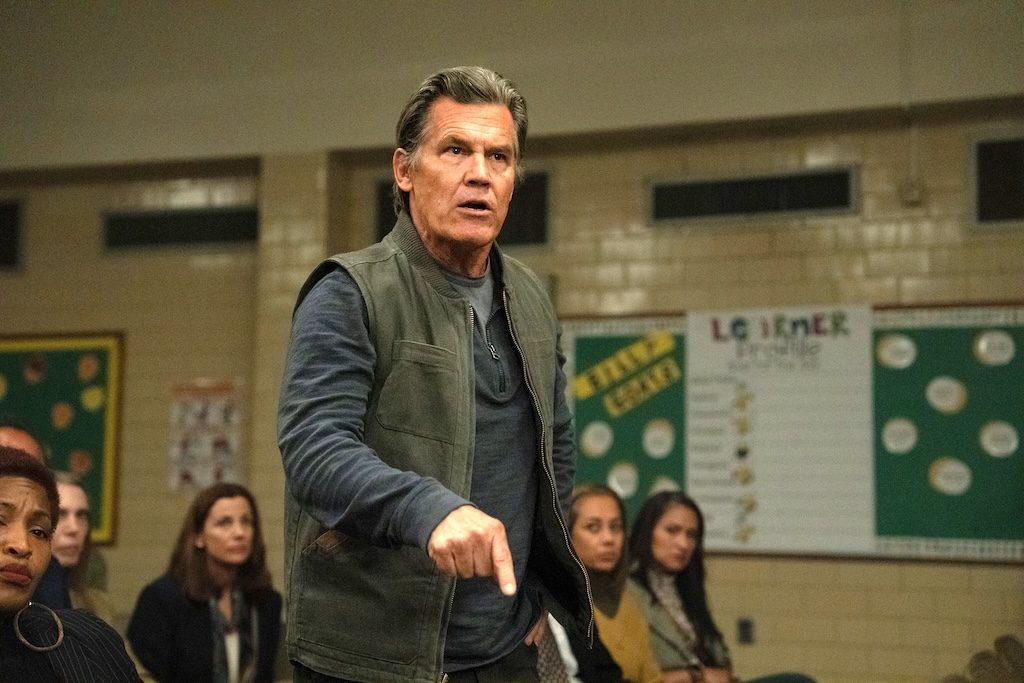
Archer Graff (Josh Brolin) Photo courtesy of Warner Bros. Pictures.
Marcus Miller: The Passive Enabler
Marcus Miller (Benedict Wong) is the school principal. He’s a bureaucrat, an administrator. The guardian of the status quo governed by rules and regualtions. He’s not evil, but he’s complicit because he implicitly trusts the system without questioning it. He doesn’t even consider its erosion. He lets Gladys into the school, into his home, and blocks Justine from speaking to Alex.
Conclusion
Zach Cregger set out on this journey from a place of personal pain and truth. Weapons is “based on a true story” without a map. There’s a lot to unpack in the mythology of this dark fairytale and its characters.
[More: A Talk with Zach Cregger on “Barbarian”]

Join the Discussion!



Browse our Videos for Sale
[woocommerce_products_carousel_all_in_one template="compact.css" all_items="88" show_only="id" products="" ordering="random" categories="115" tags="" show_title="false" show_description="false" allow_shortcodes="false" show_price="false" show_category="false" show_tags="false" show_add_to_cart_button="false" show_more_button="false" show_more_items_button="false" show_featured_image="true" image_source="thumbnail" image_height="100" image_width="100" items_to_show_mobiles="3" items_to_show_tablets="6" items_to_show="6" slide_by="1" margin="0" loop="true" stop_on_hover="true" auto_play="true" auto_play_timeout="1200" auto_play_speed="1600" nav="false" nav_speed="800" dots="false" dots_speed="800" lazy_load="false" mouse_drag="true" mouse_wheel="true" touch_drag="true" easing="linear" auto_height="true"]


You must be logged in to post a comment Login