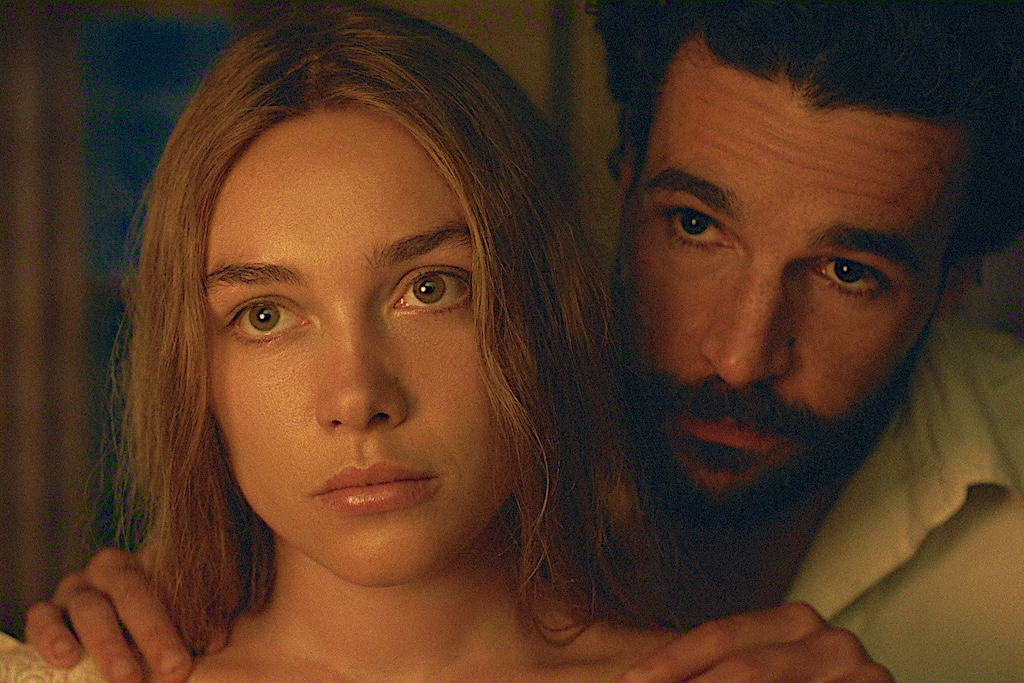
The most faithful version of John Steinbeck’s East of Eden novel first published in 1952 would be difficult to film. At roughly 700 pages, spanning two generations and a large ensemble of supporting characters, the East of Eden novel is less a story than a moral argument traversing family that weaves biblical Cain and Abel allegory, the naturalism of land as character, and an existential argument for “timshel” – free will and agency into an epic sprawl.
Steinbeck’s novel carries ideas that no screen version fully captures, and the novel’s scope gives you the full moral and philosophical argument. It is about everything: heredity, redemption, the American West, family, sin, free will, and the nature of evil. It ponders the vicissitudes of life.
The 1955 film decided it was about a son who needed his father’s love. The 2026 Netflix series decided it was about how psychological damage passes between generations and whether the next generation has to receive it. Is this damage motivated by maternal abandonment or jealous.
Both are legitimate adaptations with differing emphases.
Two major screen adaptations have made radically different choices about what to sacrifice from the book and what to run with. The 1955 Elia Kazan film (Zoe Kazan’s grandfather) starring James Dean as Adam Trask, cuts approximately the first two-thirds of the novel and starts with Aron and Cal as teenagers.
The 2026 Netflix series, written by Zoe Kazan spanning across seven episodes, attempts what the film never could: a broader multi-generational scope with juncture across time and place from Connecticut to the Salinas Valley. It stars Florence Pugh as matriarch Cathy Ames, Christopher Abbott as patriarch Adam Trask, Mike Faist as son Charles Faist, Joseph Zada as brother Caleb, and his twin Aron, played by Joe Anders.
The over-riding theme of East Of Eden is the nature of good and evil. Are bad people born that way or do they chose based on their free will?
The Salinas Valley locale in Steinbeck’s novel is not a random backdrop. It functions as a living moral environment where cycles of prosperity and drought mirror cycles of human failure, resilience, and renewal.
Two families, the Trasks and the Hamiltons, navigate this unpredicatble landscape from the Civil War, the Great Depression through World War I making it truly epic in time span.
The Cain and Abel architecture underneath every scene
The biblical reference that organizes the entire East of Eden novel and adaptations runs across two full generations. First it’s Charles and Adam Trask, then Caleb and Aron.
The skills of Steinbeck’s thematic construction is that this isn’t a metaphoric afterthought bolted onto the main story. It is the story’s actual spine. Every scenic vertebrae of sibling rivalry, perceived paternal favoritism, and suppressed jealousy relays back to it.
The novel’s philosophical payload arrives through the Hebrew word “timshel,” interpreted by the servant character Lee (Hoon Lee) to mean “thou mayest,” not “thou shalt” or “thou wilt.” Free will, not fate, governs whether Cain’s descendants repeat his sin.
This motif carries through to Cathy’s morality. She demands her agency and makes her own morally-spurious life choices including abandoning her sons.
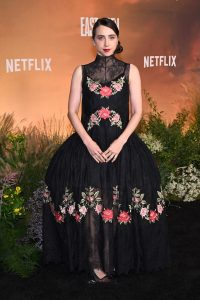
Zoe Kazan. Photo by Roy Rochlin/ Getty Images for Netflix
How East of Eden’s 1955 film turned a 700 page novel into a two-hour arc
Paul Osborn’s screenplay for Elia Kazan’s adaptation makes one decisive structural choice that defines everything else: it begins with Cal and Aron already young adults, skipping the earlier sections of the novel entirely. The entire history of Adam and Charles, Cathy’s murderous origins, Samuel Hamilton’s philosophical conversations with Lee, the failed lettuce-shipping venture, gone.
What remains is concentrated on a single generational cycle in 1917 California. The film doesn’t summarize what it cuts from the novel. It trusts the audience to feel a family’s accumulated weight through behavior rather than exposition. That gives the film an emotional density that pure scene-by-scene adaptation rarely achieves.
Kazan later described the film as shaped by his own sense that his father disapproved of him, a personal urgency that comes through in every scene between Cal and Adam.
Cal Trask in East of Eden: the psychological spine
With the scope compressed, Osborn builds the screenplay around one question: will Cal Trask be loved by his father? James Dean’s Cal becomes the narrative spine pulling every scene forward. Converting Steinbeck’s distributed philosophical argument into a single character’s crisis is a core principle worth noting.
Cal embodies “timshel,” not as an idea discussed over dinner, but as a lived experience and conscious decision. He believes he is inherently bad. The film asks whether he can choose otherwise, and it asks that question entirely through behavior, not lecture. Perhaps he inherited the gene from his mother Cathy?
The scenes that do the heaviest lifting
The birthday money scene as a masterclass in earned conflict
The scene where Cal presents Adam with an envelope of money earned through wartime bean speculation is arguably the most important scene in the film.
Structurally, it functions as the Act Two crisis: the moment where the protagonist’s most sincere gesture of love is rejected publicly and completely. Osborn’s building is stripped to the bone. Cal doesn’t explain himself at length; Adam doesn’t deliver a speech on wartime morality. The conflict lands through action and silence.
Adam’s rejection of the money is the novel’s moral argument made physical and immediate, all without a single line of philosophical dialogue.
The revelation scene: what Cal does with what he knows about Cathy
When Cal brings Aron to meet their mother at her brothel, it functions as the story’s point of no return. In the novel, this act is premeditated and carries deliberate cruelty; in the film, it carries more ambiguity. Osborn gives Cal a motive that feels less calculated, which shifts the moral register of the entire story without changing the underlying incident. This is where adaptation interpretation lives. The screenwriter’s reading of character psychology determines whether the audience experiences a scene as tragedy or as malice.
The scene also demonstrates how to handle traumatic exposition. Cathy’s existence as a living secret doesn’t need explanation delivered at length to the audience. The revelation lands because the prior scenes have built pressure to the point where release feels inevitable.
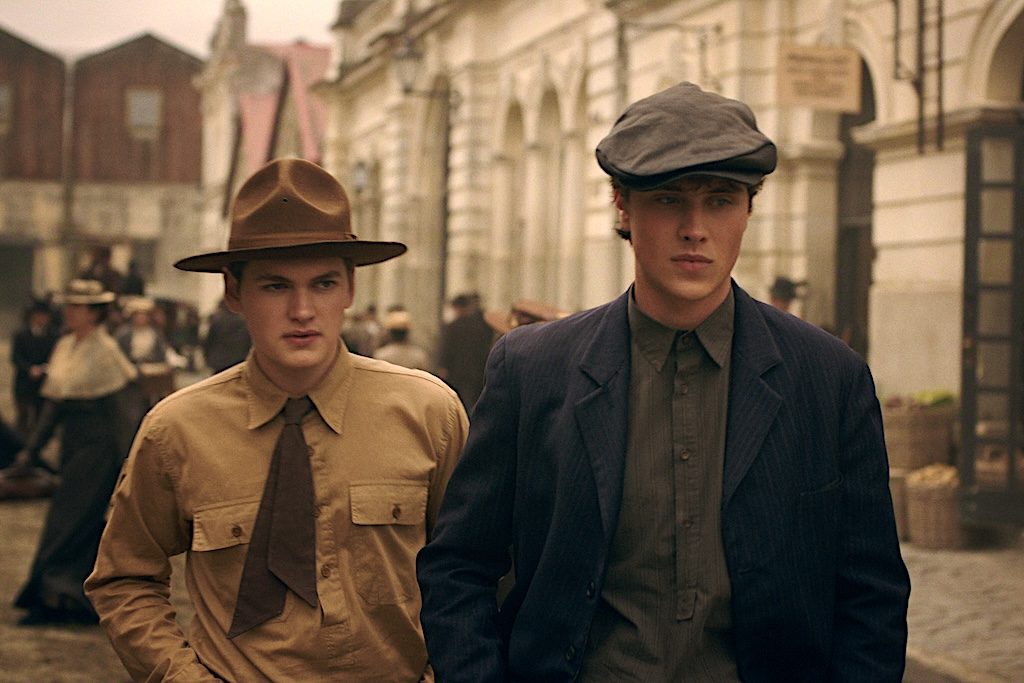
Aaron Trask (Joe Anders) and Cal Trask (Joseph Zada) Photo courtesy of Netflix
How East of Eden’s 2026 Netflix series does things differently
Seven episodes and the return of the full novel
Zoe Kazan’s 2026 Netflix series attempts what the East of Eden movie from 1955 deliberately avoided: a more complete multigenerational structure. Cathy is present from the beginning with full backstory. Lee gets the philosophical weight the novel actually gives him. Samuel Hamilton’s (Ciarán Hinds) friendship with Adam is restored.
Seven full episodes allow the series to earn emotional payoffs that the film had to shortcut. Zoe Kazan has said in interviews, she saw Cathy as “the catalytic element” of the story, and the expanded format of a series gives that catalytic function room to develop across the entire family saga.
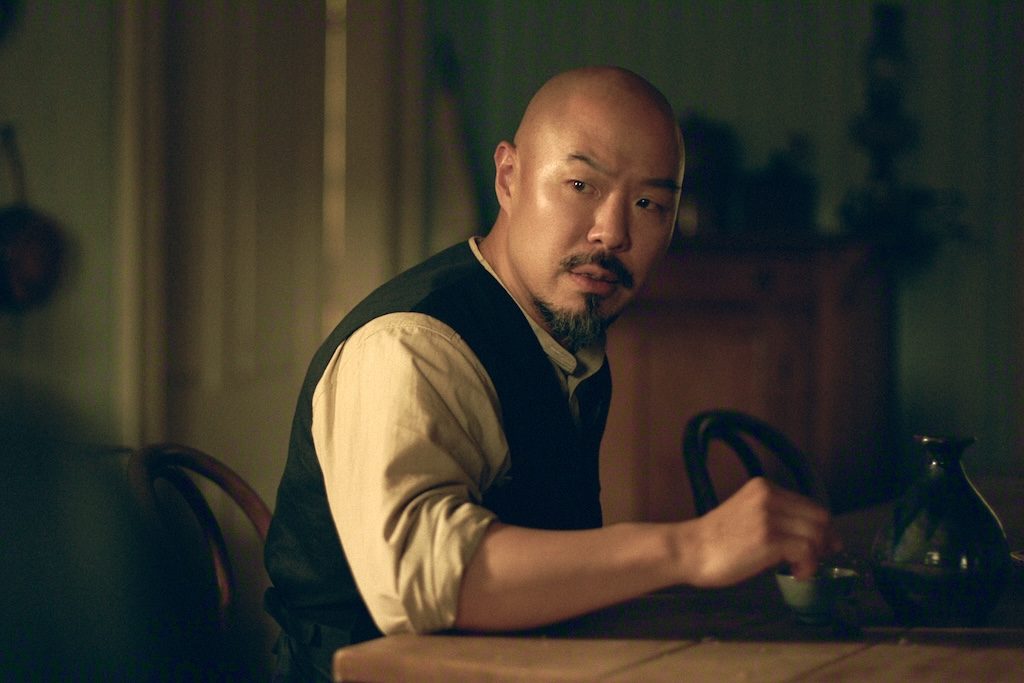
Lee (Hoon Lee) Photo courtesy of Netflix
The Cathy reinterpretation and its critical reception
The series’ most debated adaptation choice is its treatment of Cathy Ames. Steinbeck’s novel presents her as closer to an inherently evil figure: manipulative, remorseless, designed to test the novel’s belief in free will by being the character who may be exempt from it.
The 2026 series gives her formative trauma, greater interiority, more vulnerability and cause to survive on her own, which Kazan frames as an effort to make Cathy “fully human without excusing her.” Cathy character is more layered. She never claims victimhood, but rather an individual doing what it takes to survive in a cruel and unforgiving world.
Steinbeck purists pushed back, arguing that explaining Cathy softens exactly the disturbing moral starkness and ruthless Machiavellian drive that makes her so unsettling and captivating. She hurts people when its not necessary for her wellbeing.
What screenwriters can learn from both adaptations
Both adaptations prove a rule that most writers learn is you don’t cut the scenes you love least. You cut the scenes whose function can be absorbed by other scenes or whose emphasis you want attenuated.
In the 1955 film, the entire early history of the Trask family is cut not because it lacks value, but because Cal’s present-tense behavior implies it. In the Netflix series, that history is restored because the format has breathing room to let it develop and blossom rather than imply.
Anchoring a complex theme in a single character’s wound
Both versions of East of Eden succeed to the degree that they anchor “timshel” in a specific character’s psychological struggle rather than in dialogue about free will. The 1955 film does this through Cal’s craving for Adam’s approval. The 2026 series does it through Cathy’s formative wound and her refusal to examine her own choices or reconcile them.
Theme only lands when it lives inside a character’s specific, urgent problem. Abstract ideas become dramatic only when they have meat on them. The right entry point depends entirely on what you’re trying to learn.
Watch the East of Eden trailer here