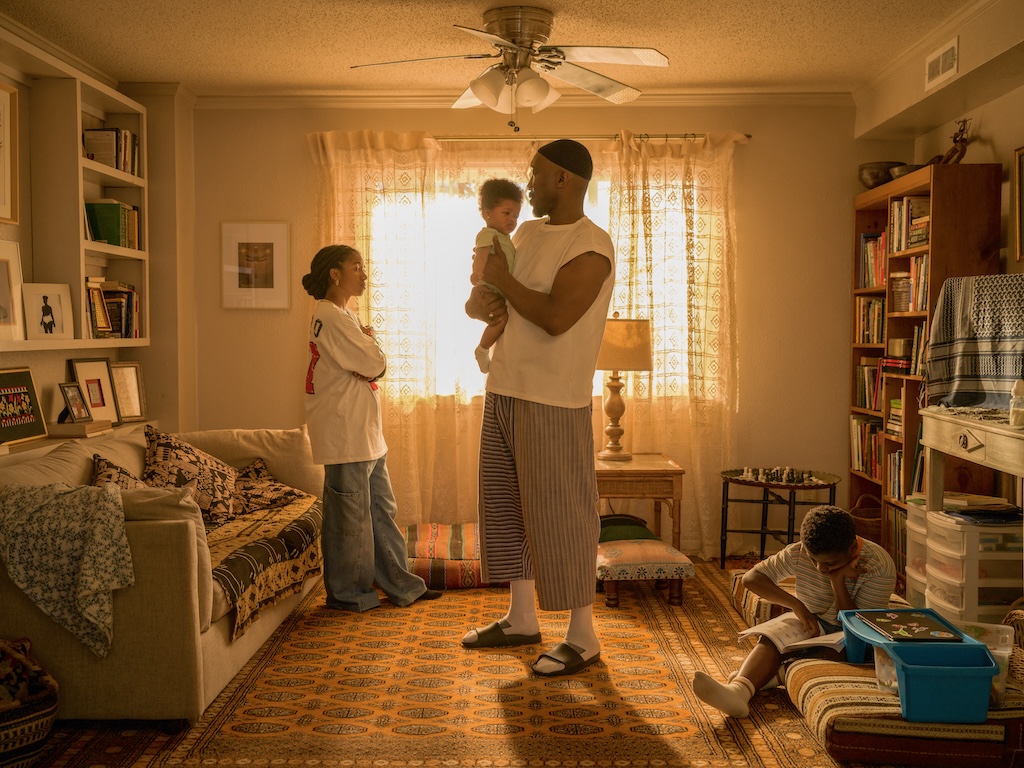
Rooted in the prophetic tradition that demands devotion to the maternal lineage, Bassam Tariq’s Your Mother Your Mother Your Mother is a rich, spiritually-powerful study of grief, grace and compassion. The film follows a devoted Muslim Latif (two-time Oscar winner Mahershala Ali) navigating the disorienting aftermath of his wife’s sudden death leaving him to care for his two daughters teenage Fatiha and baby Aziza.
As he confronts long-buried generational traumas, his solitary mourning shifts into a transcendent pilgrimage through faith, identity, and forgiveness. Your Mother (x3) is set in the world of hitmen, pornography, and mosques in Houston’s underbelly to sharply contrast against its underlying themes.
Marking an evocative creative reunion between Tariq and Ali, this profound indie drama embraces visceral, poetic, lyrical realism with violent action. It explores faith, masculinity, violence, community and responsibility.
Tariq (Mogul Mowgli, These Birds Walk) captures the quiet ache of domestic spaces with touching intimacy, grounding the narrative in Islamic themes in modern cinema while telling a universally poignant story about the hole left by missing matriarchs.
In this in-depth Bassam Tariq interview with Creative Screenwriting Magazine, the writer/ director opens up about guiding Ali through an emotionally raw performance and how the power of a mother’s prayer echoes long after she is gone.
Latif is an extreme man pushing the boundaries of an extreme situation in an extreme world. He’s morally elastic and full of spiritual contradictions. How did you navigate constructing that character in your mind before even starting with the plot?
Latif is a contract killer, a widower, a father, and a man of faith.
What I loved about the character of Latif was that I wanted somebody who had a religious understanding of the world and looked at it only in black and white. I wanted to start adding color into his life by becoming a domestic father.
In the domestic space, all of his ideas of right and wrong are going to be questioned..
I wanted to start with Latif thinking he knows how he should raise his kids or what his daughter’s getting into. All his ideas are going to be challenged and he’s going to have to learn to be in the gray like we all do. There’s a rigidity to him and he’s going to have to learn to find mercy.
He’s also going to have to look after a Muslim pornographer, somebody that he would probably want to be killing with Pastor Hwan Yoon (John Cho).
Allah’s got you. He sees you through all the pain. The bloodshed. He sees your beauty. I see your beauty. Reflect that beauty, Latif
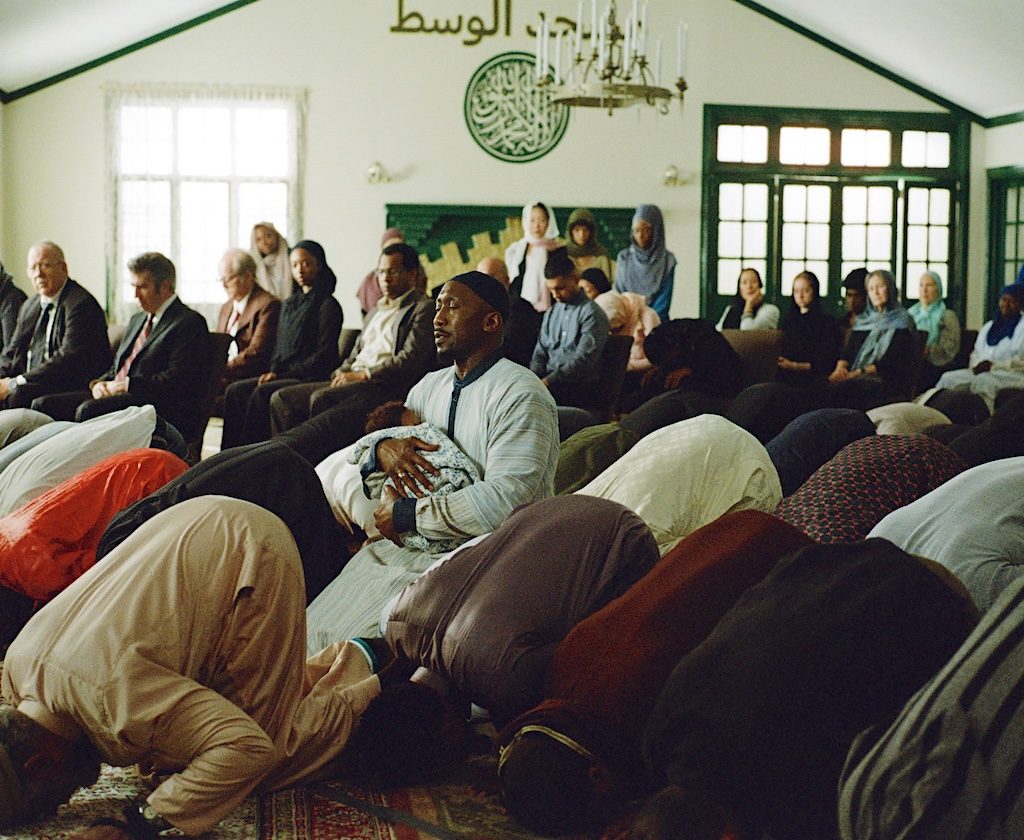
Latif (Mahershala Ali) Photo by Jaclyn Martinez/ Amazon MGM Studios
How did you navigate the more tangible themes of grief and fatherhood with less tangible themes like mercy and grace in the story?
This is the big challenge of the film because it needs someone to cast a spell on you.
It needs you to buy into these ideas and you need to feel this spiritual quest happening in order for something like that to be evoked.
Music is really important in the way our actors are acting in the movie. The world feels very lived in, but there’s a grief Latif is carrying where we as the audience members say, ‘Man, can someone just throw him a bone?’
I love it when I’ve found myself praying for a fictional character.
Look at the 45 minute point in Sirat. It rocked me. I remember after that moment when the car falls out into the abyss and I was praying to God that this man needs to be reunited with his son. If this film is dealing with faith and this man’s been so good, why would God do this to him?
Then the turns it takes make you realize that you do not understand the plans. You must keep moving and still find kindness.
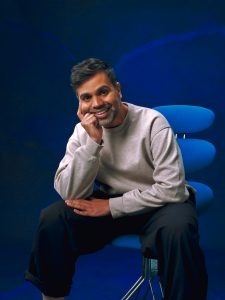
Bassam Tariq. Photo by Obidigbo Nzeribe
Your Mother, Your Mother, Your Mother is a sprawling movie. How did you contain it so you didn’t lose the audience?
I think the part where I am nervous of losing the audience, and I know I will lose people, is at the end. It’s a strange thing to happen in this movie.
I have this one character that’s high and mighty, that’s living above. He believes deeply. When John Cho and I met, we had a conversation about it. Is Pastor Hwan a charlatan? I was like, ‘No, this man deeply believes. He is convinced that he is one of God’s soldiers. He really believes he’s a righteous crusader.’ And then you have Latif, a man that’s waging his own crusade.
They both have to come to a place where they meet one another. I didn’t want it to be just some bloodbath in the end, because that doesn’t help anybody. I thought that something needs to happen, some cataclysmic event, or some miraculous event which allows them both to see each other almost as equals. And then they have to kind of walk together.
That question has to be raised, that only Pastor Hwan can raise, which also unlocks something even for Latif at that moment.
Latif is a man who reacts to the obstacles thrown at him in his world. How does this help him evolve as a person?
When you lose somebody like your wife, that was a bridge that also held up pillars of your life. And now that’s gone.
You’re filling these shoes that you cannot fill. You’re filled with grief. The breast milk he searches for his infant daughter represents his wife’s love. When the milk starts going away, he has to contend with the reality that she’s not here anymore. And that is really hard for him.
Latif doesn’t like he doesn’t like being a hitman. He doesn’t want to be a pornographer. He just wants to save his family.
God brings the righteous together
Is there a scene that most captures the essence of what you want to say?
The restaurant scene was such an important moment in the movie.
The other moment that I cut from the film, but then my editor Cam McLauchlin really fought to bring it back, was the scene of Giancarlo Esposito playing Abdul Malik, where he shares the story about how the wife chose the name Khadijah.
That was a throwaway scene that I had written very quickly to just get Giancarlo to be in the movie. I didn’t realize how crucial that scene was going to be. And it comes at a point in the story where the tension is building.
And then we’re in a car ride, where Latif is stuck, and he can’t run away from any of these feelings. He’s got to sit and hear this story unfold. It was so impactful, so emotionally full. So that’s the scene that I think really encapsulates the film.
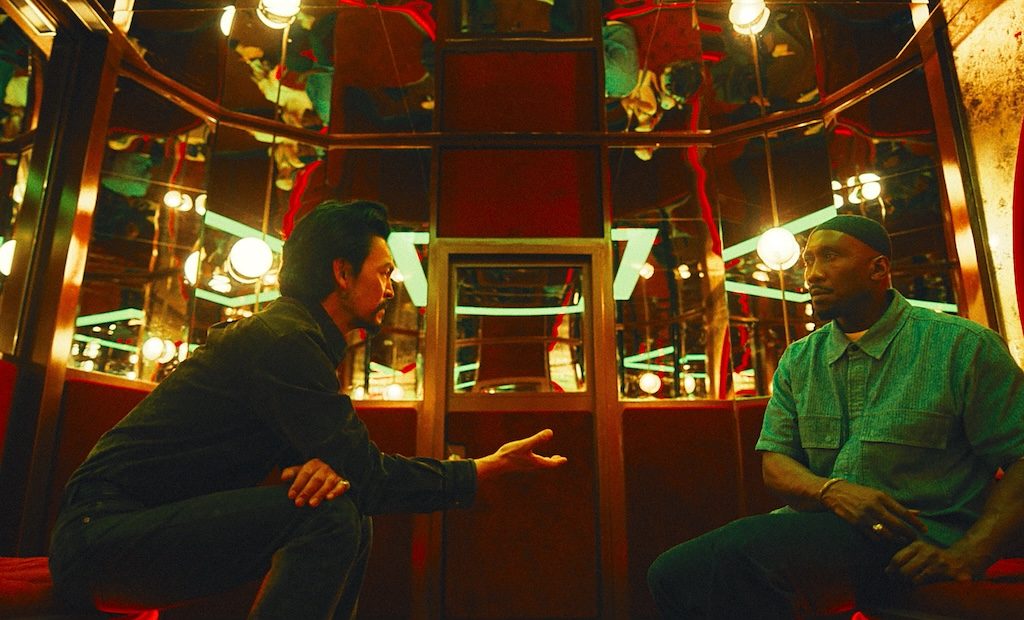
Pastor Hwan (John Cho and Latif (Mahershala Ali) Photo courtesy of Amazon MGM Studios..
What were Mahershala Ali’s first responses when he first read the script?
What was so amazing about Mahershala, which I don’t think would happen with any other actor, was his questions were not about Latif at all. He understood Latif, and he knew men like Latif. The thing that he had questions about, were about tone and about other parts of the world.
He didn’t have many notes on the script at all. That’s what I’ve really loved about him in this entire process. He trusted me.
It gets me emotional because he really was more committed than I was. I’ll give you an instance. It was the second or third day of filming, where he’s in the Mormon house, and he’s sharpening his dagger, and his daughter’s sitting there watching.
And I was like, ‘Should he be doing this in front of his daughter? I don’t know how I feel about this.’ And he’s like, ‘You wrote this, we’re doing this. Don’t get off the horse right now. We’re galloping, we’re leaping, we gotta stay on, stay with me here.’
What do you want the audience to take away from the film?
There are moments in our life where we feel irredeemable to the people that we love. We don’t know how we can ever show our faces again.
There are moments where Latif, after all that’s happened, how can he actually really show his face to his family? We think that there will be some kind of special thing that we could do that will make things better. But I think just showing up and being present is sometimes the most important thing we can do.
One step at a time.
Just keep going. I broke it. I broke the family, I broke this trust, I broke the relationship.
But then that same person shows you grace in a way that you can never imagine. And I want people to know that that grace is possible. Even if you believe in God or not, there is kindness, there is still compassion that will help you keep moving.
And we can find it if we just listen.