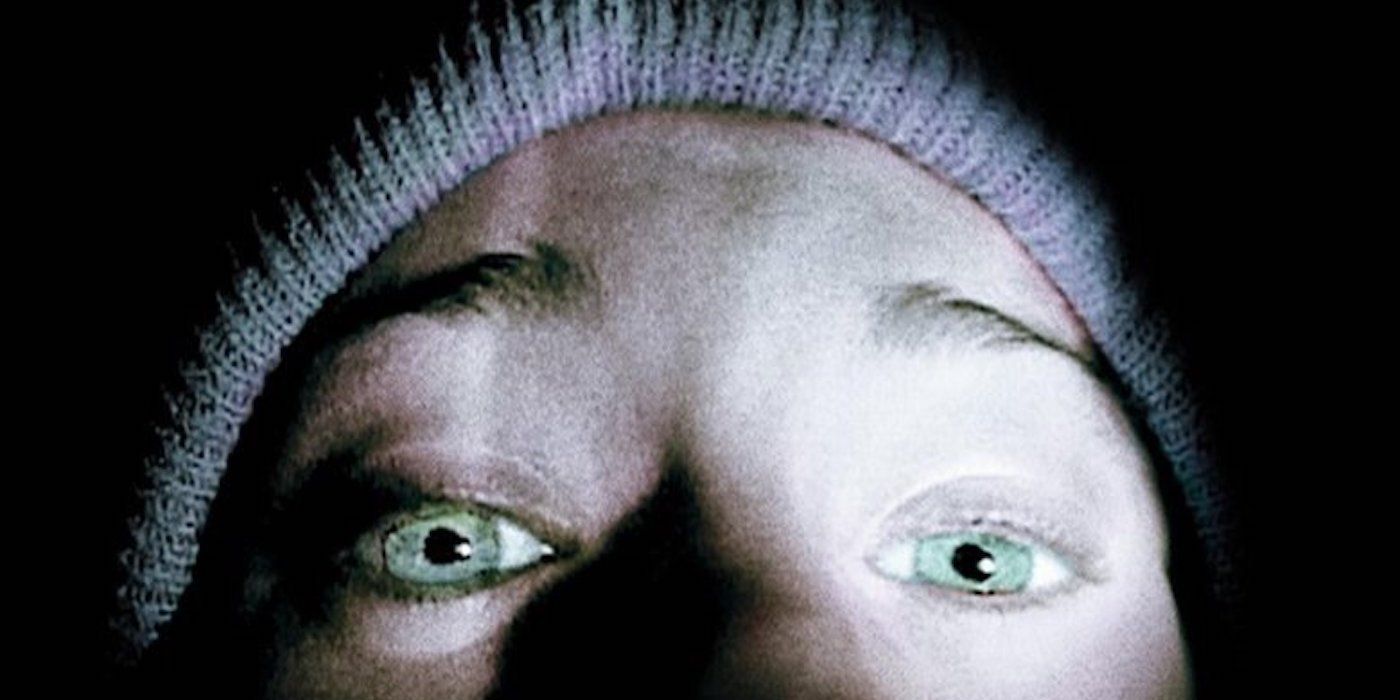
The spec script is changing the way screenwriters do business. Sure, splashy spec scripts getting caught up in bidding wars are nice to read about in the trades, but they don’t guarantee a pathway to a sustainable filmmaking career. That route still exists, but it is no longer the only path or necessarily the best one.
Self-reliance means treating the feature screenplay as more than a calling card. It can be the foundation of a film, a financing package, a directorial statement, an audience strategy, and a lasting piece of intellectual property.
This isn’t about vanity projects or artistic purity. It’s about controlling your own IP, building a personal brand, and proving to the industry that you don’t need permission to make something great. Screenwriters are setting the terms of their own careers. Moroever, the number of distribution platforms to get your film viewed is increasing. And talent scouts are watching.
The Spec Script Was Always a Gamble
For decades, the spec script was the golden ticket to screenwriter career success. Write something brilliant, sell it for seven figures, and let the studios handle the rest. You just need to show up for the awards. But the math never added up. Even at the height of the spec market frenzy in the ‘90s, only a fraction of scripts sold, and an even smaller fraction actually got made and turned a profit.
Consider the numbers:
In 2023, the WGA reported that only 12% of working screenwriters made a living wage from writing alone. The Black List’s annual survey found that less than 1% of scripts hosted on the platform ever get produced. Streamers, once seen as a financial lifeline, are currently cutting original content budgets in favor of algorithm-friendly IP.
Meanwhile, the screenwriters who are actually getting recognition are making their own films.
Related: Writing the Stunt Spec Script. The Art of Really Standing Out
A script is a proposal. A finished feature is evidence that you can deliver. Evidence can include:
- A completed film with rising/ recognizable talent
- Festival plays and audience responses
- A trailer that communicates tone and market position
- A mailing list or online audience community
- A track record with distributors or sales agents
- Clear rights documentation and chain of title

Shih-Ching Tsou Left-Handed Girl. Photo courtesy of Netflix
Indie Features: The More Effective Career Starter
Your indie feature isn’t just a film — it’s your calling card, your business plan, your brand, and your leverage all in one. It’s the difference between being a writer who might get hired and a writer who controls their own filmmaking career.
The Duplass Brothers and the Micro-Budget Revolution
Mark and Jay Duplass didn’t wait for Hollywood to validate them. In the early 2000s, they shot The Puffy Chair for $15,000 on a credit card. The film premiered at Sundance and launched their careers. More importantly, it proved they could make a movie with few resources — a skill that made them indispensable when studios and streamers started looking for cost-effective, high-impact filmmakers.
Their approach wasn’t about making a “perfect” film. It was about proving they could deliver a finished product. That’s the key difference between a spec script and an indie feature: one is a promise, the other is proof with a tangible asset.
Sean Baker and the Power of the iPhone
Sean Baker’s Tangerine was shot on an iPhone for $100,000. The film didn’t just get into Sundance — it changed the conversation about what a low-budget film could achieve. Baker didn’t have a studio backing him. He had a vision, a small team, and the willingness to do the work himself.
Furthermore, filming on phones allowed him to shoot in places he may not have otherwise have had access to such as the Taipei Night Market where he filmed Left-Handed Girl.
The result? A career that now includes The Florida Project, Anora and Red Rocket, films that still feel uniquely his because he never ceded control to a system that would’ve diluted his voice.
If you’re going to bet on yourself, you need a strategy. Here’s how to approach your indie feature as the new spec script.
Related: The Most Common Mistakes in Spec Scripts

Amleth (Alexander Skarsgård) Photo by Aidan Monaghan/ Focus Features
Write Something You Can Actually Make
The biggest mistake screenwriters make with independent films is writing for a budget they don’t have. If you’re not a millionaire, don’t write a period piece with dozens of locations and a cast of thousands. Write something contained, character-driven, and realistically producible.
Coherence (2013) – Was shot over five nights for $50,000 with a small cast in a single house. The film grossed over $1 million and became a cult classic due to its strong concetp and execution. The film delivers complex science fiction purely through spatial tension and character psychology.
Similarly, Steven Knight’s Locke (2013) restricts its physical world to a single vehicle on an interstate highway. Knight uses real-time constraints, precise phone dialogue, and escalating stakes to maintain narrative propulsion without a single exterior set-piece.
The Witch (2015) – Robert Eggers wrote a period horror film that could be shot in the woods with a small cast. The result? A $40 million gross on a $4 million budget and a career that now includes The Lighthouse, The Northman and Nosferatu.
Designing Film Production Around Concrete Assets
To execute a self-reliant indie feature, the scriptwriter must audit their assets before page one. Do not write an Arctic thriller without access to sub-zero geography. Do not write a high-concept courtroom drama requiring thirty background actors.
Begin with what you can secure for free or nominal rates. A writer with access to a decommissioned motel, an isolated cabin, a bank closed for the weekend, a disused railway station, or an abandoned industrial warehouse already holds their first production asset. Create a story around that.
Related: How Does The Script Development Process Work?
Build Your Personal Brand Around the Project
Your indie feature isn’t just a film — it’s the cornerstone of your personal brand as a filmmaker.
The Safdie Brothers (Uncut Gems, Good Time) built their brand on high-energy, chaotic crime thrillers. Their early shorts and micro-budget features (Heaven Knows What) established their voice long before A24 came calling. Now, they’re focused on solo projects like Marty Supreme and If I Had Legs I’d Kick You.
Ari Aster (Hereditary, Midsommar) used his short films (The Strange Thing About the Johnsons) to develop a cult following before his first feature. Your indie film should feel like a natural extension of your voice and what movies you want to make for the future.
It’s relatively cheap to build your community. You can post videos of rehearsals, readings, stating your personal intention of what you want to express, who are your influences, how you handle writers’ block or other setbacks, what happened when equipment fails or locations fall through and how you stay grounded in the uncertainty of the film business. Audiences want to know as much about you as a person as your project.
A personal brand is not a guarantee of an audience. The value is clarity. Collaborators can see what kind of work the scriptwriter is building and why this project belongs in that body of work. If the strategy requires the writer to perform a persona unrelated to the material, it is likely to be unsustainable.
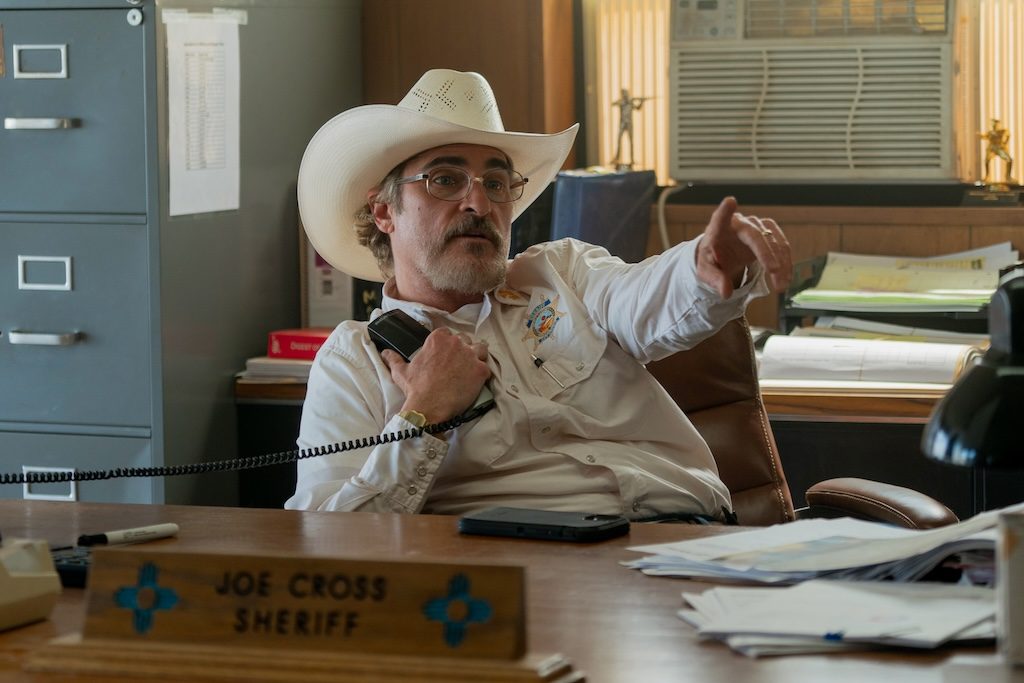
Joe Cross (Joaquin Phoenix) in Eddington. Photo courtesy of A24 films
Positioning Your Film in the Marketplace
A practical approach is to identify the project’s promise and communicate it consistently:
- What emotional experience does the film offer?
- What makes this story distinct from comparable films?
- Who is likely to respond to it, and where might they watch it?
- What images, scenes, or performances best express its tone?
The answers can inform a pitch deck, teaser, festival strategy, and outreach to potential partners.
Financing Is Part of the Writing Strategy
A feature designed for independent production should be written with production in mind.
The best low-budget scripts create attention through character, structure, and circumstance. Buried builds a contained thriller around a man trapped underground. Locke turns a series of phone calls into a moral and professional crisis. The Blair Witch Project transformed limited visible resources into a formal advantage.
Before writing “FADE IN,” consider:
- What is the film’s producible engine?
- Which elements are essential to the premise?
- What can be suggested rather than shown?
- What performance or directorial opportunity makes the project attractive?
- Can the logline be understood without a budget explanation?
- Does the ending create a strong audience conversation and pull?
The screenplay remains the primary creative document. But in an independent film model, it also becomes part of a financing argument.
Crowdfunding now functions as both capital formation and audience building, according to recent industry analysis. That makes community development part of the project’s architecture, not merely a fundraising tactic.
Related: Kevin Smith Celebrates 25 Years of Screenwriting And Making Indie Films
Are You Ready To Shoot?
Before committing to production, test the script against practical questions:
- How many speaking roles are indispensable?
- Which locations require permits, control, or significant company moves?
- Does the central conflict depend on something the budget cannot credibly show?
- Can the visual approach make a limitation feel intentional?
- What is the plan for sound, postproduction, insurance, and delivery?
The answers should shape the draft, not flatten it. A limited budget is not an excuse for generic writing. It is a design brief. The goal is to preserve the movie’s distinctive dramatic engine while removing costs that do not add story value.
Writers should also be honest about the difference between a proof of concept and a feature. A short film or teaser can demonstrate a tone, character, or visual idea, but it may not prove that the premise can sustain a feature-length narrative. A proof of concept or a teaser trailer is a also a marketing tool not a commercial asset.
A feature, meanwhile, demands a plan for completion, audience, and distribution – not just a shoot schedule. It is what generates revenue.
This is where a producer, line producer, or entertainment attorney can be essential. A screenwriter who understands the production realities can make better creative decisions, but should not mistake a spreadsheet for a greenlight. The project needs a credible path from screenplay to finished film.
Self-reliance is not the same as doing everything alone. It is knowing which partners the film needs, what they contribute, and what rights or revenue they receive in return.
The Independent Film Is the New Spec — and a Negotiating Tool
The most useful way to view an indie movie is not as an escape from the established system. It is a way to enter that system with greater leverage and to retain greater creative control. A completed or financed feature can generate:
- A stronger sample than an unproduced script
- A demonstrated relationship with actors and producers
- Audience data
- Festival credentials
- Distribution conversations
- Adaptation opportunities
- A foundation for the next project
It can also fail. Independent movie production carries financial, legal, and practical risk. Ownership does not guarantee profitability, and creative control does not replace execution.
Selling can be the right decision when the price, credits, rights, schedule, and creative conditions justify it. Stop treating it as the default definition of success.
Before signing away a screenplay, ask what the deal buys and what it removes. Are the tradeoffs worth it?
Before producing independently, ask what resources and protections the project requires. Before accepting backend, define the accounting. Before licensing rights, define the term, territory, media, obligations, and reversion.
The writers best positioned for career success will understand both sides of the transaction: the craft of creating a film people want to see and the business of keeping that film from becoming someone else’s property entirely.
Ownership is not an abstract ideal. It is a series of clauses, credits, deadlines, approvals, licenses, and accounting statements. Writers who learn to read those terms and build projects accordingly are not waiting for the cavalry.