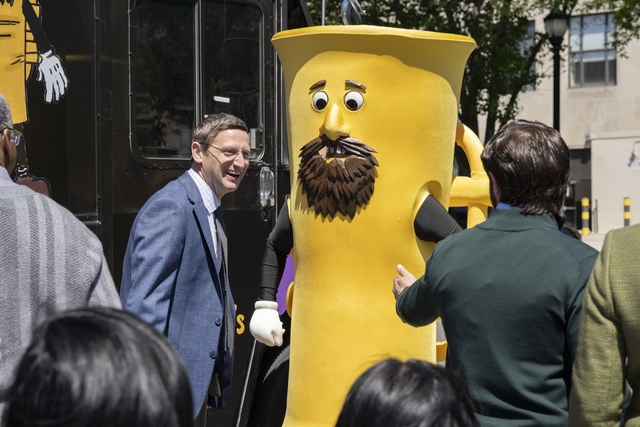
For television writers, The Chair Company offers a useful case study in turning an absurd (and arguably, an execution-dependent pitch) comic premise into a sustained series engine. The show pairs Tim Robinson and Zach Kanin’s talent for social catastrophe with a conspiracy that gives the comedy a narrative propulsion beyond its sketch format roots.
The HBO Max series follows Ron Trosper (Tim Robinson), an ordinary corporate employee whose humiliating workplace accident becomes the entry point to an increasingly elaborate mystery. The title suggests a comedy thriller with office furniture. The storytelling is much stranger: a man who cannot let go of an embarrasing incident involving a chair that everyone around him considers insignificant.
Notably, there are shades of the anti-logic weirdness in Backrooms in the series which are currently in vogue.
A Humiliation Story Disguised as a Conspiracy Story
Robinson’s best comic characters often respond to a minor social breach as if their survival depends on overcoming them.
That is where the conspiracy framework becomes useful in The Chair Company. It gives Ron’s obsession external validation — or at least the possibility of it. The audience can laugh at his overreactions while still asking whether he may be correct.
This is a durable tonal mechanism. David Lynch and Mark Frost used it in Twin Peaks, where an eccentric small-town investigation could be both emotionally sincere and surreal. More recently, The Curse, created by Nathan Fielder and Benny Safdie, made its central couple’s self-deception funny, agonizing, and narratively consequential.
The difference is scale. The Chair Company appears designed to keep the focal point intimate: one man’s shame, one corporate ecosystem, and one mystery that may be much larger than story itself.
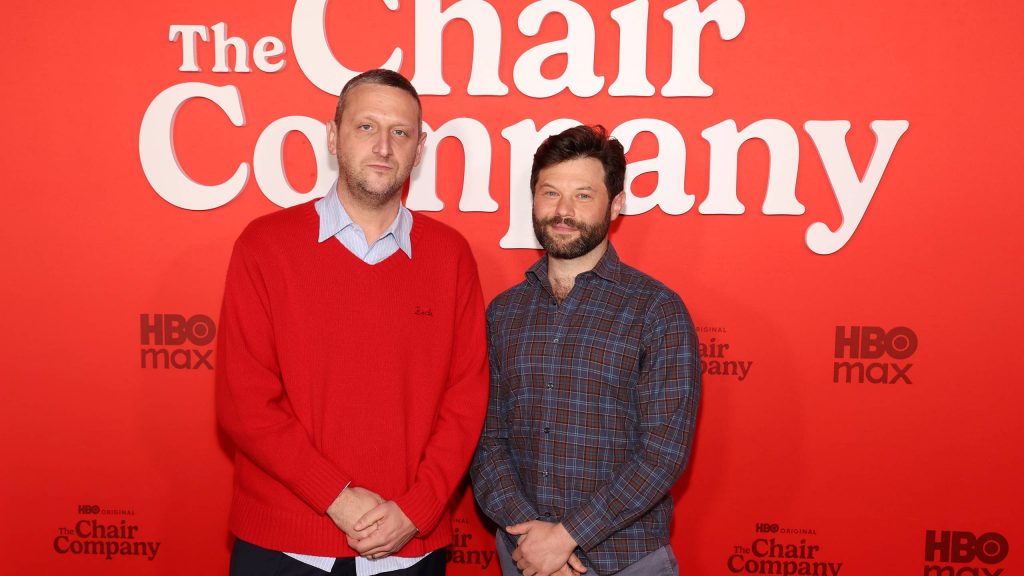
Tim Robinson & Zach Kanin
Defining The Prestige Comedy
The landscape of HBO prestige comedy is shifting toward elevated hyper-specificity and surrealist dread.
At the center of this movement marks a significant narrative expansion for creators Tim Robinson and Zach Kanin. While the duo is best known for the frantic sketches of I Think You Should Leave with Tim Robinson, this project signals a more deliberate, serialized approach to their signature brand of social horror laced with a conspiracy thriller to keep the train filled with chair cargo rolling.
The conspiracy premise allows the creators to bridge the gap between the isolated “cringe” moments of their previous sketch comedy work and a sustained, high-stakes thriller plot that spans an entire season.
Robinson and Kanin have spent over a decade refining their specific comedic shorthand, first at Saturday Night Live and later through Detroiters.
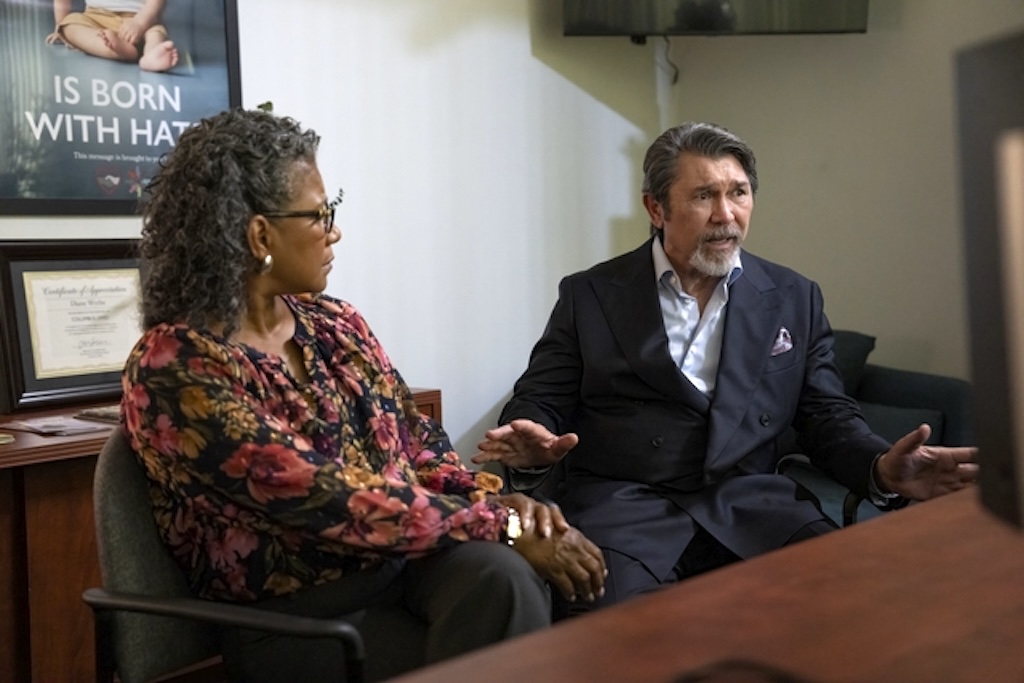
Brenda (Zuleyma Guevara) and Phillips
Jeff Levjman (Lou Diamond Phillips) Sarah Shatz/ HBO
Robinson’s Comedic Philosophy
Tim Robinson emerged from Saturday Night Live with a distinct comedic voice. His SNL era (2013–2015) was defined by an unwillingness to punch down, a commitment to emotional specificity within absurdist scenarios, and a particular talent for building entire universes from single premises.
After SNL, Robinson continued developing this sensibility through online sketches and guest appearances. Unlike many post-SNL comedians who pivoted to acting or producing films or television series, Robinson remained committed to the art of comedy — how a joke could be constructed, deconstructed, and rebuilt within new parameters.
The seed for The Chair Company emerged from Robinson’s ongoing fascination with incongruity: what happens when you place intelligent people in situations that demand they treat fundamentally ridiculous and inconsequential things as serious?
The lengthy journey of The Chair Company is a testament to the power of a distinct creative voice. Tim Robinson and Zach Kanin have never tried to broaden their appeal to fit a mass-market mold. Instead, they leaned into their specific obsessions until the market moved toward them. Their weirdness is indeed their superpower.
The Chair Company: From Sketch to Series
A primary challenge in developing The Chair Company was ensuring that the lead character remained grounded enough to follow for an entire season. In I Think You Should Leave, Robinson’s characters are often one-dimensional constructs of ego and insecurity. For a half-hour series, the character requires internal logic and a sense of vulnerability that makes the audience care about their survival within the purported conspiracy.
The writing process involved stripping back some of the pure mania found in their sketch work to reveal a more recognizable and investable human core. Robinson’s performance style often relies on high-status posturing hiding a low-status reality. In a serialized format, this allows for a slow-burn, tangential reveal of the character’s backstory and motivations, rather than a singular explosion of anger.
Kanin and Robinson’s collaboration is rooted in a shared obsession with the “rules” of social interaction. They often write about the moments where those rules break down. In this series, the conspiracy acts as a literal manifestation of that breakdown — a world where the things people suspect are happening behind closed doors are actually occurring, but in the most mundane way possible.
Conceptualizing The Chair Company on HBO: The Pitch
When Tim Robinson pitched The Chair Company to HBO, he wasn’t pitching a traditional comedy. He was pitching absurdism and a mood.
It debuted in 2025 as a six-episode limited series that defied easy genre categorization. It’s not quite a workplace comedy. It’s not a sketch show, though sketch sensibilities permeate every scene. It’s a thriller comedy built entirely around the logic of a furniture company — or rather, around the illogical things that happen when you place absurdist characters inside the rigid structure of soulless corporate America.
Tonally, the show sits in a wobbly lane between workplace comedy, paranoia thriller, and cringe character study.
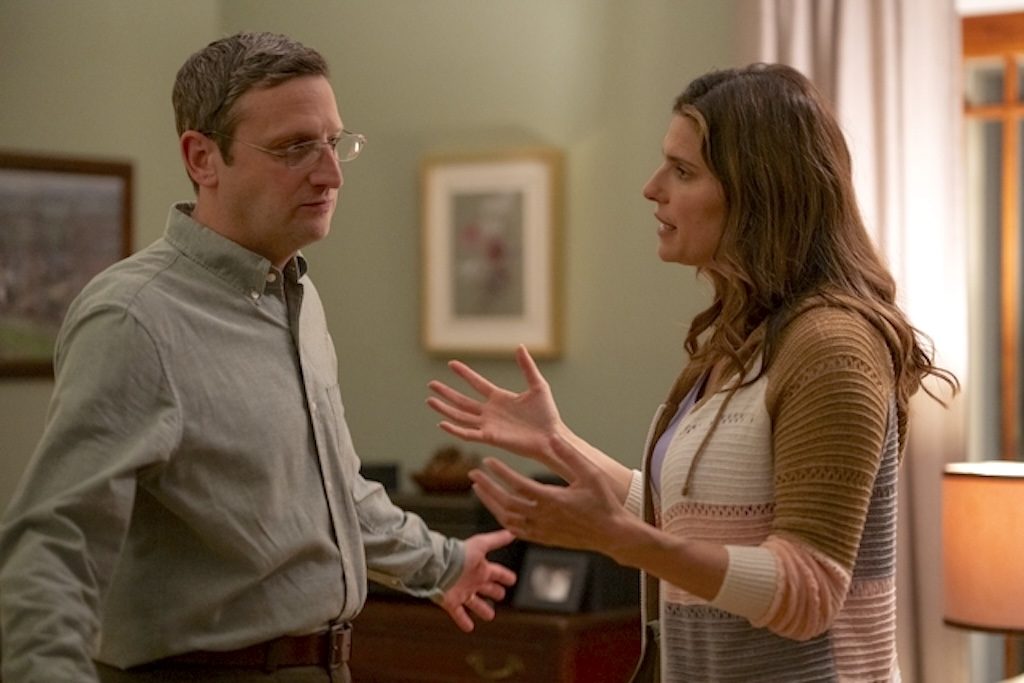
Ron Trosper (Tim Robinson) and Barb Trosper (Lake Bell) Photo by Sarah Shatz/ HBO
Why HBO Was a Logical Buyer
HBO has a long history with comedy that bends and defies genre rather than obeying traditional comedic expectations. Consider Barry, which used a hitman premise to explore performance, violence, and self-delusion, The Rehearsal, which turns social anxiety into an elaborate documentary experiment; and The Righteous Gemstones, where grotesque family behavior is supported by a mega-church community.
The Chair Company fits that programming logic. Its protagonist may be ridiculous, but the series does not need to treat his emotional experience as weightless or empathetic. The more seriously the show treats Ron’s need to solve the problem, the more story the comedy can generate.
The sale of the series to HBO was not merely about Robinson and Kanin’s internet sketch fame; it was about the pedigree of the producing team and the clarity of their unique vision. Hyperobject Industries, led by Adam McKay and Todd Schulman, has a reputation for backing projects that blend social commentary with unconventional humor. This partnership gave the project the “prestige” gravity required for an HBO greenlight.
HBO positioned the series as a comedy, and the casting of Robinson understandably signals a comic project. But “comedy” alone is too broad to explain how the show works. The series uses a mystery structure — an inciting incident, a private investigation, expanding clues, escalating suspicion — to organize its episodes.
A conspiracy thriller promises that details matter, information is withheld, and apparent coincidences may connect. A cringe comedy promises that characters will make situations worse through ego, denial, or misjudgment. Put those forms together and you get a protagonist who is uniquely qualified to notice patterns — but potentially too unstable to interpret them correctly.
That ambiguity is productive. It creates a question more interesting than “Is there a conspiracy?” The better question is: What does Ron need the conspiracy to mean?
The Role of Hyperobject Industries and Executive Producers
The involvement of Adam McKay’s Hyperobject Industries cannot be overstated in the success of The Chair Company. McKay has transitioned from broad comedies like Anchorman to politically charged, tonally complex projects like Succession and The Big Short.
Executive producers Todd Schulman and Alex Bach also played key roles in bridging the gap between the creators’ vision and the network’s requirements. This level of production support allows the writers to focus on the “voice” of the show while the producers handle the logistical complexities of a serialized production.