
7 Basic Plots Of Film Storytelling

We’ve all heard that there aren’t any original stories on cinemas anymore. Every story has been told. Not quite. There may seem to be underlyling patterns, themes, and story structures, because there are. We are all connected via our common humanity and our desire to tell, see, and hear stories.
The book Seven Basic Plots: Why We Tell Stories was written by Richard Booker, a journalist and author who posited, along Jungian (Carl Jung) lines, that seven archetypal stories existed. Another famous Jungian, Joseph Campbell, also talked about archetypes in his Hero With A Thousand Faces but these were more character archetypes than story archetypes.
Let’s take a deep dive and explain these basic stories:
Booker Was Ridiculed By Some
The concept of a “collective unconsciousness” is a controversial one. Booker was sliding literature and film into speculation. You have to somewhat accept Jungian philosophies to embrace the ideas of archetypes whether it was characters or plots. But there is some value in just taking these plots at face value because most TV or movies actually do fit and this book’s overall concept has surprising depth.
Multiple Plots
As a side note, many stories incorporate more than one plot element which somewhat belies the concepts that Booker presents. Certainly, there are monsters in any Quest or Voyage and Return, but it’s the entire narrative thread to look at.
Let’s examine the seven plots one by one:
1) Overcoming The Monster
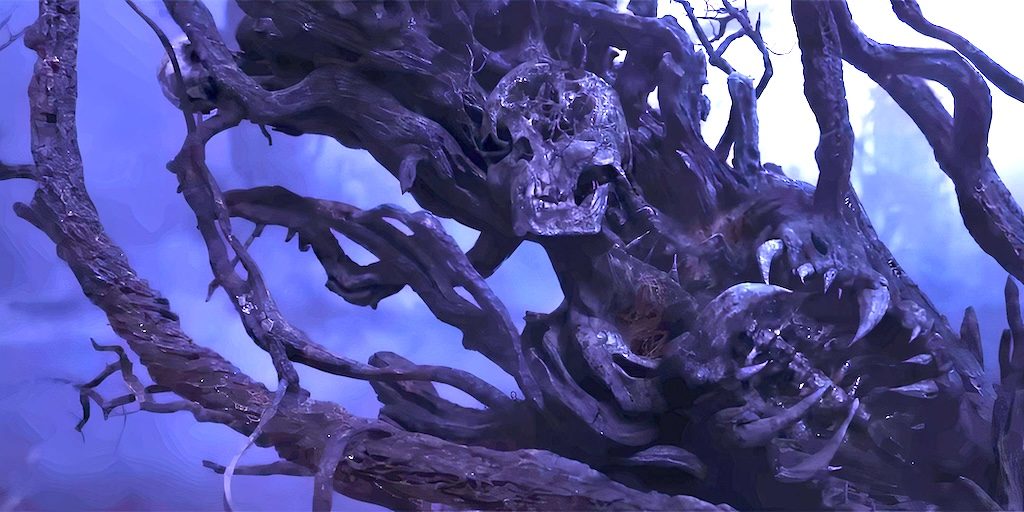
Perhaps the easiest plot to understand and it runs the gamut from slasher films to creature features and aliens, werewolves, and giant insects.
The hero/ heroine must confront something monstrous (an evil or being), survive and/or defeat it. The list of features or TV series that encompass this plot are legion going back in literature to the BCE’s and right up to 2025’s The Gorge.
The monster is typically also symbolic for something inside the protagonist’s mind. In this respect, internalized ‘monsters’ like greed, ego, alcoholism, drug addiction, etc. can be considered something to be overcome. These plots feature characters pushing beyond themselves to slay whatever confronts them.
Film Examples:
Nosferatu (1922/2025) – a pre-Dracula concept that involves a supernatural evil (the creature) who causes illness, death, and bad things to happen.
Jaws is considered the grandfather of the summer blockbuster movies. We still want to stay out of the water, don’t we? Booker, in his introduction, finds interesting parallels to Jaws in the epic poem Beowulf (1025 AD).
Alien started a franchise that lives today and Predator is still rocking the theaters with the last sequel (prequel) Predator: Prey following it to box office gold.
TV Examples:
Stranger Things features five seasons of Demogorgons and Mind Flayers, but the biggest monsters are the human ones who are behind the top secret government projects which created them.
Hannibal, You, any episode of Criminal Minds feature all-too-human creatures who commit terrible atrocities.
Of course, the seminal Scooby Doo featured creatures of all types.
A slamdunk in the plots category, this is so universal a storyline it has existed and will continue to exist forever.
2) Rags To Riches
From obscurity or adversity to greatness, wealth, or happiness. This often involves growth, self-discovery, and transformation.
Usually, someone starts as disadvantaged and rises to material success but there also should be cathartic change. What’s most compelling about these types of films is the concept that we can all succeed if we’re true of heart and work hard.
Film Examples:
Creed is a solid example of this storyline, where a rough youth becomes a world-class boxer through the mentorship of Rocky Balboa, an old friend of his father.
A poor boy from the Mumbai slums gains fame and fortune by participating in a gameshow. But Slumdog Millionaire’s most compelling story is the love story between Jamal (Dev Patel) and Laitka (Frieda Pinto) – that’s the real reward/riches.
Disney has made a fortune telling these types of tales. The live action Snow White being the latest example but certainly expressed in the iconic Cinderella both animated and live action.
The more hardship to any fame or fortune concept the better, even crossing years to achieve the success. The more the characters work the more they appreciate the reward and the more we celebrate their victories.
TV Examples:
Schitt’s Creek takes this plot and turns it on its head when the Rose family loses everything and has to move to a rundown town they still own.
But Arrested Development did it first with the Bluth family’s fortune being destroyed when the patriarch, Jeffrey Tambor , is arrested for fraud sending the entire company that supports the family into a hardscrabble talespin. Two Broke Girls had one riches to rag character. Caroline (Beth Behrs), was rich until her father’s Ponzi scheme and she had to go to work for the first time.

Main cast of Schitt’s Creek. Photo courtesy of CBC
3) The Quest
I’ll admit, this one feels like another one, Voyage and Return, but there are subtle differences. Booker makes it make more sense than I probably will so refer to the book (it’s great) if I make a mess of this in one way or the other.
A caveat: Booker says there are stories that can have multiple plot elements. This and Voyage can be cousins in the same storyline.
The main differences I can suss out involves the characters in the Quest have a specific goal (artifact perhaps) to achieve. They may encounter similar challenges along the way to their goal but the arrival at the destination is the main reason for the Quest.
Film Examples:
In The Hobbit and The Lord of the Rings trilogy, Bilbo and then Frodo must quest to save Middle Earth, facing numerous enemies and temptations along the way. Raiders of the Lost Ark, of course, the quest to find the Ark of the Covenant. Finding Nemo would be in the list.
TV Examples:
Avatar: The Last Airbender as Aang journeys across the world to defeat the Fire Lord.
The Mandalorian’s Din Djarin (Pedro Pascal) has various quests to protect and deliver Grogu (Baby Yoda) to a safe place.
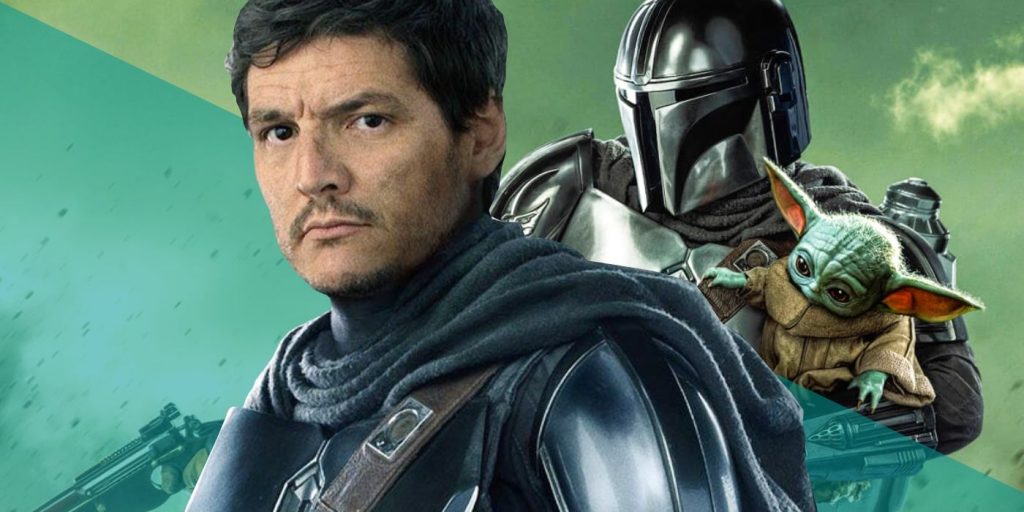
Din Djarin/ The Mandalorian (Pedro Pascal) Photo courtesy of Disney+
4) Voyage And Return
Strange worlds are typically where the main character faces challenges and/or adventures and returns home wiser or transformed.
Film Examples:
The Wizard of Oz’s Dorothy travels over the rainbow to Oz, meets new and fantastical friends, has trials, and learns the important lesson that “there’s no place like home.”
The Last Starfighter (Lance Guest) is a wiz at video games and so is conscripted to fight in a galactic war far, far away.
I could see Harry Potter in this category also.
TV Examples:
Lost drops a planeload of people on a strange island where they face sinister forces like the Smoke Monster and other forces they don’t comprehend. In the end, they return, sort of, to a blissful existence.
Any season or generation of Star Trek. Creator Gene Roddenberry once described the show as “Wagon Train in outer space” meaning each point along the journey is a lesson and a challenge.
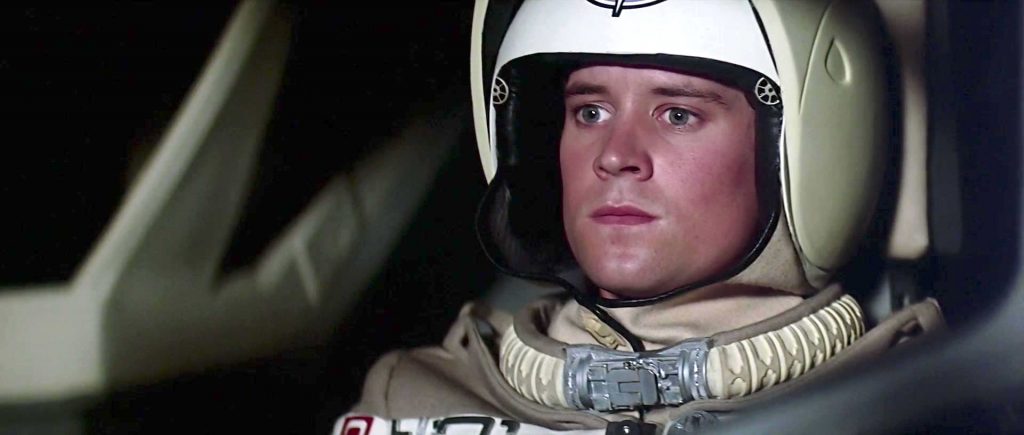
Alex Rogan (Lance Guest) The Last Starfighter. Photo courtesy of Universal Pictures
5) Comedy
Do we really have to cover this? Isn’t it self-evident? Yes and no. Comedic elements yes but also, according to Booker, it’s also a journey to self-knowledge and harmony. Through the sometimes-absurd nature of comedy, you’re able to put a character through a lot to redeem them and still entertain your audience.
Film Examples:
Groundhog Day is a superb example of the duality discussed above. Hilarious at times, it also does show tremendous growth for cynical weatherman Phil (Bill Murray) as he finally understands why he’s there in Puxatony: again, and again and again.
Almost any romantic comedy has comedy at its core but also strong thematic overlays to the growth of the characters and many times a serious message. Emilia Clark’s Last Christmas for example.
TV Examples:
One word – sitcoms: almost since the dawn of television with The Honeymooners to the long-running It’s Always Sunny in Philadelphia and Running Point.
Archer, Friends, The Office (both US and UK versions), Cheers, and The Good Place – all these genius shows make you both laugh and think.
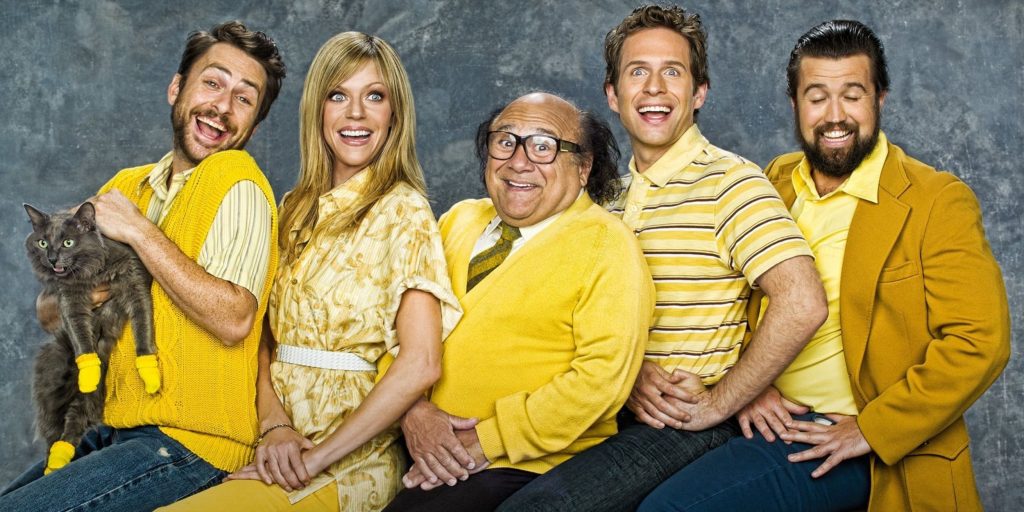
Main cast of It’s Always Sunny In Philadelphia. Photo courtesy of FX networks
6) Tragedy
Tragedy is all about ego, pride: the first deadly sin. Characters vie for riches or power challenging the order in the Universe and are punished for it.
Icarus in Greek myth is an archetype of this story. His father, Daedalus, a master craftsman, made a pair of wings for his son to escape a prison. He warned Icarus not to fly too closely to the sun or the heat would melt the wings. Sure enough, Icarus did exactly that, the wax holding the wings together melted, and Icarus plunged to his death. The sun is symbolic of godhood and by flying toward it, Icarus attempted to become godlike.
The arc of this plot leads to downfall and often death (sometimes mental or emotional death), presenting a moral or emotional lesson.
Film Examples:
Requiem for a Dream is about as bleak as it gets and a solid example. The Man Who Would Be King is a classic and the theme of hubris is right in the title. In Scarface, Al Pacino’s Tony Montana tracks a rise to power and a hard fall from that power. American Gangster lines up here also.
TV Examples:
Breaking Bad has to be on the top of this list. Walter White starts out as a science teacher wanting to give his family money before he dies, and ends up as a drug kingpin who is killed. Sons of Anarchy and You have similar story tracks. The Sopranos… well, we’re not really sure but the assumption is Tony dies at the end of the last episode. Ten years after the last ep, creator David Chase confirmed Tony did die.
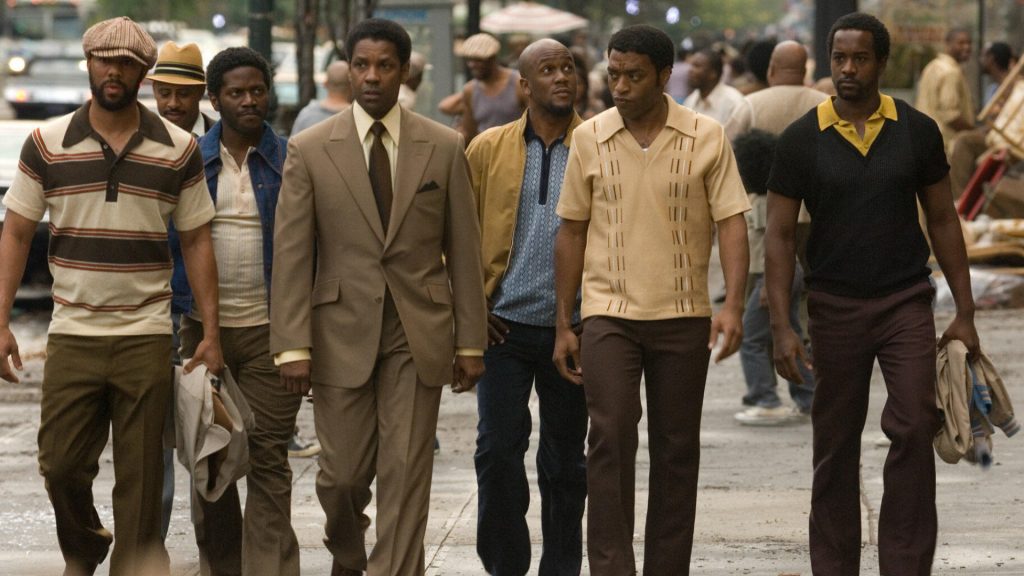
Main cast of American Gangster. Photo courtesy of Universal Pictures
7) Rebirth
The protagonist undergoes a profound transformation, usually after hitting a low point. This is also called redemption. It involves a cathartic change from who a character was to who they’ve become through the story.
Film Examples:
The Gorge is about two assassins who find mayhem and love in the gorge. The love transforms them and they live happily ever after. Arrival details a linguist who learns an alien language and is changed forever. In Nonnas, Vince Vaughn plays real-life restaurateur Joe Scaravella who learns what is truly important in his life. Of course, you can’t dismiss A Christmas Carol or It’s a Wonderful Life as two classic examples of rebirth.
TV Examples:
Film does this better than TV since any series can’t change the character much or we’ll not want to watch it any more.
Ted Lasso focuses on growth and rebirth from the beginning as Ted takes that giant step into coaching a soccer team, something he knows nothing about. House, M.D.’s Gregory House (Hugh Laurie) never really changed much but well, in one season his maddening leg pain (somewhat symbolic of the Fisher King) was gone and he actually turned into a nice guy – for a while.
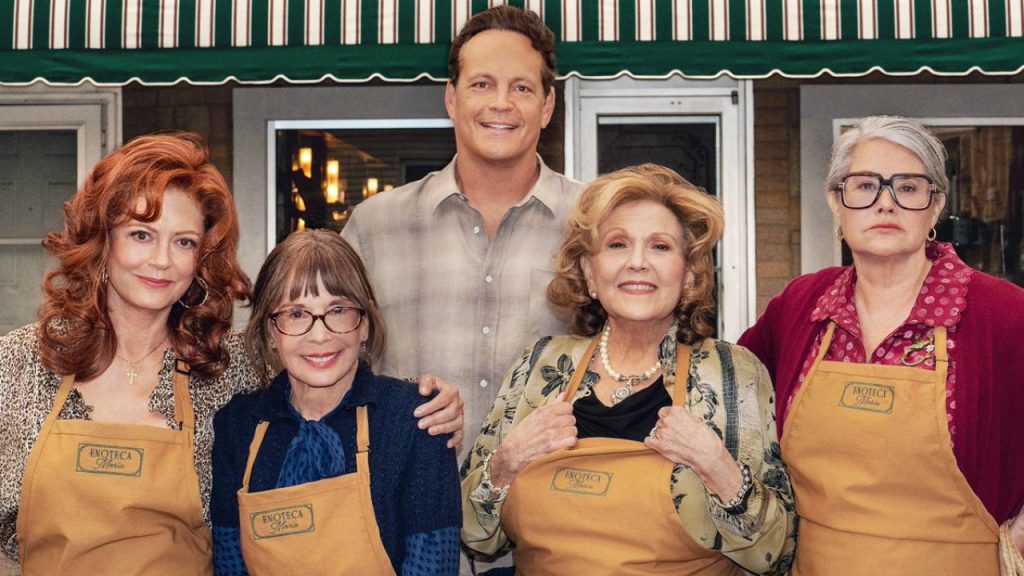
Main cast of Nonnas. Photo courtesy of Netflix
Why Any Of This Is Important
As mentioned, Booker’s theory has its feet in Jungian psychology which has at its core something called the Collective Unconsciousness, a place where we subconsciously inherit and share what it is to be human. Since so many of our worldly experiences are similar it’s not unreasonable to put forth this theory.
The simpler truth is just that we strive in similar fashion to accomplish what we need. Being human, we respond in some expected fashion. Sometimes it’s epic, sometimes, funny, and sometimes tragic.
Boiling down all human responses to just seven plots is a good bit of hubris perhaps but Booker makes excellent points and we should consider them.
A writer’s job is to detail these journeys. To do that we need to first embrace and understand them.

Join the Discussion!


Browse our Videos for Sale
[woocommerce_products_carousel_all_in_one template="compact.css" all_items="88" show_only="id" products="" ordering="random" categories="115" tags="" show_title="false" show_description="false" allow_shortcodes="false" show_price="false" show_category="false" show_tags="false" show_add_to_cart_button="false" show_more_button="false" show_more_items_button="false" show_featured_image="true" image_source="thumbnail" image_height="100" image_width="100" items_to_show_mobiles="3" items_to_show_tablets="6" items_to_show="6" slide_by="1" margin="0" loop="true" stop_on_hover="true" auto_play="true" auto_play_timeout="1200" auto_play_speed="1600" nav="false" nav_speed="800" dots="false" dots_speed="800" lazy_load="false" mouse_drag="true" mouse_wheel="true" touch_drag="true" easing="linear" auto_height="true"]







You must be logged in to post a comment Login