
The Dark Side of Obsession: How Nick Antosca Brings ‘Cape Fear’ to Apple TV+

Cape Fear is the 10-episode limited series created, showrun, and executive produced by Nick Antosca (Candy), with Academy Award winners Martin Scorsese and Steven Spielberg serving as executive producers. Academy Award winner Javier Bardem.
Inspired by the 1991 film Cape Fear remake directed by Martin Scorsese and produced by Steven Spielberg, a storm is coming for happily married attorneys Anna (Amy Adams) and Tom Bowden (Patrick Wilson) when Max Cady (Javier Bardem), the notorious killer they are responsible for putting behind bars, is let out of prison — and he wants vengeance.
Arising from Amblin Television, Cape Fear on Apple TV is based on both John D. MacDonald’s novel The Executioners, which inspired Gregory Peck’s Universal Pictures feature (1962) of the same name, as well as the acclaimed 1991 remake directed by Scorsese and starring Robert De Niro as Max Cady.
Scorsese and Spielberg helped reimagine the classic story for the present day while honoring its legacy.
Cape Fear explores how the past continues to shape the present in ways that are both personal and destabilizing. In this long-form adaptation, the story is reinterpreted as a psychological thriller that expands a well-known tale into a layered, character-driven series. Created and show-run by Nick Antosca, the 10-episode series allows the narrative to linger, building tension through atmosphere, moral ambiguity and the slow accumulation of unease in everyday life.
At its center is a family bound by a shared past decision — one that resurfaces when a man they believed was long gone from their lives, suddenly reappears and terrorizes them.
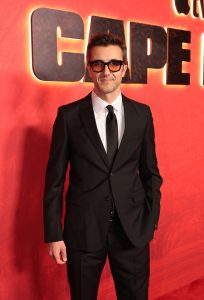
Nick Antosca
How To Reimagine Cape Fear
“A few years ago, I went to Universal, Martin Scorsese, and Steven Spielberg’s Amblin with a pitch for a modern retelling of ‘Cape Fear’ that reflects the uncertainties and psychological horrors of the 2020s,” Antosca says of the beginnings of the Apple TV series adaptation.
“Reimagining the story of Max Cady and the Bowden family as a series gives us the chance to go deeper into the nightmare. Using the storytelling opportunities of television we were able to get deeper into the family’s history, Max Cady’s history, and explore a more psychologically complex version of this classic thriller,” he continues.
Antosca decided to base his iteration of Cape Fear around a slow burn tension that accumulates and effectuates over time. The original 1962 and 1991 movies are more acute and immediate in their knuckle-biting depiction of Max Cady terrorizing the Bowden family.
He reinforces the unease by making the audiences voyeurs rather than observers.
“This version explores a kind of nightmarish paranoia and uncertainty that the family experiences as they’re unaware of who’s terrorizing them,” states Antosca. This creates space for a moral ambiguity where both sides are both right and wrong. It reflects our current times where, not only can people disagree on who’s right or wrong, they can’t even agree on what’s true or fake.
Earlier versions of Cape Fear reflect a simpler, more dichotomous time, where a villain was morally compromised and the heroes were not. We now explore the more morally-ambiguous and gray areas of the situation where heroes and villains might become indistinguishable at times.
More: Robin Veith & Nick Antosca Talk ‘Candy’
A Deeper Exploration of The Bowden Family
At the center of the story is the Bowden family, whose outward stability is tested as past choices resurface with consequences. Amy Adams stars as Anna Bowden, a defense attorney and mother whose desire for order and security is challenged when Max Cady, a former client, is released from prison.
“The source material was so strong,” says Adams of what drew her to the project. “I loved how it opened a world of discovery for the characters as it goes so much deeper into their backstories, brings in more of the family members, and examines relationships. One of the things I was attracted to was examining the consequences of the things we keep secret.”
Adams was also excited by the opportunity to re-examine Anna’s role in Max Cady’s conviction from a new perspective, as she finds herself questioning the possibility that he might be innocent.
We get to see the complications and the doubt — recognizing that she may have been wrong, and whether she negotiated Cady’s plea deal for the right reasons. We see how it affects her and her family as she moves forward in her life.
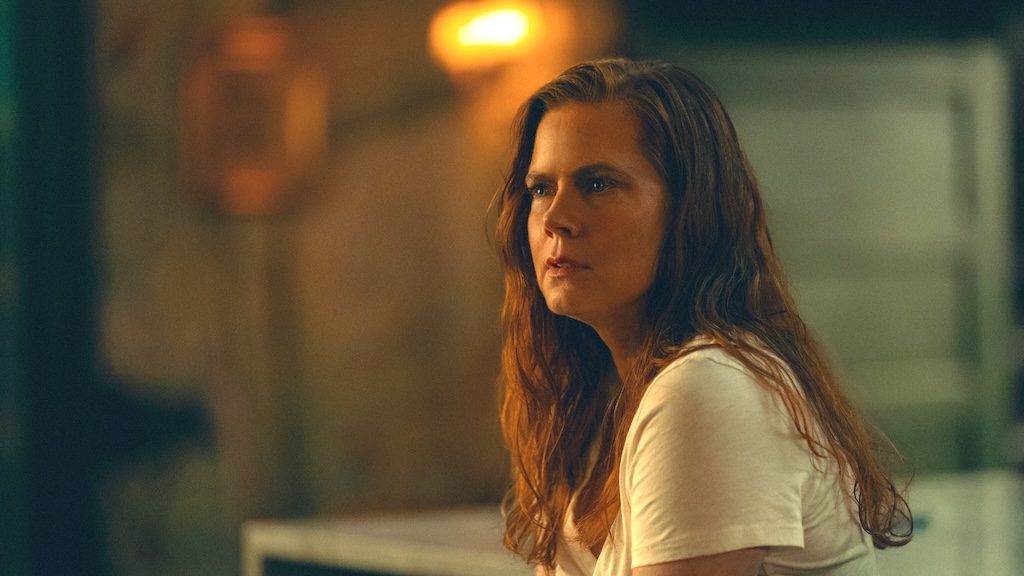
Anna Bowden (Amy Adams) Photo courtesy of Apple TV
Patrick Wilson plays Tom Bowden, an ex-Marine and successful attorney whose professional life is deeply entwined with Anna’s since he was the prosecuting attorney on the Cady case. This shared history surrounding Cady’s conviction becomes a defining element of their marriage. “When Max Cady comes back, it forces us to examine ourselves and our marriage,” recalls Wilson.
Nick Antosca captured the spirit of injustice from the original story and calibrated the psychological tension with a build, sustain, and release plot.
The tension was further amplified by infusing modern day technology into Cape Fear to give it a contemporary feel. There are drones, phones, and AI to escalate the family drama.
Tapping into the children’s perspectives allows the story to sprout story tendrils beyond Tom and Anna’s marriage. Lily Collias plays Natalie Bowden, the Bowdens’ mature and strong-willed teenage daughter. Joe Anders portrays the artistic and quiet son, Zach, a character unique to the series, whose experience offers a different entry point.
The series allows Zach’s internal life to slowly unfold alongside the larger conflict affecting the family, reflecting how instability can register quietly and directly, shaping behavior long before it is fully understood.
As Max Cady re-enters the family’s life, the impact on the Bowden children becomes increasingly central. Adams describes Max’s strategy for disrupting their peaceful existence as deeply intentional. “Max understands that the way to punish Anna is to punish her family,” she states. “The only thing she wanted was stability and security for herself and her family. To infiltrate the family the way Max does, pulls any sense of security away from Anna.”
For Adams, that intrusion forces long-buried truths to bubble to the surface. “It starts to reveal some of the secrets Anna’s been keeping from her children,” she notes. “In the end, she believes it will make them closer because they’ve all been honest with one another, but it’s a painful journey to that honesty.”
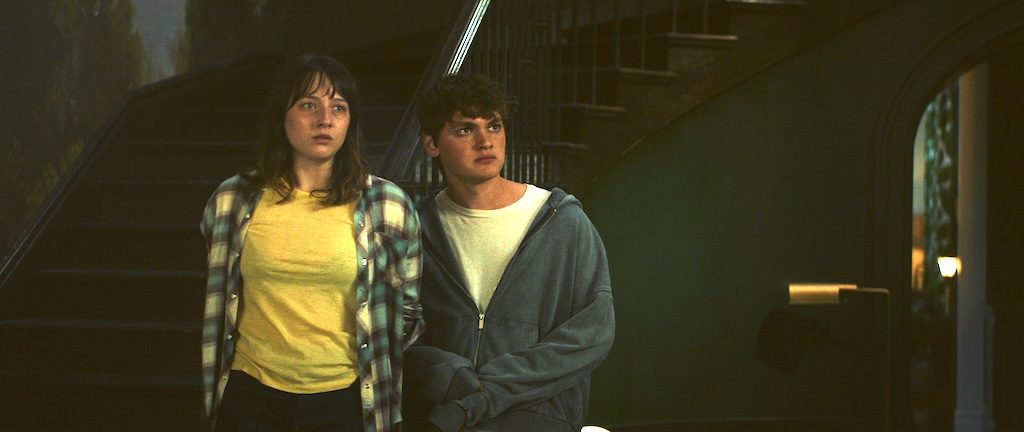
Natalie Bowden (Lilly Collias) & Zach Bowden (Joe Anders) Photo courtesy of Apple TV
More: Martin Scorsese Meditates on Age and Regret in “The Irishman”
Reimagining Max Cody
As Javier Bardem dove into portraying the remarkable complexity of Max Cady, he had an acute awareness of the character’s legacy, but he also knew that he wanted to avoid any imitation.
“It is far from my wish to try to match what Robert De Niro did,” Bardem reflects. Instead, the actor and executive producer focused on grounding Max’s actions into a specific sense of grievance. “This is the story of a man who’s been in prison for a crime that we have to figure out if he did or did not commit. When he comes out, he feels he was betrayed by his lawyer, and he wants revenge,” Bardem states.
For Bardem, Max’s rage is not sudden or explosive, but compressed, born of years of betrayal and grievance. “The roots are very deep,” he states. “They go way beyond being in prison — back to his childhood, to the suffering that shaped him.”
That internal rhythm defines how Max moves through the world. “I don’t see him as someone who is tense or constricted,” Bardem declares. “There’s no rush. There’s no urgency. He will take his time — and that’s what makes him dangerous. He lets fear and insecurity grow in others.”
That sense of patience informed both Bardem’s performance and the character’s physical design. Early conversations with creator Nick Antosca led to an animal reference that became central to Max’s presence.
“We talked about the Florida panther,” Bardem notes. “The way it moves, the way it waits. It’s beautiful, attractive — and then, in less than a second, it can kill you. Max is constant. He doesn’t push. He lets nature do the work.”
Bardem’s Max Cady is as seductive as he is menacing. He’s charismatic and hypnotic. He wears his vulnerability on his sleeve right until he unleashes his devastation on the Bowdens.
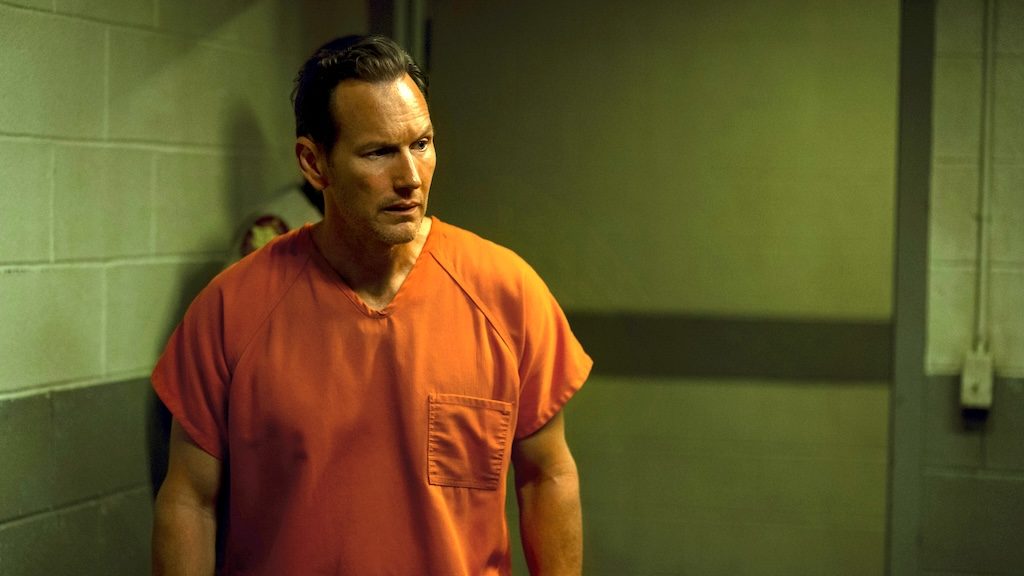
Tom Bowden (Patrick Wilson) Photo courtesy of Apple TV
More: Martin Scorsese On Making “Killers Of The Flower Moon”
Who Is the Crystal Cady?
Crytal Cady (Juliette Lewis) recurs as a mysterious masked woman whose role unfolds gradually, her significance felt long before it is fully understood. And she may hold the key to the truth. Eventually, she’s unveiled as Max’s half sister.
Lewis describes the series as one that leans fully into moral complexity. “They were very intent on making the family messy,” she mentions. “And they’ve done that times 10. Now you have two kids, everybody has secrets, everybody has layers, and nothing is what it seems.”
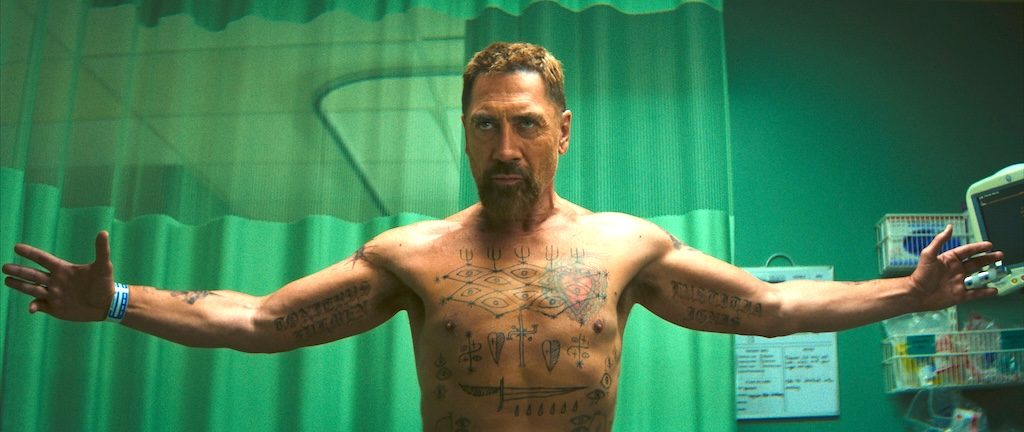
Max’s Tattoos – A Biography Etched On His Body
A visual representation of Max’s inner life is manifested via his extraordinary tattoos – much like cave paintings. Executive producer and director Amanda Marsalis says the tattoos were specifically designed to advance the narrative from the outset.
Marsalis worked closely with tattoo artist Scott Campbell to ground the designs in Max’s lived experience. “We were looking at a lot of references for prison tattoos and thinking about the time Max spent incarcerated, as well as his religious conversion in prison,” she explains.
Raised within Christianity in both Spain and the United States, Max later turns to Santería while in prison, adopting symbols he believes will help him project fear and power. Early tattoo imagery draws from Christian iconography, including a skull resembling Christ crowned with thorns, later defaced as Max symbolically rejects that faith.
Some of Max’s tattoos also reflect his formative trauma. Two dogs reference his father, who bred dogs, and Max’s own childhood abuse. One dog represents his father, the other his sister — marked with words connected to memory — reminders of the people who harmed him most. Still other markings honor his wife and unborn child, symbols of love that predate his imprisonment.
“What you don’t see at first are the tattoos on his chest and back,” Bardem shares. “They’re about eyes — about opening the eyes to justice, to truth.” For Bardem, those unseen markings define Max’s psychology. “He feels he’s been robbed of his past,” he notes. “He’s a man with a mission, and he’s committed to it until the end.”
Antosca says he can’t envision anyone else carrying the legacy of Robert Mitchum and Robert De Niro in the way that Bardem has done in his series. “The first time I saw him in the tattoos, the styling, the hair, I knew he had done something really special,” he reflects.
Max Cady (Javier Bardem) Photo courtesy of Apple TV
The Shape Of Fear
While this adaptation of Cape Fear converses with a well-known cinematic lineage, the series approaches that legacy more through atmosphere rather than replication. Nick Antosca describes the films as “modern myths of an archetypal family facing a primal threat,” noting that each version of Cape Fear embodies “the atmosphere and the fears of its time.”
For Antosca, honoring the legacy of the 1991 film while pushing the story forward was essential. “Fans of the 1991 film can look forward to that same visceral intensity and psychological terror that define Scorsese’s masterpiece,” he points out. “At the same time, fans of the film may be surprised by some of the changes.”
“This is very much a reimagining — honoring the DNA of what made the movie so powerful while taking the story in directions that feel urgent and resonant for today’s audience,” the screenwriter concludes.

Join the Discussion!

Browse our Videos for Sale
[woocommerce_products_carousel_all_in_one template="compact.css" all_items="88" show_only="id" products="" ordering="random" categories="115" tags="" show_title="false" show_description="false" allow_shortcodes="false" show_price="false" show_category="false" show_tags="false" show_add_to_cart_button="false" show_more_button="false" show_more_items_button="false" show_featured_image="true" image_source="thumbnail" image_height="100" image_width="100" items_to_show_mobiles="3" items_to_show_tablets="6" items_to_show="6" slide_by="1" margin="0" loop="true" stop_on_hover="true" auto_play="true" auto_play_timeout="1200" auto_play_speed="1600" nav="false" nav_speed="800" dots="false" dots_speed="800" lazy_load="false" mouse_drag="true" mouse_wheel="true" touch_drag="true" easing="linear" auto_height="true"]






You must be logged in to post a comment Login