
Creative Screenwriting Screenplay Competition Winners Discuss Their Scripts

The Grand Prize Winners of the Creative Screenwriting Screenplay Competition receive a profile piece to help them promote their projects. Take a look at the most recent winners:
The Rag Princess – Leif Eric “Ellie Jay”
Creative Screenwriting Animation Competition
The Rag Princess is a gothic fantasy-horror combining the creepy charm of Coraline with the orphan-tragedy of A Series of Unfortunate Events.
Misfortune unites six girls at a gloomy 1930s orphanage where girls become dolls after dark. Their lives are linked to their dolls; a broken doll at midnight means a broken child at dawn, and a destroyed doll is fatal. When a bully blackmails twelve-year-old Anna over her forbidden love with another girl, an accident lands Anna’s doll in an incinerator. She must team up with her worst enemy to escape the fire, navigate a labyrinth of deadly toys and return to the girl she loves—before someone wakes up dead.
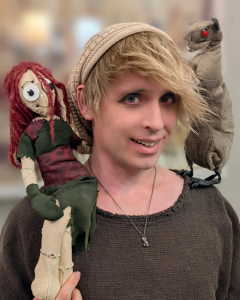
Leif Eric “Ellie Jay”
What was so compelling about this project that showcases your interests and writing voice?
I’ve always been obsessed with the intersection of cute and creepy, specifically that uncanny gothic realm where meek girls in patched dresses face high-stakes horror. Outside of classics like Coraline, there aren’t enough doll-centric children’s dark fantasies being made. I wanted to write the definitive story in that space.
The Rag Princess is the most personal story I’ve ever written, featuring timid ragamuffins, broken toys, an innocent romance between two girls, characters pushed to their literal breaking points, and a shadowy setting lit at the edges by hope. At its core, it’s about a shy young girl who doggedly sticks to her optimism against an uncaring world, literally tearing herself apart to unite a group of mistrustful orphans into a loving family.
Because of my background in stop-motion animation, I structured the visual storytelling to allow the use of real dolls and practical animation to bring this story to life. Designed to haunt and inspire, and I have written this story as a screenplay and a novel, both of which I’m shopping around to interested parties.
How does your project fit into the marketplace in terms of similar projects?
The Rag Princess fills a proven gap in the current children’s dark fantasy market. LAIKA’s 15th-anniversary re-release of Coraline in 2024 pulled in over $53 million, outperforming new releases even as a 15-year-old stop-motion film! Audiences are starved for unique stop-motion films and creepy doll stories, yet no new projects have entered that arena.
The Rag Princess shares the dismal, gothic charm of A Series of Unfortunate Events, a property adapted into both a feature film and hit streaming series, proving the need for more IP in this sphere
“But,” you say, “Coraline and A Series of Unfortunate Events both started as books!” The Rag Princess has that covered, as I have also written a children’s novel-version of this story, and it has now started to garner its own interest.
The Rag Princess fills the same space as classic tales that never lose appeal. It takes inspiration from the tragic orphans and brutal rivalries of A Little Princess, the sequestered sick child of A Secret Garden, and the horrifying Rat King and tin soldiers of The Nutcracker.
While firmly kid-friendly, The Rag Princess borrows elements from more mature horrors. It features the high-stakes fairytale maze of Pan’s Labyrinth and a sanitized body-horror mechanic reminiscent of A Nightmare on Elm Street, where injuries sustained as dolls manifests on their human bodies when they wake. This ensures every choice in the doll world carries palpable, real-world stakes.
How would you like to see this project developed?
I envision The Rag Princess as a groundbreaking hybrid of stop-motion and live-action. The daytime orphanage sequences would be shot in live-action with real actors, while the night realm seamlessly transitions into stop-motion, using physical dolls moving through the same sets. Seeing the actual dolls come to life as stop-motion creates a sense of true magic that would captivate both young and old viewers.
Partnering with a studio like LAIKA or ShadowMachine to execute the practical animation would be a dream come true. And of course, I would be fine doing the film as completely stop-motion.
Beyond the screen, this project is built for cross-platform expansion. I originally developed the story as a video game, even creating a prototype where you play as the Rag Princess, sewing doll-enemies’ body parts to environmental objects before pulling the thread tight to tear them apart. The video game DNA still exists in the screenplay and novel. Each sequence focuses on a central “boss” character whose specific doll and powers mirror her inner damage. Anna uses her determined optimism to repair each girl and bring them to her side, uniting the orphans into a family by the end.
The development of The Rag Princess even includes the existence of a legendary lost film. Over sixteen years ago, I hand-crafted a stop-motion animation, using a real Rag Princess doll sewn by my sister Valkyrie. I painstakingly shot the epic fight with the Rat King frame-by-frame on 16mm film. In a cruel twist of fate, as soon as the film left my hands for processing, it was mysteriously lost.
To this day it has never been found… but the vision survived!
Do you have a dream cast and director?
Henry Selick is the absolute dream director. Obviously he has the whimsigoth aesthetic down as the director of Coraline and Nightmare Before Christmas. He even has experience mixing live-action with stop-motion as the director of James and the Giant Peach and the experimental Monkeybone.
If not Selick, then obviously Guillermo del Toro. He’s shown he can handle stop-motion with Guillermo del Toro’s Pinocchio, and would be awesome for directing the live-action sequences having worked so well with the child actor in Pan’s Labyrinth.
Another great choice would be Travis Knight, director of stop-motions like Wildwood and Kubo.
It’s hard to name a dream cast when most characters are children. Anyone I mention might age out by the time production begins.
As the project has lived in my mind for a long time, I can mention my dream cast of years passed.
Anna: A young Jodelle Ferland (Silent Hill) or Mackenzie Foy (The Nutcracker and the Four Realms) could have embodied Anna’s rare mix of vulnerability and determination.
Piper: A young Thomasin McKenzie (Leave No Trace) could have played the fragile sick girl who holds Anna’s heart.
Rachel: Isabelle Fuhrman (Orphan) could have played the cruel antagonist, as she clearly has experience playing evil orphans, but she would have needed a blonde wig.
Nowadays, Jodelle Ferland or Isabelle Fuhrman might be about the right age to play the 32-year-old harsh matron Mrs. Dahl. And Thomasin McKenzie or Mackenzie Foy could play the kind-hearted 18-year-old nurse Clarinda Grace.
Bio:
I’m Leif Eric Johnson and I sometimes write under my pen name Ellie Jay. I’m a non-binary professional writer with 15 years of experience spinning creepy, fantastical tales across screen, video games, comics and books. Notably, I worked with Sam Raimi, participating in projects like Ash vs the Evil Dead and The Grudge. I have written for award-winning game series such as Life is Strange and The Walking Dead. I’m no stranger to fantasy as I’ve written for Wizards of the Coast’s D&D settings of Forgotten Realms, Ravenloft and Dragonlance.
I live in an uncanny valley where adorable meets scary, dolls come to life and darkness is lit by a bit of hope.
Incarnations – Albert M. Chan
Creative Screenwriting Feature Screenplay Competition
My sci-fi drama feature Incarnations follows Dr. Thomas Hunter, a brilliant Ivy League biologist whose four-year-old son is killed in a mass shooting. Unable to come to terms with his loss, Thomas becomes obsessed with a mysterious epigenetic marker that forms a unique pattern in each person — a pattern that appears to reemerge in a newborn after that person dies. Suspecting he may have discovered scientific evidence of reincarnation, he journeys to Tibet to test his theory by comparing the newly recognized Dalai Lama’s pattern with that of his predecessor.

Albert M. Chan
What begins as a scientific investigation becomes a desperate quest to find his own son’s reincarnation. Along the way, Thomas risks his career, his marriage, and everything he once believed about life and death.
What was so compelling about this project that showcases your interests and writing voice?
I began writing Incarnations when my own son was four years old. I wanted to explore how far a father might go to reunite with a child he’s lost, even if it meant questioning everything he believed about the world.
I grew up Catholic and went on to earn a Ph.D. in Electrical Engineering from MIT, but somehow I also became an actor and filmmaker. I’ve always been fascinated by stories that bring science and spirituality together, particularly when they explore questions that science can’t yet answer.
With Incarnations, I wanted to convey the excitement and creativity of authentic scientific discovery while telling a deeply personal story about grief, love, and parenthood. Thomas is convinced that if he can understand death, he can somehow undo his loss. But even when he finds the answers he’s been searching for, they don’t necessarily bring him peace.
That tension between scientific certainty and the messiness of being human is what interests me most as a storyteller.
How does your project fit into the marketplace in terms of similar projects?
I describe Incarnations as Arrival meets I Origins. Like Arrival, it uses an ambitious science-fiction premise to tell an intimate story about love and loss. I Origins is a particularly close comparison in its exploration of scientific evidence for reincarnation and the intersection of science and spirituality.
I’m also drawn to films like Contact and The Fountain, which tackle big existential questions while remaining grounded in their characters’ emotional journeys.
What distinguishes Incarnations is that its speculative premise draws on the real science of epigenetics, and Thomas investigates his extraordinary discovery using authentic scientific methods rather than futuristic technology. It’s an intellectually engaging mystery that takes audiences from an American research laboratory to the monasteries of Tibet and a small village in France, but its emotional center is a father struggling to come to terms with the death of his son.
I see it as a high-concept, emotionally grounded science-fiction drama with the potential to work as both a prestige film and an accessible, thought-provoking genre feature
How would you like to see this project developed?
I’d love to see Incarnations developed into a feature film with a director and producing team who share my enthusiasm for both the science-fiction premise and the emotional story underneath it.
Authenticity is particularly important to me. My husband, Dr. Richard Possemato, is a cancer biologist at NYU Grossman School of Medicine and has served as the screenplay’s scientific adviser, helping me ensure that the laboratory research, scientific reasoning, and interactions between academics feel realistic. I want audiences to experience the creativity, perseverance, and collaboration involved in scientific research without relying on elaborate visual effects.
Tibet is also an essential part of the story, both visually and spiritually. Given the practical and political challenges of filming there, I’d love to explore alternative locations, as productions like Seven Years in Tibet and Kundun have done, while collaborating closely with Tibetan actors, cultural advisers, and religious advisers. The contrast between Thomas’s scientific world and Tibet’s extraordinary landscapes and spiritual traditions offers tremendous cinematic possibilities.
Ultimately, I envision a visually compelling film that engages audiences intellectually but stays with them emotionally. Beneath all the scientific and spiritual questions, it’s a story about a father learning that finding answers isn’t necessarily the same as finding peace.
Do you have a dream cast and director?
Oscar Isaac would be wonderful as Thomas. He has a remarkable ability to combine intellectual intensity with emotional vulnerability, and I can imagine him portraying a loving father whose grief gradually consumes him.
Emily Blunt would bring warmth, strength, and determination to Sarah, Thomas’s wife, who channels her grief into helping other families while her husband becomes increasingly consumed by his research. Carrie Coon would be fantastic as Kris, a sharp, unconventional hospital janitor who challenges Thomas’s scientific worldview while confronting an unimaginable decision about her own son. I’d love to see the friction and unlikely friendship between Isaac and Coon.
For a director, Kogonada would be a dream choice. I admire the emotional sensitivity and visual artistry he brought to After Yang, particularly his use of an intimate science-fiction story to explore family, loss, and what it means to be human. I’d love to bring those qualities to Incarnations, combining the intimacy of Thomas’s personal journey with the suspense of his scientific investigation and the breathtaking landscapes of Tibet.
Bio:
Albert M. Chan is a NYC-based Chinese-Canadian screenwriter, filmmaker, and actor with a Ph.D. in Electrical Engineering from MIT. His acting credits include Patriots Day, 30 Rock, Gotham, and Law & Order: SVU. A Humanitas New Voices screenwriting fellow, he has written and directed films that have screened at more than 200 festivals across six continents. His work explores science, spirituality, identity, parenthood, and human connection.
Manangapa’ – Alexander Hoefner
Creative Screenwriting Short Screenplay Competition
The title of my short film is Manangapa’, which is a word from Kadazan, the eponymous language of my mother’s people group in Sabah, Malaysia. It means “those who call him father.” It’s a martial arts drama about a Kadazan family of four dealing with the arrival of British colonists in the 1840s, and the immediate aftermath of British “pacification” efforts.
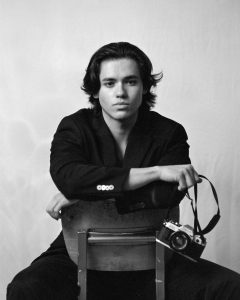
Alexander Hoefer
The story begins when it is already too late; the father of the family has become violent and erratic after lead poisoning has spread from a British musket wound to his neck. After he loses his temper during a family dinner, his wife, son, and daughter flee into the jungle — and there, they must decide whether to keep running, or to stay and fight him.
What was so compelling about this project that showcases your interests and writing voice?
This project began when I was seven years old, the first time I visited the Monsopiad Heritage Village in Sabah. It was then that I began to wish there were movies about my ancestors: the shamanic priestesses and (“head-taking warriors”) of North Borneo.
I wrote this short film about them. I am taking it further by partnering with Rita Lasimbang, CEO of the Kadazandusun Language Foundation, to translate all the dialogue into Kadazan, the now-endangered language that they all would have spoken in. Every line in the film will be delivered in Kadazan.
At its most fundamental and personal, however, all my work is an attempt to phrase the two most formative parts of my life: my move to America from Southeast Asia at age eleven, and my relationship with my mother. My interest in martial arts, film, and language stem from the former. My interest in action and in family-driven stories come from the latter.
With this project, I am trying to marry the mediums I used to make sense of myself in adolescence with a mission for cultural preservation that I’ve found in adulthood.
How does your project fit into the marketplace in terms of similar projects?
Films like The VVitch, The Northman and Embrace of the Serpent have proven there is an audience for culturally immersive historical societies. I think Manangapa’, because of its cultural specificity, has clear festival and artistic potential, and my action/folk horror approach means that it can also be positioned to reach elevated-genre audiences.
My hope is that the strength of its relationship drama will distinguish it within those genre and festival markets, to encourage discussion even beyond its historical setting.
How would you like to see this project developed?
Manangapa’ is a proof of concept short for a larger feature that I am now — as always — rewriting. I am deep into preproduction for this short, which we are now scheduled to shoot in Sabah in January, 2027.
After completing the short, my hope for the feature is to partner with an independent production company looking for up-and-coming global talent and films that target an international genre market. I’m thinking particularly of XYZ Films and the success they had with The Raid, their Indonesian martial arts duology.
Do you have a dream cast and director?
My dream director for this script is, well, myself. And I’m lucky enough to have found my dream cast through virtual auditions I held over the summer! This October, I’m going back to Sabah to rehearse scenes with them for the first time.
Bio:
Alexander Hoefer was born in Singapore to an American father and a mother from the indigenous Kadazan people of Sabah, Malaysia.
After moving to New York City in 2023, he began creating video content for fashion brands like Dior, Calvin Klein, and Adidas. He is currently a go-to video editor for various entities in fashion media, and he is in preproduction for his short film “Manangapa’. He is also the recipient of the University of Georgia’s 2023 Virginia Rucker Walter Poetry Prize, the 2023 Digital Humanities Prize, and the 2022 Franklin College Spark Fellowship in Creative Writing.
Hacienda del Sol – Yvonne Condes
Hacienda del Sol, a 1-hour historical drama, and an epic, multigenerational story set in 1899 about a family of women who must make their way in Los Angeles, a corrupt, chaotic city bursting with possibilities.

Yvonne Condes
The story begins the night 34-year-old Bernarda de la Torre and her daughters run away from the only home they’ve ever known in Mexico and stow away on a steam train headed for Los Angeles. When steely Bernarda arrives with her daughters, she looks up an old school friend, Julia, who she believes owes her a favor. The girl she once knew has evolved into the formidable Doña Julia, the most powerful woman in California and the matriarch of Hacienda del Sol, a massive hotel where the Western United States’ elite go to make deals and be seen.
Bernarda thrusts herself into Doña Julia’s world of political intrigue and local machinations, soon becoming her Lieutenant in charge of all the back-of-the-house dirty work. Bernarda quickly realizes this is her calling.
Meanwhile, her daughters discover the city. Commanding, 18-year-old Alicia forms a dangerous relationship with the cruel Sheriff’s manipulative wife. Dreamy, middle sister, Imelda, 17, who is over being poor, sets out to find the perfect rich husband, while wiry 14-year-old Mari makes a split-second decision to pass as white, changing her life forever.
Throughout the series, we’ll witness history – from suffrage to world wars to the civil rights movement – through these women’s eyes, similar to The Gilded Age and East of Eden. We’ll also experience organized crime, passionate affairs, and betrayal that could tear the family apart.
What was so compelling about this project that showcases your interests and writing voice?
The idea for Hacienda del Sol sparked when I began doing research for my work as a freelance journalist and as a contributing editor to the social media project Picturing Mexican America. I learned about fascinating Latina, Black, and Indigenous women who were vital to the formation of Los Angeles, but whose voices were drowned out of L.A. history by early historians looking for a white male narrative.
I discovered people like Maria López de Lowther, the little-known Mexican American woman who gave speeches in Spanish hoping to sway Spanish-speaking men to vote for California suffrage in 1911. She is credited with tipping the scale to get suffrage passed in the state that same year. If that weren’t enough, she was also a decorated war hero, the first Latina to teach at what is now UCLA, and the instructor L.A. schools brought in to teach teachers how to pronounce Los Angeles. I can name 10 men with buildings named after them from UCLA to Downtown Los Angeles who are not half as interesting as María.
The more I learned, the more curious I became about my own family history, so I started interviewing relatives and doing genealogical research. The characters in Hacienda del Sol are inspired by the women in my family who did not have the power or resources to live the lives they dreamed of but still had incredible stories to tell. Like my dad’s grandmother, who sewed money into her husband’s coat so he could bribe his captors to get out of a public execution during the Mexican Revolution. And my mom’s grandmother, who fought off three men kidnapping her daughter with only a broom and her rage.
These smart, courageous, and incredibly interesting women from history and my own life have given me so much. Even though I made up Doña Julia, Bernarda, and her daughters, I’m so in love with their characters that I’m writing a novel based on Hacienda del Sol.
How would you like to see this project developed?
I would love for Hacienda del Sol to be an ongoing series that follows the family, Doña Julia, and the rest of the characters through the dramatic expansion of Los Angeles. Its population exploded thanks to the oil boom, Hollywood studios, and organized crime, and it has always been at the forefront of culture, fashion, and entertainment. There’s no end to the drama that could be mined from Southern California history.
One note I’ve gotten on Hacienda del Sol is how expensive it would be to make. There are ways around that. For example, East of Eden’s 1900 Salinas, California was filmed in a historically preserved town in New Zealand to keep costs down. I believe Hacienda could be filmed in Los Angeles by working with the city to film in historic downtown, city-owned buildings like Pico House, a former grand hotel, and Sepulveda House, a 22-room Victorian family home that is now a museum.
Do you have a dream cast and director?
My dream director is Eva Longoria. I see Andor’s Adria Arjona as Bernarda and Scream’s Melissa Barrera as Doña Julia. For the older sisters, I think Isabela Merced from The Last of Us would be an amazing Alicia, and Inde Navarrette would kill it as the dreamy and conniving Imelda. Last but not least, there is a hot priest character that I would absolutely love to be played by Leo Woodall from White Lotus and One Day.
Bio: Yvonne Condes is a Mexican American screenwriter and freelance journalist based in Los Angeles. Originally from Tucson, Arizona, her writing life started in the Midwest as a small-town newspaper reporter. Her career eventually took her to California, where she transitioned from print to online journalism.
After moving to Los Angeles and having kids, she started a website about their adventures exploring the city, traveling to National Parks, and going to movie junkets. After more than a decade as an OG mommy blogger, she sold her interest in the award-winning website she co-created to focus on screenwriting and freelance journalism.
As a freelance writer, her news stories and essays have appeared in The Washington Post, Los Angeles Times, and HuffPost. Her screenwriting earned her spots in The Writers Lab 2024 and CineStory 2025, and she was the Grand Prize of the Creative Screenwriter Pilot Screenplay Competition.

Join the Discussion!



Browse our Videos for Sale
[woocommerce_products_carousel_all_in_one template="compact.css" all_items="88" show_only="id" products="" ordering="random" categories="115" tags="" show_title="false" show_description="false" allow_shortcodes="false" show_price="false" show_category="false" show_tags="false" show_add_to_cart_button="false" show_more_button="false" show_more_items_button="false" show_featured_image="true" image_source="thumbnail" image_height="100" image_width="100" items_to_show_mobiles="3" items_to_show_tablets="6" items_to_show="6" slide_by="1" margin="0" loop="true" stop_on_hover="true" auto_play="true" auto_play_timeout="1200" auto_play_speed="1600" nav="false" nav_speed="800" dots="false" dots_speed="800" lazy_load="false" mouse_drag="true" mouse_wheel="true" touch_drag="true" easing="linear" auto_height="true"]







You must be logged in to post a comment Login