
How David Robert Mitchell Built ‘The End of Oak Street’: Writing Dinosaurs, Family Tension, and ’80s Dread

After a mysterious cosmic event rips the idyllic Oak Street from suburbia and transports their neighborhood from 1982 to someplace unknown filled with dinosaurs in their back yards, the Platt family soon discovers that their very survival depends on them sticking together as they navigate their unrecognizable surroundings and find a way back their old reality.
The End of Oak Street is written and directed by David Robert Mitchell (It Follows) and produced by J.J. Abrams with others. It’s got a “Dino” Jurassic Park meets Land Of The Lost vibe.
David Robert Mitchell dreamed of making a dinosaur movie as a kid. He read dinosaur books and watched dinosaur movies with his father who imagined becoming a paleontologist someday.
Together they watched many Ray Harryhausen films, considered the father of stop motion animation. His credits include The Valley of Gwangi (1969) — cowboys discovering an Allosaurus in Mexico. Mitchell caught the dinosaur bug early, but he wasn’t sure what his version of a dinosaur would look like.
A few years ago, David was taking a casual stroll through his neighborhood and passed a house and an alleyway. He imagined a dinosaur digging through the trash. This was the genesis of The End Of Oak Street.
“I just could see it. I stopped and I looked at this interesting tableau of this fantastical thing in this mundane place in a middle-class neighborhood. And I thought, I want to write something that feels like this. I want to make a movie that feels like this image in my mind,” Mitchell reflects.
The 80s were a seminal time for the youngster in terms of the film landscape.
“You had really strong character-based films that you connected with and cared about. To take that and put them into very dangerous and interesting situations, and have them find ways to navigate them, because you genuinely care, makes the spectacle more meaningful,” the filmmaker continues.
Underscoring The End Of Oak Street as a family drama of families in otherwordly distress was a further nod to the era.
“All the Platt family members have their own issues, their own struggles, and their own little secrets they are unable to share with each other. But when these people find themselves in a dangerous situation, with mortal stakes, it forces them to connect… or not,” teases Mitchell.
The 80s saw the rise of the Spielbreg Amblin family horror films that weren’t too scary and the whole family could watch without the kids having nightmares. They were big-hearted and entertaining. This was the feeling David Robert Mitchell sought to capture in his movie.
Related: David Robert Mitchell Interview ‘It Follows’
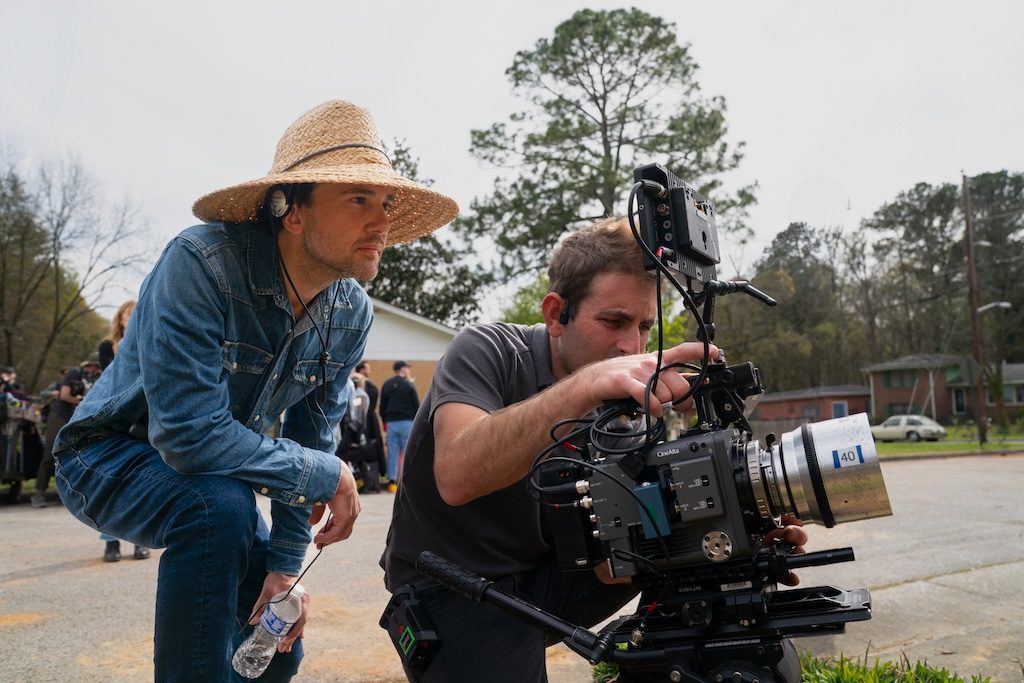
David Robert Mitchell (left) Photo by Daniel McFadden
Related: How Jurassic World: Rebirth Connects to the Original Jurassic Park Film
J.J. Abrams Enterts The End Of Oak Street
J.J. Abrams was immediately excited by this Twilight Zone concept about a family yanked out of their natural world. It was a project his company Bad Robot could easily get behind. He envisioned an indie/ studio hybrid movie. Abrams was further attracted to the classic horror tropes of dinosaurs rampaging a suburban neighborhood, but also their mundane activities such as lounging on the Platt’s lawn. This insane contrast elevates the human drama.
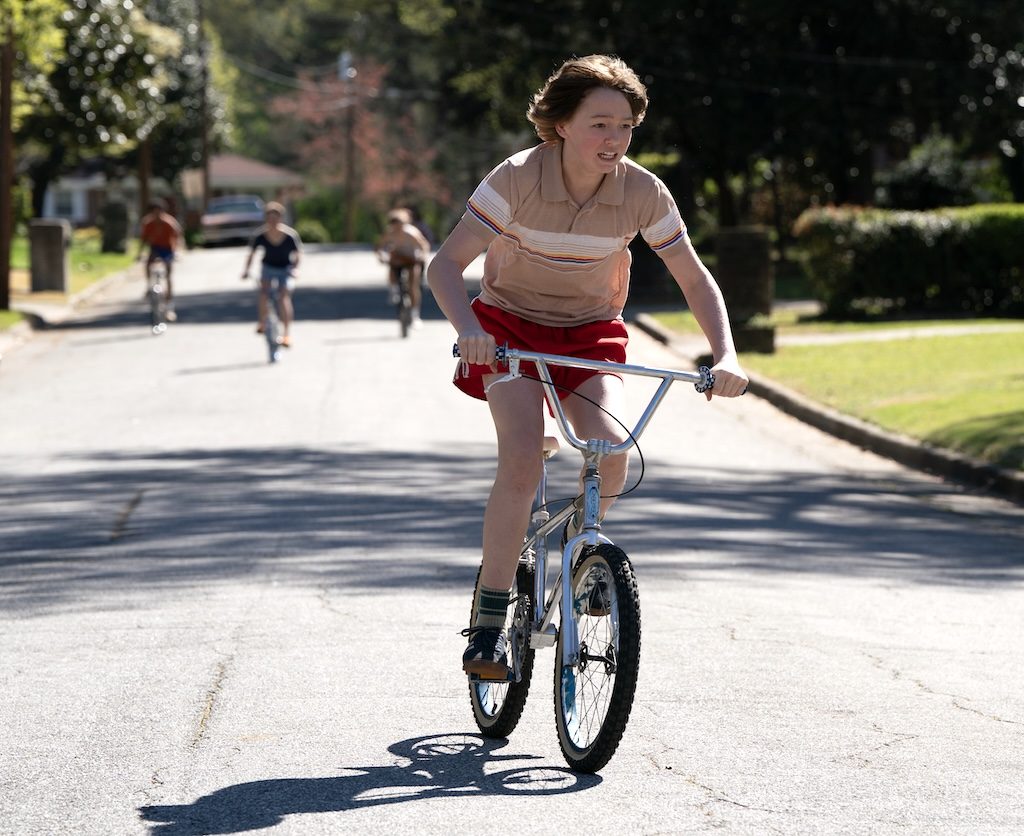
Brian Platt (Daniel Convery). Photo by Daniel McFadden/ Warner Bros. Pictures
Meet The Platt Family
There’s Denise (Anne Hathaway) the matriarch and part-time closet novelist, Greg (Ewan McGregor), the overly-optimistic patriarch who ruly believes everything will work out just swell, and siblings Brian (Christian Convery) and Audrey (Maisy Stella) who have their own adolescent concerns to deal with.
Part of the immersive experience was allowing the audience to become familiar with the day-to-day of the Platt family – including their playful canine, Starbuck. There is a genuine connection between them even when things aren’t always peaceful emotionally.
By heightening these emotional bonds in a sincere and real way, the audience can also vicariously experience their emotional absorption. Once these parameters were in place, the filmmaker could focus on the spectacle, the suspense, the action, and the danger of his action film. David Robert Mitchell wanted to make a big summer popcorn movie after all.
Denise Platt keeps the family together, although she is restless and questioning her identity and role in life. Her life has reached a plateau. Is this it? Is this all she deserves? Denise and husband Greg have their regular matrimonial arguments which test her patience. Greg simply dismisses her concerns as an over-reaction because everything will work out. Her resentment slowly accumulates as Greg remains oblivious to the rupture it’s causing in their marriage.
Denise yearns for a different life and imagines an escape – thoughts she articulates in her novel. But when the Platts enter a world of terrifying dinosaurs, she puts her writing career on hiatus. When the family experiences true danger, she summons up all her courage, strength, and pain, and channels them into saving her family – by stabbing a Titanoboa (look that one up).
Anne Hathaway best describes her character Denise as being based on Dorothy from The Wizard Of Oz – a naïve girl in a fantasy land that has some growing up to do and difficult choices to make.
Greg Platt is a loving, caring, husband and father. A hard-working American dad. He happily participates in the Oak Street sack races and community cook outs. He’s recently been laid off (and hides it from Denise) and tries to make ends meet by delivering pizzas. This further exacerbates Denise’s guilt for considering leaving.
These are real bittersweet, relatable problems in any family may face.
For all intents and purposes, the Platts live a normal, picture-perfect existence despite their issues. They’re a very normal family. They live in a small suburb. They eat dinner together. They run out of milk. They go to block parties. They take part in potato sack races.
Brian and Audrey are adolescents and have each other’s backs.
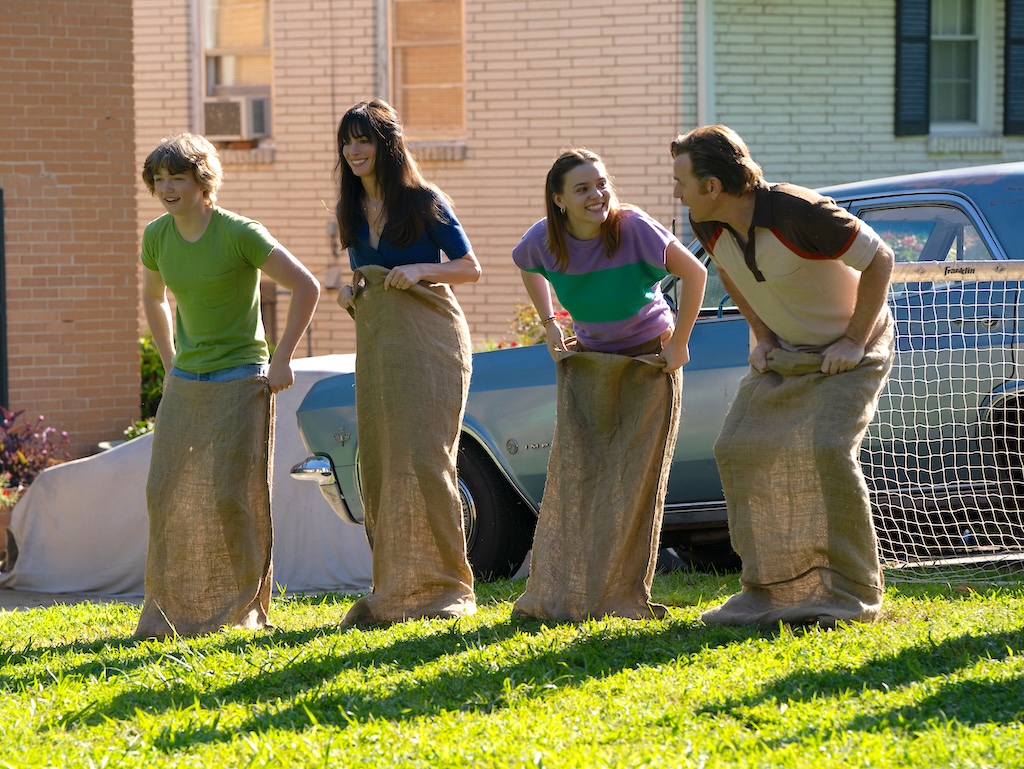
Brian Platt (Christian Convery), Denise Platt (Anne Hathaway), Audrey Platt (Maisy Stella) & Greg Platt (Ewan McGregor) Photo by Daniel McFadden/ Warner Bros. Pictures
The time/place wormhole that affects Oak Street isn’t extensively explained – but that’s the point. Everything in Oak Street is recognizable, familiar, but markedly different.
There is a veritable sense of claustrophobia in Oak Street. The Platts could leave, but where would they go? They are trapped at the end of Oak Street. Any attempt to escape could be met by a lurking dinosaur foraging for its next meal.
Related: David Koepp Interview: Unpacking “Jurassic World: Rebirth” & Beyond
Meet The Dinosaurs
The dinosauris began and evolved at the script stage. Some resembled terrifying xenomorphs,while others could almost be cute family pets that tip over the garbage cans when they’re hungry. They were deliberately drawn from various prehistoric periods.
“It was very much about what would be interesting in these particular moments, how can I build these set pieces with a combination of joy, humor, terror and suspense, and the suggestion that these animals are just living in this environment?,” recalls Mitchell. The team really played with that combination.
The wormhole was unique in that it partially transported the entire Platt neighborhood through time so they they remained in their familiar neighborhood. They lost power, their basement flooded, and Brian gets bullied.
Everything about the neighborhood had to feel familiar and grounded in naturalism – right down to kids riding bicycles; except for those pesky dinosaurs which elevated the story to give it a sense of fantastical realism.
Related: “An Amblin-esque Time Travel Family Adventure” Jonathan Tropper On ‘The Adam Project’

Join the Discussion!

Browse our Videos for Sale
[woocommerce_products_carousel_all_in_one template="compact.css" all_items="88" show_only="id" products="" ordering="random" categories="115" tags="" show_title="false" show_description="false" allow_shortcodes="false" show_price="false" show_category="false" show_tags="false" show_add_to_cart_button="false" show_more_button="false" show_more_items_button="false" show_featured_image="true" image_source="thumbnail" image_height="100" image_width="100" items_to_show_mobiles="3" items_to_show_tablets="6" items_to_show="6" slide_by="1" margin="0" loop="true" stop_on_hover="true" auto_play="true" auto_play_timeout="1200" auto_play_speed="1600" nav="false" nav_speed="800" dots="false" dots_speed="800" lazy_load="false" mouse_drag="true" mouse_wheel="true" touch_drag="true" easing="linear" auto_height="true"]






You must be logged in to post a comment Login