
Furious on Hulu: Elizabeth Meriwether’s Crime Thriller Series Explained

Created and executive produced by Emmy-nominee Elizabeth Meriwether (The Dropout, New Girl), Furious is a psychological crime drama series on Hulu that turns the classic law and order, cat and mouse serial killer template on its head as it bends the moral compass of law enforcement.
The show is loosely inspired by the cult-favorite 1987 movie Black Widow written by Ron Bass (who also serves as an executive producer on Furious), which originally starred Debra Winger as Alexandra, a Justice Department investigator pursuing Catharine, Theresa Russell’s lethal seductress character.
Meriwether repurposes this premise for new audiences into a female serial killer TV series, shifting the focus toward deep character psychology, shared trauma, and moral ambiguity rather than sheer greed.
Furious centers on Alice Black (Emmy Rossum), a determined FBI investigator, with a past, getting pulled into a high-stakes investigation surrounding a series of suspicious deaths. As Alice delves into the killer’s history, she becomes locked in a tense, intimate cat-and-mouse pursuit where the line separating justice from vengeance begins to blur.
The series also stars Lola Petticrew as Catherine and Scoot McNairy as Danny Kelly. Furious is a law enforcement show with tonal shades of Killing Eve, Mindhunter, and Dead to Me.
Related: Elizabeth Meriwether & Kim Rosenstock Talk ‘Dying For Sex’
Elizabeth shares her thoughts with Creative Screenwriting Magazine on creating the crime series.

Elizabeth Meriwether. Photo by Disney/ Hulu Frank Micelotta
Furious isn’t a remake of Black Widow. How did you base your TV series on it?
Furious is loosely based on the 1987 movie Black Widow
It’s a movie about a female serial killer Catharine Peterson and a female FBI agent Alexandra Barnes in a catand mouse dance. That was the genesis of the idea for the TV show. As I dug into it, it became clear that the female serial killer in Furious wasn’t going to be a straightforward black widow – somebody who marries a man and then kills him and takes his money.
We were going to go in a different direction of what her motivations were. So we needed a new title.
One of the characters in the show, Nora, who’s played by Quincy Tyler Bernstein, loves Greek mythology and talks a lot about it over the course of the show.
The idea of the Furies (the Greek goddesses of vengeance, justice and punishment), these three women, these Harpies (half bird, half humans) flying through the sky to enact vengeance on criminals stuck with me.
[Mythologically, both serve as agents of divine retribution, but the Furies focus on vengeance for moral crimes, whereas Harpies are associated with storm winds and sudden disappearances.]
I really love the idea of evoking that in the title because that myth of the Harpies and the Furies is replaced by a flawed justice system.
The theme of instinctive vengeance versus justice became a central theme in our show as well. What does that feel like? What does that mean? Is that fair? Is that right? In what ways is the justice system failing women? Is vengeance an answer?
Related: How Showrunner Elizabeth Meriwether on ‘The Dropout’
How does a female serial killer affect the genre?
I think only five percent of serial killers are women.
During the research for the show on female serial killers, they’re almost always victims of violence themselves, or they come from very violent backgrounds, and childhoods. That really stuck in my head.
It complicated the usual role of victim that you see a lot with such female characters on television. This bad thing happened to me, I’m a victim. And I’m going to present a story where I’m blameless, or where my healing makes sense. It’s easy to digest.
Catherine in Furious has been a victim of violence, and has made a different choice to become a monster herself. That’s a different take on the classic serial killer story. The show’s digging into women’s relationship with violence, both as victims and perpetrators. That feels sort of new.
Related: Liz Hannah & Patrick Macmanus Talk “The Girl From Plainville”
What additional research did you do for Furious?
I spoke with psychologists. I am a huge fan of crime thrillers. I have seen so many of them, but I’ve never written one. I didn’t want to base my ideas for the show on other crime thrillers.
I wanted to like go to the source and actually speak to law enforcement and social workers. We had three incredible female FBI agents who work in trafficking who kept working with us on the show as consultants.
I spoke to an NYPD homicide detective and to a woman who’d been trafficked. I spoke to an assistant District Attorney in Brooklyn, who primarily deals with domestic violence and actually wrote a book about it.
I was really fascinated by women who work in law enforcement, who know the system is flawed, but continue to work inside of that system, try to fix it, and find some form of justice for other women inside of it. This felt like a really interesting place to be.
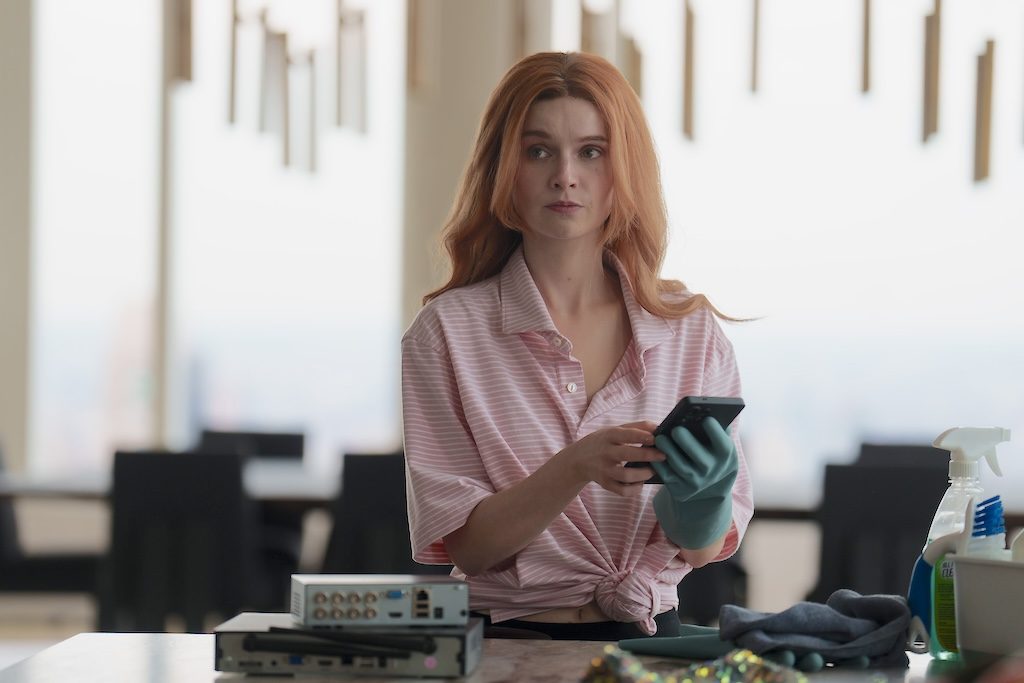
Catherine (Lola Petticrew) Photo by Disney/ Hulu/ Sarah Shatz
How did you juggle the line between vengeance and justice and bending the moral curve?
It’s hard to make sweeping statements about all law enforcement, because one of the things that I learned researching the show is that these are human beings trying to do their jobs in very broken systems.
We’re definitely in a time when there’s a lot of questions about law enforcement, the justice system, and whether or not it’s working for everybody.
When I get into the really big, sweeping systemic problems, I get a little overwhelmed. So it was important to me to focus on the actual characters in the show and tell their story.
There are twists, turns, and reveals. It’s a crime thriller. There are themes where you’re questioning the moral framework that we think that we live in.
I’m hoping that it’s an exciting show to watch, but then also starts conversations. I hope it’s a show that sticks with you and makes you think about your own feelings and your own reactions to what the characters are doing.
Discuss the relationship between Alice and Catherine.
Emmy’s character is a detective in the NYPD, and then, because of an abusive relationship that she had with another police officer, she decides to leave the NYPD and start again at the bottom in the FBI. And this murder case falls into her lap.
She starts working on it and unpacking it, and she starts to realize that this is a serial killer’s work. And that the serial killer is probably a woman. She starts to investigate and try to find that person.
And at the same time, we’re telling the story of Lola, who plays Catherine, the serial killer, who is on a mission. And in each episode, you learn more about why Catherine is doing what she’s doing. That was interesting for me from a writing perspective. This is not a whodunit, but why they did it.
We know who the killer is in the first five minutes of the series. What’s the tension in the show? What’s the mystery? What’s the thing driving you from episode to episode? So it became Catherine’s story.
Why did Catherine get to a place where she is able to kill multiple people? One of the interesting things that came from my research was what trauma does to your memory, and the way that memories, which are so important and crucial in court to build a case, are affected.
In real life, people don’t remember things in chronological order. They get dates, times and people and mixed up because they’re remembering a feeling or a sensory experience. I use that to create the mystery for Catherine where she herself doesn’t quite remember exactly what happened to her.
Her journey over the course of the show is about finding out for herself what happened. This felt like an interesting and different way to go. She’s not keeping evidence from the audience. She’s figuring it out in real time.
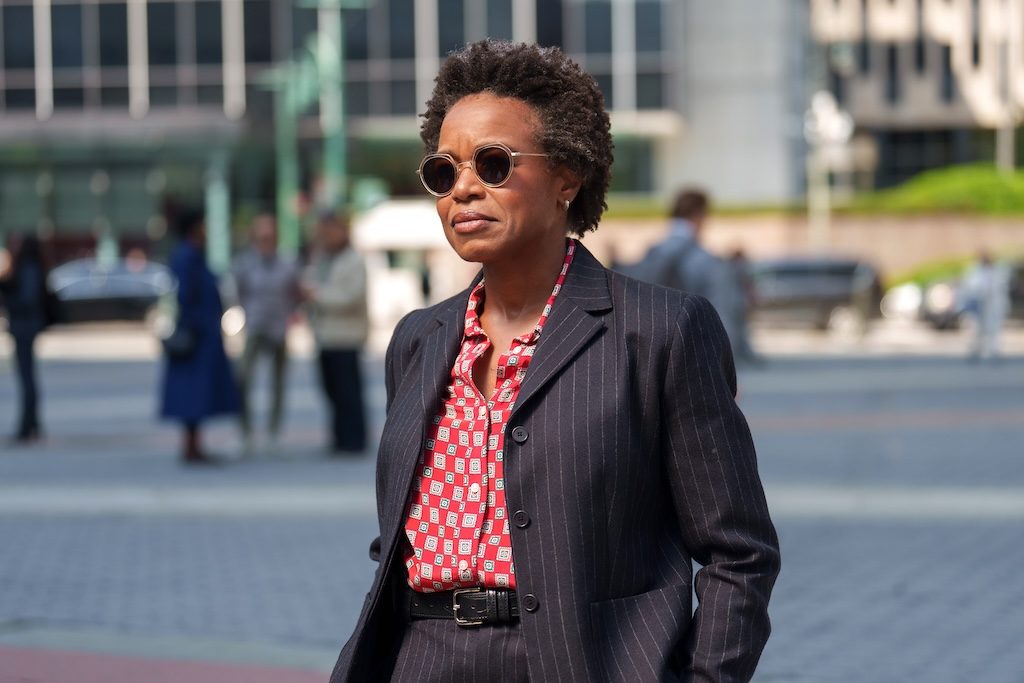
Nora (Quincy Tyler Bernstine) Photo by Disney/ Hulu Sarah Shatz.
How did you build audience empathy for Catherine?
I wanted people to feel for Catherine. I think there’s a really complicated, messy gray area where you can understand someone’s story, but still not excuse their behavior. You need to dig into what that story actually is, feel it, and understand it in order to understand what they’ve done.
We’re with that person all along, not watching them from a distance or feeling sorry for them.
I find myself going for these projects that have very weird tones. I like keeping the audience on their toes and not settling into one particular tone for the whole show.
That’s a great thing about doing eight episodes. You can go in to lot of different places. I think there are parts of the show that are quite funny. And then parts that are very dark. I think mixing it up like that gives the audience a second to catch their breath, and allows them to listen more to the darker parts because I think we instinctually don’t want to go to those dark places.
I think comedy helps relax you and allow you to kind of take in darker and more complicated things. It’s very human that people are absurd in many ways, even in very extreme situations. It’s part of our release.
What most impacted you as a screenwriter after writing Furious?
I definitely went into the show thinking I’ve watched so many crime thriller dramas that I’ll be able to write one. And then I ended up in a situation in the middle where thought, “Wow, this is really hard.”
It was really hard, but I love doing things that scare me. I love writing new things. I did learn a lot about how to put clues in and crafting one of these stories.
It’s such a skill. I now have an even deeper respect and love for all of the shows that I am a fan of. It’s tricky and I love it. I learned a lot and I hope I get to do it again.

Join the Discussion!



Browse our Videos for Sale
[woocommerce_products_carousel_all_in_one template="compact.css" all_items="88" show_only="id" products="" ordering="random" categories="115" tags="" show_title="false" show_description="false" allow_shortcodes="false" show_price="false" show_category="false" show_tags="false" show_add_to_cart_button="false" show_more_button="false" show_more_items_button="false" show_featured_image="true" image_source="thumbnail" image_height="100" image_width="100" items_to_show_mobiles="3" items_to_show_tablets="6" items_to_show="6" slide_by="1" margin="0" loop="true" stop_on_hover="true" auto_play="true" auto_play_timeout="1200" auto_play_speed="1600" nav="false" nav_speed="800" dots="false" dots_speed="800" lazy_load="false" mouse_drag="true" mouse_wheel="true" touch_drag="true" easing="linear" auto_height="true"]







You must be logged in to post a comment Login