
Screenwriter Liz Doran on Adapting Miles Franklin’s Novel ‘My Brilliant Career’ Into A Netflix Miniseries

My Brilliant Career is a sweeping Australian period drama adapted from Miles Franklin’s 1901 feminist novel, following the fiercely independent and fiery Sybylla Melvyn, a young woman navigating the harsh realities of rural 19th-century colonial Australia while daring to dream of a writing life beyond marriage, domesticity, and societal expectations.
The series explores themes of female ambition, class struggle, creative identity, and the cost of forging your own path in a world designed to silence you — making Franklin’s more than century-old story feel powerfully relevant today.
Liz Doran begins her discussion with Creative Screenwriting Magazine by clarifying that Miles Franklin’s full name was Stella Maria Sarah Miles Franklin. She wrote using a male pseudonym thinking it would boost book sales. The strategy worked.
What is a story set in 1901 rural Australia saying to contemporary global audiences?
What is really frustrating, in that it’s still relevant today, is that young women still don’t have the same choices as men.
Obviously, the choices that young women face today are not the same as in 1901, because there was clear discrimination against women and their only options were marriage, spinsterhood, governess or whatever. Young women today face a different kind of discrimination, such as in the workplace and career choices.
There’s the pressure about what kind of a woman you have to be. Are you going to be a career woman, a trad wife?
It’s interesting to me how many younger women watched the show and say, ‘This is really speaking to me.’ But even though the career choices for Sybilla (Phillipa Northeast) in the show are very clear – either you get married or you’re poor, she faces an uphill battle.
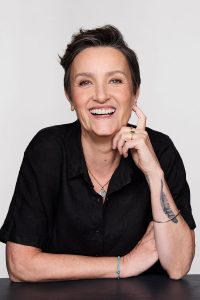
Liz Doran. Photo courtesy of imdb
What does the story My Brilliant Career mean to you?
When I was young, I saw the film version of My Brilliant Career directed by Gillian Armstrong and that was hugely influential to me. In that moment, at the end of the film where Sybylla declines Harry Beecham’s marriage proposal, I thought that maybe I could be a writer too. Maybe I could have a creative life?
I grew up in a boring suburban household where no-one was creative and the career expectations were to become a lawyer, a teacher, or something like that.
About four years ago, Jungle Entertainment called me and said, ‘We’re thinking of adapting My Brilliant Career.’ And I was like, ‘Oh, my God, do not speak to anyone else. That is something I would die to do because that’s such a formative text for me.’
Then I read the book. It still felt so fresh and so relevant to me. It’s such an Australian story.
Sybilla is really speaking to me and younger women that I’ve met. We pitched it to Netflix and they agreed to do it.
I’d written the pilot and we’d sketched out how we would do the rest of the series. I’d started creating some of those characters who were different from the book. We pitched it with the idea of adding indigenous characters and the Chinese-Australian story with Harry Beecham (Christopher Chung).
Halfway through the pitch, Que Minh Luu, who was the head of Netflix at the time in Australia, stopped us and bought it.
Tell us more about Sybilla and what she says to young women.
I think she absolutely is a feminist. And, I’m totally happy to use that term.
I think she’s unique in a sense that there’s a very ‘Australian-ness’ to her. There’s a rawness, forthrightness, naivety, or that country, unbuttoned character.
We’ve had some critics saying we’ve gone a bit too far, but that’s OK. We’re just getting the message out to the ladies. She’s an archetype of a character who does go against the grain. I think that the uniqueness is the specificity of the location and the situation.
Sybilla doesn’t actually have a “brilliant writing career.” What are your thoughts on this title?
Well, I don’t have that either. We then had a very long development period that was very difficult and not guaranteed.
The original title that Miles Franklin suggested to her publisher is, My Brilliant “Question Mark” Career. When the book got published in 1901, the English publisher took away the question mark because they thought that it wouldn’t sell as many copies.
What I’ve always loved this title, and I loved it literally from that first exposure to it.
It’s ironic, isn’t it? And that’s what’s so brilliant about the title, which is at the end, Sybilla chooses a completely unknowable and risky choice. She doesn’t make the safe choice. The safe choice is to marry Harry. He’s stable, he’s going to come back and get more money and she can be accepted into society.
She doesn’t have to face any questions of any of her choices, but she doesn’t do that. She chooses the dangerous, the difficult, and the unknown – and that’s what has the brilliance about it.
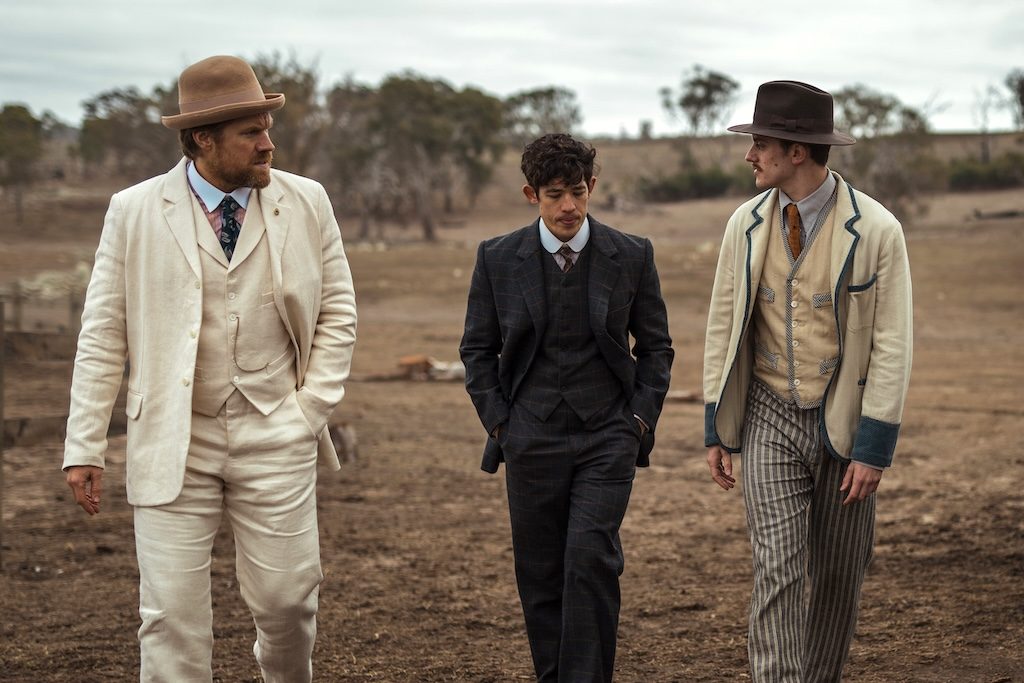
Julius Bossier (Alexander England), Harry Beecham (Christopher Chung) and Frank Hawden (Jake Dunn) Photo by Ian Routledge/ Netflix
Discuss Sybilla’s three potential husbands
I think Sybilla and Harry Beecham do love each other, but not in the traditional husband and wife sense.
Sybilla gets three really good husband offers in the new series. We’ve added two new ones, which was Everard Grey (Alex Fitzalan) and Frank Hawden (Jake Dunn). Those characters are in the book, but we elevated them quite a lot in this adaptation.
These are three really great options, but you still choose yourself and your unknown future.
Everard Grey gives her money and status but no love, and no chance of ever having love outside of that relationship.
It’s opening and reflecting her as a character because if all she wanted really was to be a writer, then Everard is actually the best choice. He could give her everything, but she’d be living a lie. She’s a deeply truthful character and also she is deeply romantic, so Everard was not a good choice for her.
Frank Hawden is very similar. He’s a great choice within the story, but I don’t think in the end, he truly is giving her the opportunity to have a creative life because once they get back to England, his family are going to have all sorts of expectations.
Harry Beecham is the biggest sacrifice because there is genuine love there. This person is saying that what they love about her are all her faults and her creative life.
We’re dealing with the actual reality of the period in that she’s modelled by her mother. This is 1901. There’s no contraception. What her life would have been is a wife and a mother and she would have been squeezing her creative life around that role. When she says no to Harry, that is the biggest heartbreak because she is genuinely in love with him.
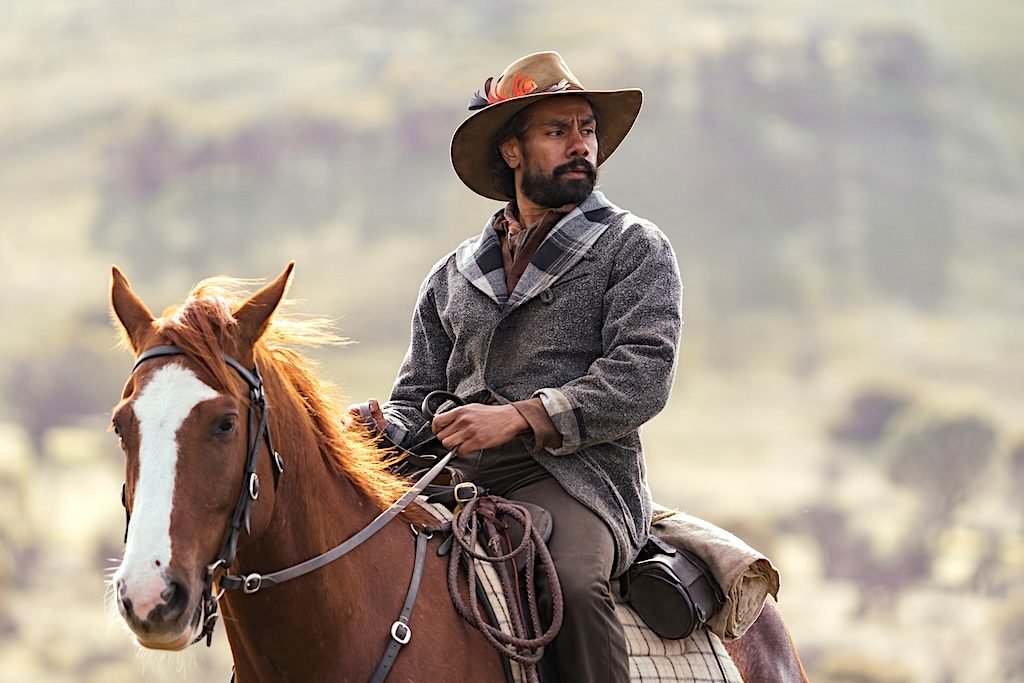
Charlie (Jarron Andy) Photo by Ian Routledge/ Netflix
What was your North Star while writing the series?
Every single episode is based around the choice between love and the career. That was it.
How do you hope male audiences will respond to such a female-focused story?
I’m hoping that the men will celebrate that it’s a woman’s story and enjoy that in the same way that women have been celebrating and enjoying men’s stories for millennia. The other thing is finding their vulnerability.
People have asked why make Harry Beecham half Chinese. The Harry in the book is a very boring representation of what it is to be a man. He’s tall, he’s handsome, he’s white, he’s rich. That’s really unattainable, and also a limited view of what a man should be.
By making him half Chinese, we give him a vulnerability. We give him a sense that he doesn’t have ultimate privilege in the world and I think that that’s representative of what most men are in the world.
Another character is Uncle Julius (Alexander England).
In the book, he’s a “confirmed bachelor.” When I read the book, I thought this character is obviously gay. He’s never had a girlfriend and he travels with his best friend. To bring that up as a representation of manhood in the story is a really positive thing for men
I’m going to mention one more character because it was really important to represent men in different, more interesting, more complex ways.
Charlie (Jarron Andy), the First Nations stockman who falls in love with Nell (Sherry-Lee Watson). It was really important for us to have a First Nations character who was a romantic lead and was a good man. He’s got vulnerability too and wasn’t in the novel.
He doesn’t know his mob. He doesn’t know his family. He’s basically from the stolen generation, and yet he is this guy who lives in the world with joy, goodness and with the capacity for love.
I’m hoping for the male viewers to follow Sybilla’s journey and connect with her as a character who is headstrong, strong-willed and does her own thing. But also that the men in the show represent a range of characters that they can connect to and that shows them a different way of being a man.

Join the Discussion!



Browse our Videos for Sale
[woocommerce_products_carousel_all_in_one template="compact.css" all_items="88" show_only="id" products="" ordering="random" categories="115" tags="" show_title="false" show_description="false" allow_shortcodes="false" show_price="false" show_category="false" show_tags="false" show_add_to_cart_button="false" show_more_button="false" show_more_items_button="false" show_featured_image="true" image_source="thumbnail" image_height="100" image_width="100" items_to_show_mobiles="3" items_to_show_tablets="6" items_to_show="6" slide_by="1" margin="0" loop="true" stop_on_hover="true" auto_play="true" auto_play_timeout="1200" auto_play_speed="1600" nav="false" nav_speed="800" dots="false" dots_speed="800" lazy_load="false" mouse_drag="true" mouse_wheel="true" touch_drag="true" easing="linear" auto_height="true"]







You must be logged in to post a comment Login