
A Screenwriter’s Guide to Gothic Horror Films & Television

Gothic storytelling has been around since the 18th century in literature, and more recently, films and television shows. The horror subgenre is distinct from other horror stories due its lucid aesthetic and complex thematic elements. It’s defined by atmosphere, decay, emotional depth, and the haunting lingering past.
Key Elements of Gothic Horror
In film and television, the gothic mode is characterized by:
* Prevailing stmosphere of dread, melancholy, or foreboding
* Deteriorating structures – mansions, prisons, hospital ruins, isolated spaces
* Psychological repression, partial memories, and fragmentation
* The intrusion — or suggestion — of the supernatural rather than monsters
* The persistence of a malevolent family curse or generational trauma
* The feeling of uncanniness or things not being quite right.
Another key hallmark of gothic horror is the interiority, ambiguity, and menacing tone. The main characters are dealing with unresolved emotions like guilt and shame linked to past transgressions which time hasn’t healed.
Here are some examples of the genre:
* The Others (2001) – A secluded mansion, religious paranoia, and maternal grief converge in a restrained, atmospheric ghost story.
* The Haunting of Hill House (2018) – A family drama structured around a sentient house and unresolved childhood trauma.
* The Haunting of Bly Manor (2020) – A romantic and melancholic ghost narrative steeped in memory and loss.
* The Woman in Black (2012) – A period ghost story featuring isolation, a cursed estate, and generational grief.
* The Woman in the Yard (2025) – A story of a grieving widow and mother’s conscience haunting her after her husband’s death..
In gothic horror, the supernatural is frequently morally ambiguous, and the house itself functions as an emotional vessel harboring secrets long thought buried.
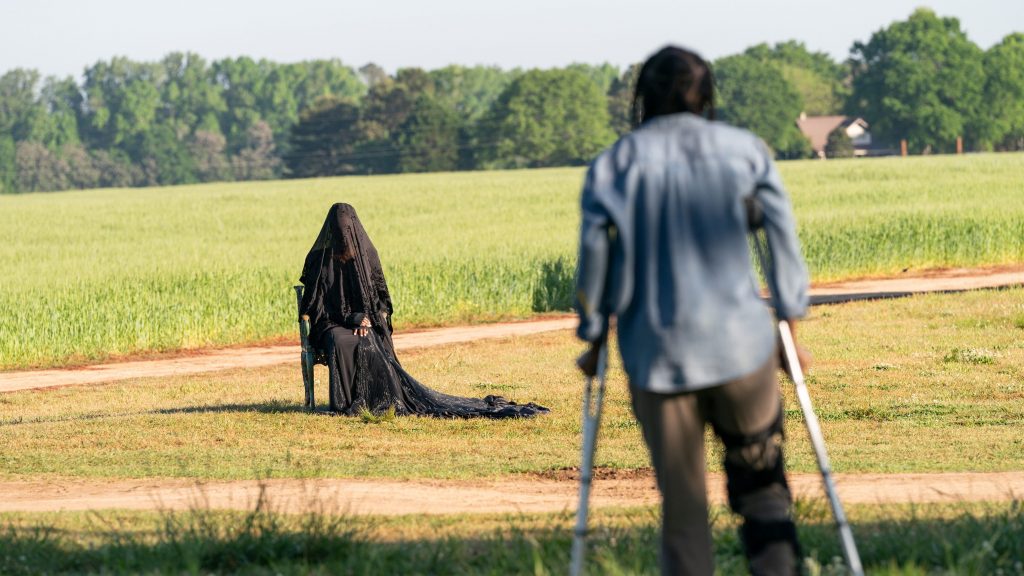
Ramona (Danielle Deadwyler) and The Woman (Okwui Okpokwasil) in The Woman In The Yard, Photo courtesy of Blumhouse Pictures
.
Gothic Romance
Gothic romance centers on passion within oppressive or degrading environments. Emotional intensity, secrecy, moral fracturing, luscious melodrama, and dangerous love often drive these narratives.
Key examples include:
* Crimson Peak (2015) – A deteriorating mansion, a mysterious aristocrat, and a heroine drawn into a love story entangled with inheritance and betrayal.
* Twilight (2008) – Though more contemporary YA show, its brooding antihero, forbidden love, and shadowy atmosphere reflect gothic romantic traditions.
* Penny Dreadful (2014) – Romantic longing intertwines with monsters and Victorian repression.
* The Fall of the House of Usher (2023) – Inspired by the works of Edgar Allan Poe, a modern telling of a pharmaceutical dynasty unraveling combines lurid horror and romance.
In these examples, restrained desire becomes dangerous, destabilizing social norms and unveiling secrets.
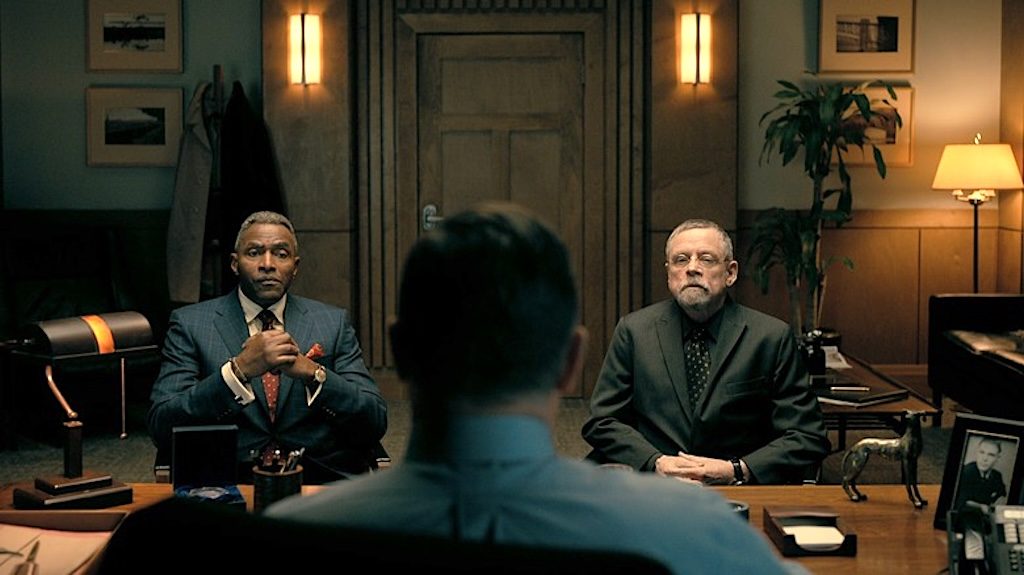
C. Auguste Dupin (Carl Lumbly), Judge John Neal (Nicholas Lea) and Arthur Pym (Mark Hamill) in The House of Usher. Photo courtesy of Netflix
Southern Gothic
Southern Gothic relocates gothic deterioration from medieval Europe to the American South. Instead of castles, audiences encounter plantations, swamps, and small towns marked by historical violence and moral corruption. Themes often include religious extremism, racism, deeply flawed characters, inherited guilt, class and ancestry. Southern Gothic films have been shaped by literary figures like William Faulkner and Tennessee Williams.
Notable examples include:
* True Blood (2008) – Vampirism intersects with Southern identity, sexuality, and social marginalization.
* Sharp Objects (2018) – A psychological drama steeped in small-town repression, declining, mental health, family trauma, murder, and dilapidated domestic spaces.
* The Skeleton Key (2005) – A Louisiana plantation house concealing secrets rooted in regional folklore.
* Sinners (2025) – Mississipi delta, twin brothers, voodoo and vampires set in the Jim Crow south.
Southern Gothic frequently uses horror elements to expose social rot beneath polished exteriors.
Urban Gothic
Urban Gothic transplants gothic anxiety into modern cities. Isolation exists not in remote castles, but in crowded industrial steampunk spaces. Urban degradation in wastelands, subterranean environments like tunnels and basements, and moral filth replace rural ruins.
Examples include:
* Only Lovers Left Alive (2013) – Vampiric immortality unfolds over centuries against derelict urban landscapes in Detroit.
* American Horror Story: Murder House (2011) – A haunted Los Angeles home blending suburban domesticity with numerous murders and spectral inhabitants.
* Midnight Mass (2021) – Focuses on isolation and faith within a small community.
Urban Gothic emphasizes social alienation and the moral corrosion of modern family life.
Gothic Fantasy
Gothic fantasy merges fairy-tale motifs with dark historical or emotional undercurrents. Mythic creatures and dreamlike images coexist with trauma and moral ambiguity.
Common examples include:
* Pan’s Labyrinth (2008) – A child’s mythic quest unfolds against fascist brutality, combining innocence with monstrous imagery.
* A Monster Calls (2016) – A grieving child’s encounters with a tree-monster externalize sorrow and denial.
* The Shape of Water (2017) – A romantic fantasy rooted in Cold War paranoia and outsider longing.
Gothic fantasy retains emotional darkness even when framed within wonder.
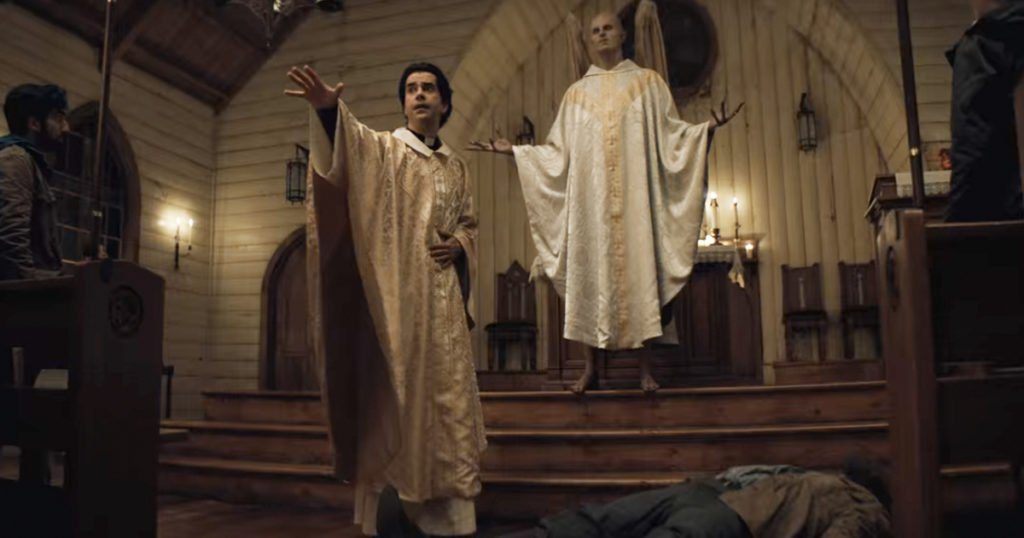
Father Paul Hill (Hamish Linklater) in Midnight Mass. Photo courtesy of Netflix
Psychological Gothic
Psychological Gothic focuses on mental instability, unreliable narration, fractured memories, and blurred boundaries between hallucination and reality.
Examples include:
* The Lighthouse (2019) – Isolation and mythic imagery drive two men into paranoia and madness.
* Black Swan (2010) – Artistic obsession manifests through bodily horror and identity degradation.
* The Babadook (2014) – A book monster emerges as an embodiment of suppressed grief and maternal anxiety.
In psychological gothic stories, fear often stems from within to mine guilt, regret, and desperation..
Gothic Science Fiction (Techno-Gothic)
This hybrid subgenre fuses gothic fatalism with near-futuristic concepts such as time travel, artificial intelligence, and dystopian futures. Characters often confront technological inevitability or existential repetition.
Examples include:
* Dark (2017) – Time loops and generational trauma create a labyrinth of inherited guilt.
* Crimes of the Future (2022) – Bodily mutation and technological evolution blended with gothic fascination with transformation and degradation.
* Ex Machina (2014) – An isolated modern estate becomes the stage for self-ware robots, artificial intelligence and corruption.
Techno-gothic works suggest that even in technologically advanced societies, existential dread and evil remains.
Prevailing Themes
Although gothic horror relies heavily on mood and atmosphere, there are some common patterns that emerge:
1) The Secretive Protagonist
Usually, the story begins with an outsider (the Governess, the new bride, the distant relative) visiting an established environment for reasons more than they say – possibly sinister.
2) The Labyrinthine Plot
Gothic scripts should feel like the houses they inhabit. There should be complicated plot twists that reveal the true nature and menace of the family history. The protagonist is often trapped in the locale, so they are forced to solve a dark mystery in order to escape.
3. The Duality of Man
Gothic horror loves characters which oscillate between the good and bad nature of human behavior. Often this is displayed as a public versus private face, or the deep scars that belie their composed facades.
Gothic horror is more than just a genre; it is a mood that illustrates that we can never escape people and actions that came before us, even after death. A time of reckoning will eventually arrive forcing us to confront what we’d rather leave behind.

Join the Discussion!


Browse our Videos for Sale
[woocommerce_products_carousel_all_in_one template="compact.css" all_items="88" show_only="id" products="" ordering="random" categories="115" tags="" show_title="false" show_description="false" allow_shortcodes="false" show_price="false" show_category="false" show_tags="false" show_add_to_cart_button="false" show_more_button="false" show_more_items_button="false" show_featured_image="true" image_source="thumbnail" image_height="100" image_width="100" items_to_show_mobiles="3" items_to_show_tablets="6" items_to_show="6" slide_by="1" margin="0" loop="true" stop_on_hover="true" auto_play="true" auto_play_timeout="1200" auto_play_speed="1600" nav="false" nav_speed="800" dots="false" dots_speed="800" lazy_load="false" mouse_drag="true" mouse_wheel="true" touch_drag="true" easing="linear" auto_height="true"]






You must be logged in to post a comment Login