
Tom Quinn, CEO and Founder of NEON Discusses The Bold, Filmmaker-First Mission of His Company

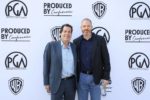
NEON is a boutique film distribution company launched to champion bold, auteur‑driven cinema. CEO Tom Quinn, with his deep indie film theatrical roots has built a reputation for acquiring and marketing provocative international films. NEON is best known for bringing acclaimed titles to audiences that blend commercial savvy with art‑house sensibility. Memorable titles include Parasite, Anora, Sentimental Value, Longlegs and I Love Boosters.
A Taste of the Cannes Film Festival
Prior to starting NEON with Tim League in 2017, Quinn came across Melancholia by Lars Von Trier in 2011 while he worked at Magnolia Pictures for Mark Cuban. He decided he wanted to work on that movie and started the process of aquiring and releasing it. Quinn discusses the subjective nature of the film festival circuit and how he navigates his films through them.
At no point in time at Cannes have I ever thought we were going to win the Palme d’Or for Melancholia. I didn’t believe we were going to win it for Parasite. We assumed the accolades would go to Quentin Tarantino. We’ve never planned or chased the idea that we must have a certain number of films in Cannes, Telluride, Toronto, or Sundance.
The tastes and the intention of Cannes represent the best cinema the world has to offer, from coutures that have very distinct, clear voices. I believe that most movies that are there embrace the thing that is most important to NEON. We truly believe that artistic merit and cultural relevance should and must exist in equal measure in everything that we do. One is not distinct from the other.
We try very hard and make it our mission to support films that really do have something to say, that have a point of view, and have a purpose. And it’s very consistent across our catalog. This year we had nine movies at Cannes, and many movies in the market.
We had six films in competition this year, definitively not the plan. None of these movies were bought with an invite to Cannes, and many of the movies that we bought over the years were bought at script stage. There are films that I thought might premiere at Cannes this year like No Other Choice which we bought many years ago but premiered in Venice last year.
We made an incredible acquisition out of Sundance, Once Upon A Time in Harlem, which is why I love director’s fortnight.
We all talk about Cannes, but that’s where I discovered directors like Bong Joon-ho. I think the last acquisition that we made this year was Paper Tiger by James Gray.
The joke is, “Don’t fault us for a good taste.” Who’s chasing who here? I love the filmmaking team, Thierry Fermeaux and Christiane Jones. But it just seems that if you tried to plan this, you would fail.
Related: Interview With Director Park Chan-wook About “No Other Choice”
Parasite – Winning the Palme D’Or Prize As A Release Strategy
It was a very happy accident. I know we get a lot of criticism from our fellow distributors. Post Parasite, we test all of our movies. We’ve been doing it for a really long time, It’s a very collegiate process. It’s in service of trying to gauge audience interest in our movies.
In the wake of the success of that film, grossing $54 million, changing 92 years of Oscar history, and being one of the first few movies in a foreign language with subtitles that elicited a very large, young set of viewers, even teenagers, it set the stage for something that followed.
And having tested every subsequent Palme d’Or winner, winning that award was the number one reason why people came to see Parasite.
That award is very powerful, very impactful, and has meant something not just for audiences. Certainly it’s been an incredible runway for us into the Academy Awards. Six of the previous Palme d’Or winners, five of those are Best Picture nominees, and two are winners, so you have to believe that there’s something very special happening there.
We got involved with Parasite at the script stage. It’s exceptionally competitive out there, so taking the risk before the film is done is an easier road to home. But more importantly for us, we’re driven and attracted to directors.
And Bong Joon-ho was part of the NEON business plan. I was going to make whatever he wanted to make, whenever, wherever, however. And that is still the case. I’ve worked with him almost as much as any other director besides Nicolas Winding Refn. He sent us the script for Parasite, and we made the decision that day that absolutely this is something we wanted to do.
Related: “Mickey 17” Bong Joon-ho Tells A Tale Of Two Mickeys
Julia Ducournau’s Raw
Even with directors like Julia Ducournau, I was pursuing her as soon as I saw Raw. We had barely launched the company, I flew to Paris and I read her next script Titane. I didn’t understand it, but I met with her.
I told her that I don’t understand the script, but I believe in you as a director, and I’m willing to put all of my faith in you. I remember her saying, “You know, I’m going to cast Vincent Landon.” I said, “I don’t understand that decision either.”
He’s a very mainstream French actor. Why would he be suited for this? She said, “I will make him suitable.” And to her credit, we signed on to the film. This was a year and a half before it premiered in Cannes. The movie itself is exactly the screenplay that she wrote. Now I completely understand it. That sort of progression was really exciting for me, but also for her as a director.
She, to me, represents the future of cinema, and is doing something that I think is rarely seen in our industry – taking huge risks. She is a director that I want to continue working with. The same is true for director Bong. The same is true for all of us.
Related: The Rising Influence of Foreign Language Films and Television in English-Speaking Markets
The Role of NEON In The Film Landscape
If our intent, purpose and our definition of success is built around something greater, then I think we will be successful. We very much want our slate to be a mirror onto the world.
When we launched Longlegs, someone asked, “Oh, you’re into horror now?” I said, “We’ve always been into horror.”
I’m a huge action snob. And we have yet to do our version of what we think an action film should be. George Miller’s. Okay. That is the high bar. Wake and Pray. These are things that I think about all the time.
The difference is, you have to make those independent films. You don’t find those movies on the open market. As we grew as a company, getting to the place where we could actually afford to produce and to invest in films further upstream, even in development, it opened up these genres that were not available to us early on in the company.
We’re completely agnostic about genre, but also country of origin. I want to support the best cinema the world has to offer.
There are many different places that you can find extraordinary work. And I still think that there are, unexplored and yet to discover territories around the world that I think are going to grow. And being in Nigeria is part of that for us.
Budget Range of NEON Films
We do have a cap and a ceiling on budget size that I personally don’t understand.
I think if we are large enough as a company to do movies in excess of $50 million, we are going to forget the core mission of doing movies. That is the lifeblood of who we are. But I want to be big enough so we can grow with certain directors.
While they may go off and do their Marvel or their Star Wars films, that’s awesome. They’ll come back to us.
There was a certain budget level that I thought about when we were writing the business plan for the company. And Snowpiercer by Bong Joon-ho was an action film. And it was a sci-fi film. And it had a huge cast. And that movie was made for less than $35 million. And I thought, that seems to be a very reasonable place for how we can achieve all of our ambitions.
John Wick was also made for something like that. It may not be possible today.
Related: Eskil Vogt & Joachim Trier: Exclusive Interview on Crafting “Sentimental Value”
Film Industry Consolidation
I wouldn’t survive a day in that environment.
The amount of politicking, the amount of layers of middle management that you have to get to a decision is hard. I’ve worked with some of these companies. I’ve been on Zooms with 50 people. And at no point in any of those meetings was anybody on the other side able to make a decision.
I just don’t want to work at a company like that. That’s a critique of a corporation.
If growth is this endless pursuit with no real mission or idea about what we’re trying to accomplish, how are you able to make good creative decisions? And with that amount of debt around your neck, I don’t know how you take any creative risk.
The only sensible thing you can do is make the most creative, bold decision in order to get yourself out of that predicament. I’ve not seen a corporation of that size do that. So it concerns me.
I think the lack of competition is bad. There’s another thing happening here that I’ve seen across our industry for a long time. The uberization of entertainment. The algorithm. I want no part in it.
I think it’s really important for us as a company that we are a true independent and to stay true to our filmmakers. We should value our job as much as they value their work. And I think we should be as accessible as they are.
I think we should be as creatively adventurous and bold as they are in their work. And I think those are the decisions that have made us stand out. The last piece is sustainability.
NEON’s Approach To Marketing
The company is very much an open source company. And I love the way that we work.
On any given day, there are 83, 85 people, and offices in New York and L.A. We have these humanist spaces where there’s a lot of group chatter. It feels you’re on the cooking line in a kitchen. And everybody speaks up, and everybody loves the work that we’re doing.
Kate Gondwe, who is the director of acquisitions, development, and production, came up with this idea for pumping free gas for I Love Boosters and boom, a week later, it was a living, breathing promo. That happens all the time at the company, where people are throwing in ideas. And because we can make quick decisions, I think speed is one of our greatest assets. That there is no red tape. Let’s go do it. Let’s give it a shot. Let’s get boots on board. And it made so much sense for the movie. It costs practically nothing.
I think marketing for us has to be its own performative entertainment. If we’re just selling, it’s no fun. It’s not interesting.
But if we are creating a whole other avenue to garner attention, to build a world around the movie, to have talent participate – that to me is the fun. But it also, signals to the audience that we care more about this movie than simply trying to solicit you to come see it.
I love the fact that the Oscars are going to be on YouTube. I think it’s great that we’re going to reach a whole new, younger audience.
We should do movies that can really take advantage of that. And you also have to have courage of conviction to do difficult films and to put yourself at risk. And so, I really value the opportunities to work with directors like Jafar Panahi.

Join the Discussion!


Browse our Videos for Sale
[woocommerce_products_carousel_all_in_one template="compact.css" all_items="88" show_only="id" products="" ordering="random" categories="115" tags="" show_title="false" show_description="false" allow_shortcodes="false" show_price="false" show_category="false" show_tags="false" show_add_to_cart_button="false" show_more_button="false" show_more_items_button="false" show_featured_image="true" image_source="thumbnail" image_height="100" image_width="100" items_to_show_mobiles="3" items_to_show_tablets="6" items_to_show="6" slide_by="1" margin="0" loop="true" stop_on_hover="true" auto_play="true" auto_play_timeout="1200" auto_play_speed="1600" nav="false" nav_speed="800" dots="false" dots_speed="800" lazy_load="false" mouse_drag="true" mouse_wheel="true" touch_drag="true" easing="linear" auto_height="true"]






You must be logged in to post a comment Login