
“Evil Dead Burn”: How French Filmmakers Sébastien Vaniček and Florent Bernard Invigorated the Horror Franchise

The Evil Dead franchise stands as one of horror cinema’s scariest success stories. Beginning with Sam Raimi’s scrappy 1981 debut shot on a shoestring budget in rural Tennessee, and directed by Fede Alvarez, the franchise evolved from a gritty, low-budget supernatural nightmare into a sprawling universe blending horror, comedy, and cult mythology. The latest installment is Evil Dead Burn written by Sébastien Vaniček & Florent Bernard. Vaniček directs.
What started with Ash Williams fighting demonic forces in an isolated cabin exploded into three theatrical films, a beloved TV series (Ash vs Evil Dead), the 2013 remake that reinvented the franchise’s tone, and the recent Evil Dead Rise (2023) that brought visceral, prestige horror sensibilities to the universe.
Related: “Horror Movies Should Talk About Social Ills” Says Filmmaker Joe Russo
Across decades, the franchise hasn’t just survived — it’s thrived by continuously reinventing itself while respecting its roots, balancing gore-soaked practical effects with darkly comic character work, and maintaining a devoted fanbase that has transformed Evil Dead into a contemporary horror canon.
With Evil Dead Burn, writer-director Sébastien Vaniček and co-writer Florent Bernard deliver a terrifying new chapter that deepens the mythology. Set within a fractured family haunted by grief, guilt and something far darker and demonic, it returns to the primal fear of the originals.
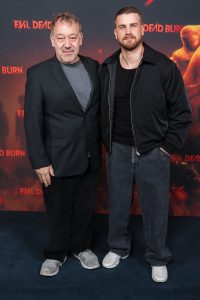
Sam Raimi and Sebastien Vanicek at the Evil Dead Burn Fan Event. Photo by David Jon/ Warner Bros. Pictures
From the outset, the creative team aimed to make a family film that feels immediate, intimate, and visceral. After the loss of her husband, Alice (Souheila Yacoub) seeks solace with her in-laws in their secluded family home.
As one by one they are transformed into Deadites — turning the gathering into a family reunion from hell — she comes to discover that the vows she took in life live on… even in death.
The New Evil Dead Chapter
Following their collaboration on French filmmaker’s Vaniček’s debut feature Vermines (Infested) — the Venice-selected creature thriller that announced his kinetic, character-driven style — filmmakers reunited to reimagine Evil Dead for a new generation of audiences. Vaniček and Bernard’s screenplay fuses the franchise’s trademark intensity with a deeply human meditation: a story about love, loss and the way grief mutates under pressure. It is both homage and reinvention to the original.
Vanicek describes the experience as both exhilarating and daunting. “It starts with an idea in your apartment in Paris,” he reflects, “and then cut to a crew of 200 in front of three people on fire, in front of a house on fire. It’s pretty crazy.”
That willingness to push the limits of scale and ambition — without losing the handmade, untamed, indie spirit that defines the franchise — became his creative compass.
He recalls the first ideas that coalesced into their script. “Florent and I wanted to primarily focus on characters — fear and action would come later. So, we started with our homework and watched all of the early Evil Dead movies. We realized that they were talking about death, but also about love. We thought that death of love would be an interesting idea, and the impact on the in-laws would be universal for an audience.”
From the beginning, the pair’s goal was to deliver something recognizably Evil Dead, yet distinctly stamped as their own. “There’s an immense respect for the franchise and the fans. That’s where it all begins. But I know I wasn’t offered this role to simply do what the audience expects,” Vaniček reflects.
“Respect is also understanding that Evil Dead is not just about blood and chainsaws. There is so much more to explore in this world. And that’s what I was determined to do. Understand the rules and twist them. Try to bring a new vision, a unique vision to this amazing world. I think that’s why Evil Dead is still alive today – because it gives directors freedom to do new things.”
Related: Kirill Sokolov on “They Will Kill You”
“Writing for Evil Dead is an honor and a great pleasure,” Bernard states. “It’s a recipe with very specific ingredients — horror, action, comedy, suspense, drama—but it’s up to us to decide the right dosage of each.”
Vaniček and Bernard’s partnership thrives on a shared fascination with character and tone.
“Sébastien and I talk a lot, mainly about the characters,” Bernard says. “They’re the ones who bring the film’s themes. We talk about them as if they were people we know, asking how they would react in different situations, and then we throw them into the worst possible scenarios.”
Getting Sam Raimi, and Producers Rob Tapert and Bruce Campbell’s Attention
Producer Rob Tapert (along with Evil Dead originals Sam Raimi and Bruce Campbell (who plays Ash Williams in the original) watched Vermin’s and decided the French filmmaking duo would direct Evil Dead Burn. They created tangible tension with minimal resources.
Sébastien Vaniček and Florent Bernard would bring the touching story of familial grief and legacy to the screen within the larger Evil Dead mythology.
“The connection with [Evil Dead II original character] Raymond Knowby (John Peakes) felt essential,” Bernard notes. “[Evil Dead Burn character] Joseph’s (Hunter Doohan) narrative arc is about the burden of family legacy — a burden we also carry when writing an Evil Dead. It’s a giant toy chest, and we chose the toys that amused us the most and made the most sense for our characters.”
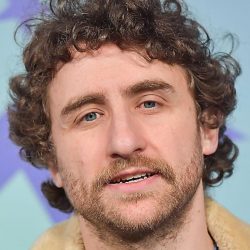
Florent Bernard
The result is a movie that turns familiar Evil Dead visuals — the Book of the Dead, the Deadites, the Necronomicon — into symbols of generational trauma and twisted familial bonds.
But before dropping the audience into the iconic world, the filmmakers first wanted to lure viewers in. “We wanted to immediately introduce a new generation of characters, and have the audience quickly understand their connections to each other: two brothers, a wife, a girlfriend, a birthday party. There’s a lot of dynamism in that scene, which I think prepares the audience for the energy of what’s coming next,” Vaniček adds.
Bernard describes the writing process as an exercise in restraint and reinvention. “The biggest challenge was avoiding too much repetition of what had already been done. That’s why we decided not to use a group of friends or people of the same age. But a woman uprooted and stuck with her in-laws — especially after a loss that affects them all—carried real narrative promise. Sébastien didn’t want to make the bloodiest Evil Dead, but definitely the most violent one.”
Together, Vaniček and Bernard have made a film that embodies the franchise’s enduring appeal: fearless, physical and cinematic. “If audiences walk out of the theatre feeling like they’ve experienced a horror-action film that’s emotional and funny, as well as uncomfortable and exhilarating,” states Bernard, “that’s what we’re aiming for.”
Related: “Our Take On Hitchcock’s ‘Vertigo’” Scott Beck & Bryan Woods Discuss ’50 States Of Fright’

Join the Discussion!
Browse our Videos for Sale
[woocommerce_products_carousel_all_in_one template="compact.css" all_items="88" show_only="id" products="" ordering="random" categories="115" tags="" show_title="false" show_description="false" allow_shortcodes="false" show_price="false" show_category="false" show_tags="false" show_add_to_cart_button="false" show_more_button="false" show_more_items_button="false" show_featured_image="true" image_source="thumbnail" image_height="100" image_width="100" items_to_show_mobiles="3" items_to_show_tablets="6" items_to_show="6" slide_by="1" margin="0" loop="true" stop_on_hover="true" auto_play="true" auto_play_timeout="1200" auto_play_speed="1600" nav="false" nav_speed="800" dots="false" dots_speed="800" lazy_load="false" mouse_drag="true" mouse_wheel="true" touch_drag="true" easing="linear" auto_height="true"]




You must be logged in to post a comment Login