
Widow’s Bay on Apple TV: How Katie Dippold Built a Comedy Series Around Grief

Katie Dippold has spent her career writing loud comedies. And some softer ones too. Her credits include The Heat, Ghostbusters, Snatched, and The Spy Who Dumped Me. She’s even rumored to be involed in the Police Academy reboot.
Widow’s Bay represents her most ambitious television creation — a tonally-controlled horror/ comedy series built around a premise that most writers would approach cautiously: a widow inheriting a bed-and-breakfast in a small coastal town and attempting to run it while processing grief.
Widow’s Bay marks a departure from Dippold’s previous police procedurals and supernatural blockbusters, moving instead toward a more atmospheric, localized form of endearing social satire that leans into the “cursed town” trope.
The series centers on a New England island where superstitions are not just folklore, but part of the daily bureaucratic grind, offering a nod to the town’s colorful past. The laughs are more heart-felt than riotous belly laughs.
Matthew Rhys stars and also serves as an executive producer, joined by Kate O’Flynn, Stephen Root, Kingston Rumi Southwick, Kevin Carroll, and Dale Dickey. Their performances lean into nervously grounded specificity: anxious shopkeepers, bureaucrats in over their heads, locals clinging to routines as the bay keeps misbehaving. The result is a comedy series where the laughs come from human reaction, not from undercutting the horror.
The central question behind Widow’s Bay appears straightforward: what happens when a widow inherits a bed-and-breakfast in a coastal town where she has no connections, minimal hospitality experience, and significant emotional baggage?
The comedy is built around the townsfolk confronting danger, humiliation, and forces they cannot rationally comprehend, let alone control. But first, is the curse real or an old widow’s tale?
Related: Susanna Fogel Talks ‘Booksmart’ & ‘The Spy Who Dumped Me’
A Contained World With Built-In Conflict
Characters cannot easily leave Widow’s Bay. Rumors travel quickly. Everyone knows who has failed, who is lying, and who has benefited from the town’s problems. The physical environment can also make a supernatural event feel inescapable.
For a comedy series, the island can also generate a social ecosystem. The mayor has constituents, rivals, old friends, local business owners, believers, skeptics, and residents who may see a curse as either a crisis or an opportunity. The small coastal town becomes a character itself — with established hierarchies, traditions, gossip networks, and resistance to outsiders.
Widow’s Bay approaches small-town life with more affection and specificity — not mocking the locals by comparing them to their more sophisticated city counterparts, but observing how small communities actually function.
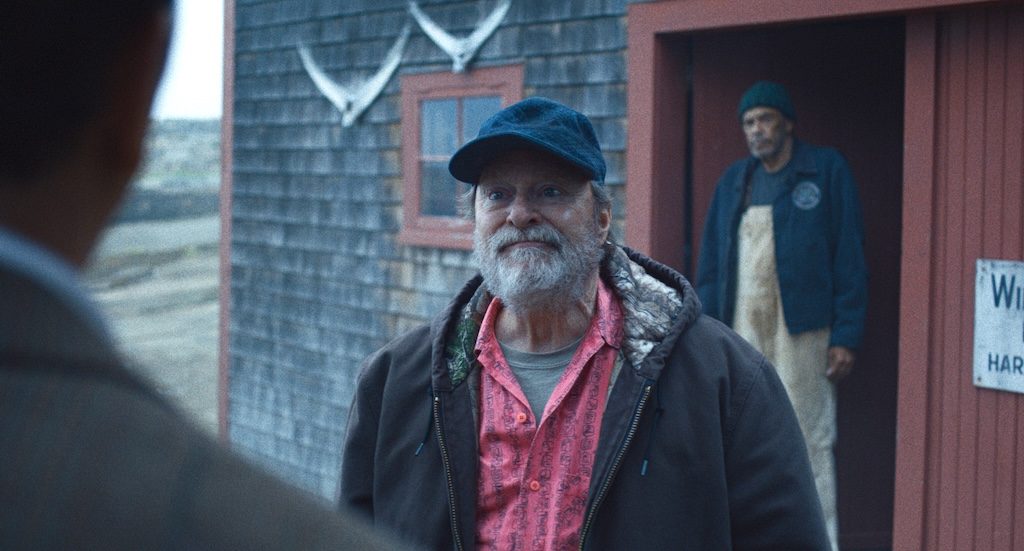
Wyck Crawford (Stephen Root) Photo courtesy of Apple TV
Related: Who Ya Gonna Call? Ghostbusters: Frozen Empire
The Mayor Is a Strategic Choice of Protagonist
Matt Rhys is best known for high-intensity dramatic work in The Americans, Perry Mason, and A Beautiful Day in the Neighborhood. Casting him as a civic leader facing supernatural trouble signals a series interested in playing its central crisis seriously, even when the circumstances become absurd.
The mayor cannot simply be a skeptical observer who delivers ironic commentary on strange events while doing his darndest to boost the town’s tourist numbers. He has a town to protect, reputational stakes, political responsibilities, and a personal investment in maintaining order.
The town’s superstitious residents are convinced the bay is dangerous, but their mayor refuses to take their warnings seriously, treating centuries of lore as nuisance rather than existential threat. That denial becomes the show’s central engine: civic gaslighting layered over supernatural dread.
A curse in Widow’s Bay creates a central mystery, but it can also produce an operational problem for the mayor. Does he suppress information? Does he try to exploit the curse to attract tourists? Does he blame a political rival? Does he lose the trust of the people he represents? Does he become the only person taking the threat seriously — or the only person refusing to see it? He may even be the villain himself.
Related: Another Simple Favor: Writers Jessica Sharzer and Laeta Kalogridis
Grounding High-Concept Absurdity in Widow’s Bay
The success of Widow’s Bay hinges on the concept of a carefully calibrated “heightened reality.” It is elevated to the point that it might be true.
Dippold’s writing process often begins with identifying a specific social anxiety and manifesting it through a genre lens. On this island, the “curse” acts as a metaphor for the things we cannot change about our environments.
The curse permeates the narrative without taking control to solve plot holes. Dippold avoids this by making the supernatural elements the source of the conflict, never the solution. This ensures that the characters must rely on their own — often flawed — logic to navigate their world.
Related: How “Deli Boys” is Redefining TV Comedy and Culture by Leaning Into Stereotypes
The Intersection of Horror and Humor
Widow’s Bay is not structured like a joke delivery system with horror window dressing. There is enough fear, dread, missing people, and unexplained misfortunes to suggest the existence of a curse.
Apple positions the show as a genuine blend of horror and character‑driven comedy, rather than a broad genre spoof.
Dippold spent years teasing the humor out to build a story where fear could stand on its own as a horror story. Only after the character arcs and narrative foundations felt solid did she begin weaving humor back in, making sure the jokes served tension rather than undercutting it. She has talked about wanting “tension and humor to feed each other instead of damaging each other,” a design principle that’s obvious in the finished show.
In Widow’s Bay, the horror is not meant to elicit screams, but rather a sense of pervasive dread that provides the creepy friction necessary for the comedy. Dippold has cited her love for the “uncanny” as a major influence, focusing on the moments where something familiar becomes slightly, terrifyingly “off.”
This narrow tonal tightrope forces the writer to be economical with both the scares and the punchlines.
Dippold’s series serves as a masterclass in “tonal anchoring.” She often uses a “straight man” mayor character who represents the audience’s skepticism, allowing the more eccentric characters to exist and play off him without breaking the show’s reality. This creates a grounded entry point into the more surreal aspects of the island’s mythology through grounded absurdism.
Episodes track escalating incidents around the island, from inexplicable disappearances to freak accidents, filtered through the eyes of townspeople who are simultaneously terrified and accustomed to chaos. The cursed geography functions as both myth and metaphor — the place you keep returning to even when you know it’s bad for you.
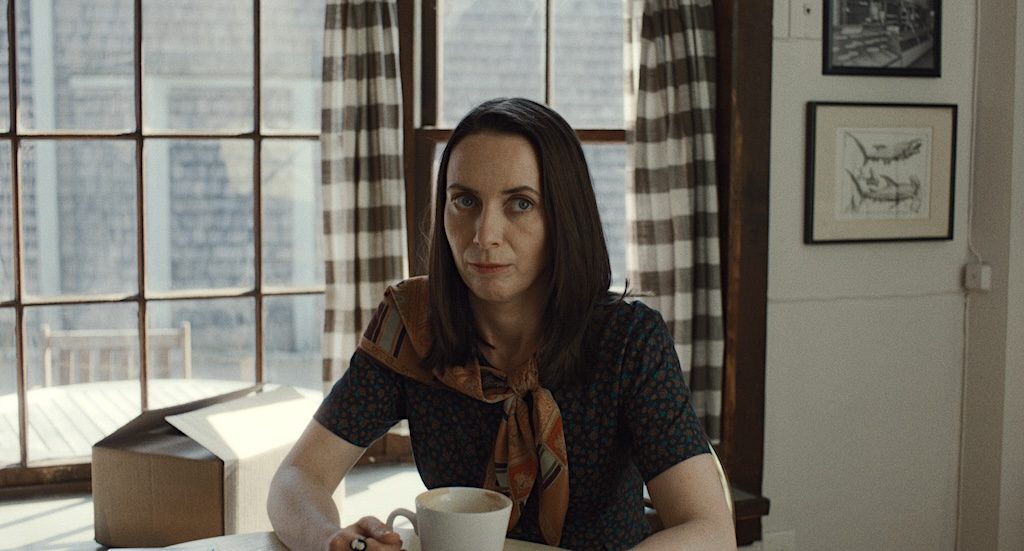
Patricia Moyer (Kate O’Flynn) Photo courtesy of Apple TV
Katie Dippold’s Long Road To Widow’s Bay
Widow’s Bay is the culmination of a very long arc in Katie Dippold’s writing career. She claims she started thinking about the idea roughly 18 years ago.
The earliest version existed as a spec script written to showcase her writing voice for Parks and Recreation. That draft was significantly more comedic, packed with jokes and designed as a calling card that demonstrated her sense of humor rather than a fully balanced hybrid horror/ comedy genre piece. Mike Schur hired her off the spec — but the script itself sat quietly for years while her career moved through studio comedies and network television.
Her fascination with seaside towns goes back to growing up in New Jersey and visiting shore communities that felt cozy on the surface yet strangely haunted underneath. That emotional contradiction — quaint vacation pleasantness married to something off — became the psychological foundation of the bay itself. Dippold has described the goal as trying to capture a very specific feeling she’d never quite seen onscreen.
Over time, she returned to the material and began stripping out much of the overt humor, a process she’s admitted was “a little scary” because it left her with an unfinished story and fewer jokes to hide behind. For a period, she felt lost between versions: the broad comedy that had gotten her staffed and the darker, more ambitious show she wanted Widow’s Bay to become.
The eventual breakthrough came when she focused relentlessly on character arcs — who was trapped, who was in denial, who was exploiting the curse — and rebuilt the narrative from those trajectories outward.
At one point, she essentially deconstructed the earlier spec, conscious that it was too joke‑forward to support elevated stakes. She then brainstormed extensively on character, mapping out who had history with the bay, who was new to town, and who was financially or politically invested in keeping the curse unacknowledged.
Only once those arcs were in place did she reintroduce humor, testing each beat against a simple question: does this joke deepen the character’s denial or fear, or does it merely wink at the audience?
Dippold has also talked about the genre shift unlocking something in her writing. Horror’s formal demands — dread, escalation, payoff — gave structure to instincts she’d previously only used in pure comedy.
Scenes became about building tension first, then finding the human reaction that reveals who the character is when pressure hits. In practical terms, that meant writing less dialogue‑heavy banter and more sequences where behavior and blocking carry the laugh.
Working with director Hiro Murai sharpened that approach. His background in surreal, but emotionally grounded television gave Dippold a director who could lean into atmospheric horror while still honoring the comedic beats.
Their collaboration turned written tension into visual language: off‑center framing, long takes that let awkwardness linger, and compositions that position the bay as a constant, unsettling presence.
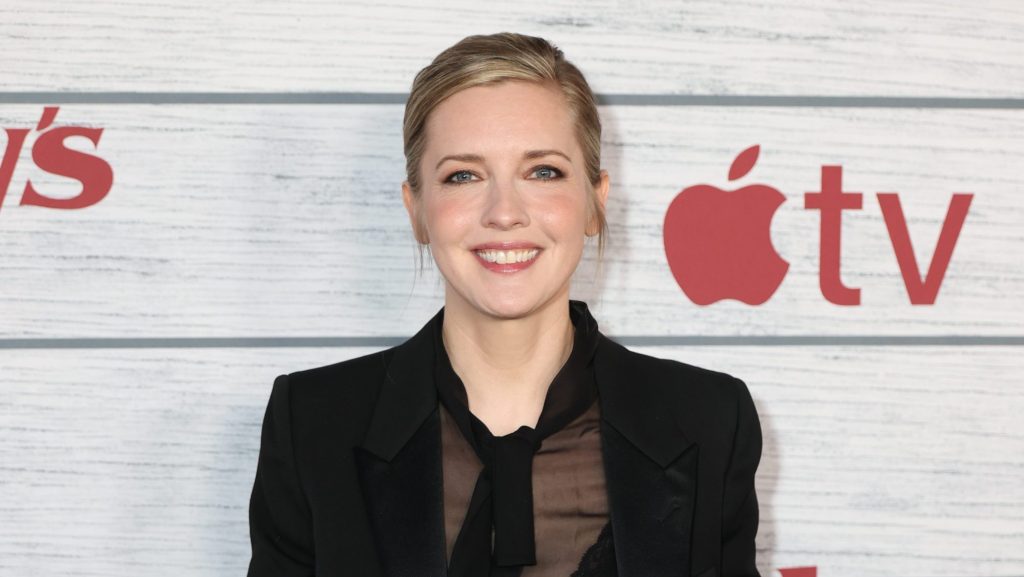
Katie Dippold
Related: “Santa Clarita Diet” Creator Victor Fresco Talks Tone, Comedy, & Zombie Wives
The Broader Implications for Television Comedy
Widow’s Bay arrives during a moment when streaming platforms are actively searching for distinctive comedy voices. The success of character-driven comedies on prestige platforms has created space for shows that don’t rely on broad humor or established IP.
Dippold’s entry into television comedy, bringing her particular sensibilities from feature filmmaking, suggests that platforms recognize the value of distinctive authorial voices. A writer known for intelligent comedies about institutional absurdity and character contradiction brings those sensibilities to television.
The series also suggests that contemporary audiences are receptive to comedy built around adult emotional realities.
A show about grief, hospitality, small-town life, and the complications of starting over doesn’t sound like traditional comedy material. Yet Widow’s Bay suggests this material actually generates genuine, specific humor for a wide audience..
If you’ve developed a comedic sensibility in one medium — features, shorts, or otherwise — you can bring that sensibility to television.

Join the Discussion!


Browse our Videos for Sale
[woocommerce_products_carousel_all_in_one template="compact.css" all_items="88" show_only="id" products="" ordering="random" categories="115" tags="" show_title="false" show_description="false" allow_shortcodes="false" show_price="false" show_category="false" show_tags="false" show_add_to_cart_button="false" show_more_button="false" show_more_items_button="false" show_featured_image="true" image_source="thumbnail" image_height="100" image_width="100" items_to_show_mobiles="3" items_to_show_tablets="6" items_to_show="6" slide_by="1" margin="0" loop="true" stop_on_hover="true" auto_play="true" auto_play_timeout="1200" auto_play_speed="1600" nav="false" nav_speed="800" dots="false" dots_speed="800" lazy_load="false" mouse_drag="true" mouse_wheel="true" touch_drag="true" easing="linear" auto_height="true"]







You must be logged in to post a comment Login