
From Story Beats to Screen: The Essential Guide to Crafting a Screenplay Outline

Since the age of chiseling words into stone slabs or dipping one’s quill in ink before delicately putting the nib on papyrus, writers have been wrestling with the question: “Do I really need an outline?” While some screenwriters swear by the spontaneity of freeform or intuitive writing – leaping from one scene to the next with little more than a vague destination in mind, even the most improvisational screenwriters are guided by some kind of internal story compass.
Whether that compass is written down or embedded in years of storytelling practice, it almost always boils down to one thing: structure. Every script has key narrative beats (even the unconventional ones) that are generally hit at specific points. Knowing them provides a rudder for the direction of your story.
That structure is best captured via the screenplay outline.
What Is a Screenplay Outline?
A screenplay outline is a planning document that lays out the key events, character arcs, and thematic beats of your story before you dive into scripting dialogue, action and formatting scenes. It’s your template—the framework upon which your story is built.
Outlines are not just for beginners. They’re for any writer who wants clarity, cohesion, and a firm grip on the journey their characters will take. They save time. Some writers use a bare minimum outline with the key turning points in their scripts, others prefer a more comprehensive one.
An outline is always a fixed document. Oftentimes, the narrative structure of your story changes during the writing process.
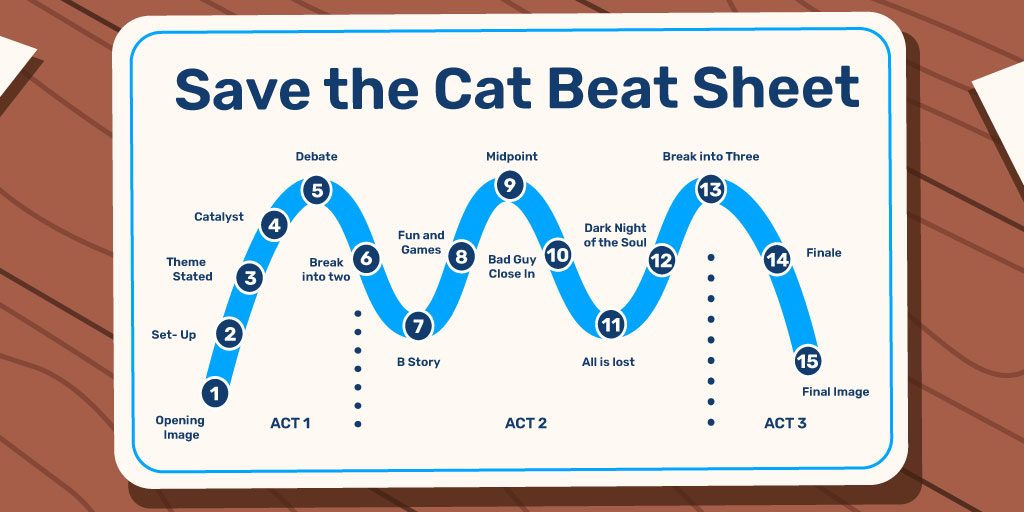
Save The Cat Story Beat Outline
Why Use a Screenplay Outline?
The necessity of outlines isn’t about rigidity—it’s about freedom through structure by not getting lost. An outline gives you the confidence to explore creative tangents during writing discovery. Here’s why they matter:
- Focus: Prevents wandering plots and unnecessary or elongated scenes.
- Clarity: Helps define character arcs and thematic development.
- Efficiency: Saves on continuous rewriting by troubleshooting structural and story issues early.
- Writer’s Block: Knowing where your story helps combat writer’s block.
- Industry expectations: Producers often request outlines or treatments after a logline or brief synopsis,
- Creative cohesion & Flow: Helps ensure a unified tone, pacing, and narrative progression.
Even for writers who thrive on discovering their story as they write, the act of planning adds discipline to the creative chaos by defining what your story is and what it isn’t. They gray area represents story possibilities – what it could be.
The Minimum Viable Outline
If you’re writing a screenplay you’ve been thinking about for a while, or a true story where all the main plot points are already known, maybe all you need is a barebones outline. These are typically broken into three essential foundational beats:
- Beginning (Setup / Inciting Incident)
- Middle (Rising Action / Turning Point)
- End (Climax / Resolution)
These three points help ensure that your story has a beginning that hooks and engages, a middle that builds and sustains tension, and an ending that pays it all off in a satisfying way. It’s the simplest version of a full narrative arc—and effective for writers who already know their characters and story world inside and out.
Expanding the Outline
Most screenwriters benefit from expanding the outline into a more comprehensive document. A solid, mid-level outline includes:
1. Title, Genre, and Format
Even a temporary title helps root the story. It’s the first thing a reader sees, so ensure it makes an impact. Defining the genre and format (TV pilot, 60-minute episode, feature film, etc.) gives your outline context and scope. It prepares the reader for what comes next and a possible trajectory of your story.
2. Logline or Premise Statement
A one-sentence description of your story’s central concept. This forces clarity and focus and gives you a compass for thematic and plot decisions. It’s a writer’s North Star.
Example: A principled prosecutor must decide whether to uphold the law or expose it when he discovers his boss is protecting and representing a killer.
Character Breakdowns
Include names of the main characters, roles, motivations, arcs, and conflicts. Track how they change from beginning to end; if they change. Some characters remain static and only affect the world around them.
Thematic Exploration
Outlines should reflect not just what happens, but what it means to the audience. What’s the desired takeaway? If your theme is justice versus loyalty, make sure key moments reflect this tension and the opposing points of view.
Example: A character may be forced to betray a friend to uphold their principles.
Outlining Theme Through Character and Plot
One of the most important—and often overlooked—uses of an outline is to track how the theme is expressed through characters and plot decisions.
Take the theme: Preserving the rule of law, unless the law is unjust.
Your outline might include:
- A character who blindly follows the law, no matter what.
- Another who questions the law but is torn between duty and conscience.
- An antagonist who manipulates the law for personal gain.
Through scenes of conflict, loss, betrayal, and revelation, these characters embody different sides of the theme.
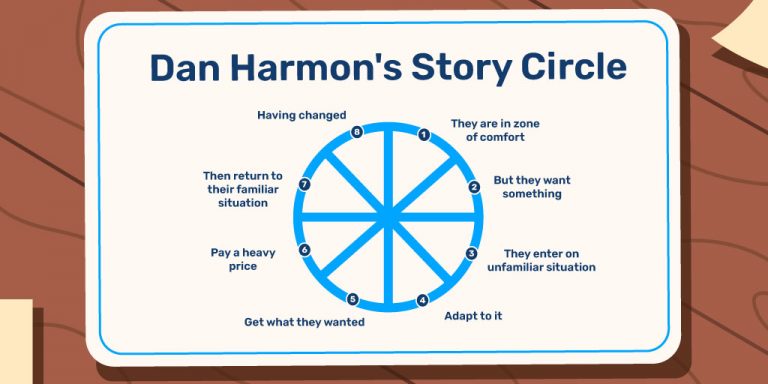
Dan Harmon’s Story Circle
Structural Beats
These are the narrative anchors. You can use classic structure models (like the three-act structure, Blake Snyder’s Save the Cat, or Dan Harmon’s Story Circle) which focuses on chaos, order and transformation. Common story beats include:
- Inciting Incident
- First Act Break
- Midpoint
- Second Act Break
- Climax
- Resolution
Scene or Sequence Descriptions
Briefly outline what happens in each major scene or sequence. Include location, character dynamics, and important actions or revelations. Think of this as capturing the trailer moments that tell an entire story in a compressed time.
Obstacles and Conflict
Note where your protagonist encounters conflict, both internal and external. Where do things get worse? What’s the worst that cn happen? When do they experience loss, betrayal, or growth? How does this escalate to force them to change?
Snippets of Dialogue or Tone Indicators
You don’t need full dialogue, but a few lines that capture unique tone or character voice can help keep the writing sharp.
Outline Length
There’s no official “correct” length for an outline, only what works for your process. That said, industry norms help you know what to expect:
- Short film (5–20 min) 1–2 pages
- 30-min TV episode 2–5 pages
- 60-min TV episode 4–10 pages
- Feature film (90–120 min) 10–20 pages
- Treatment or Scriptment 20–30+ pages
If you can write a great script from a single-page outline, go for it. If you need 25 pages of meticulous detail before you type FADE IN:, that’s valid too. Don’t focus on page count. Focus on what will keep you on track as you write your script. Think of an outline like planning a vacation. You can make it as detailed as you want. If it’s too detailed, you may miss out on a destination. If it’s too vague, you might waste time in one place.
Final Thoughts
There is no one-size-fits-all formula for writing a screenplay, just like there’s no perfect way to carve a statue. But the best way to turn raw ideas into a 120-page script is to first lay the foundation.
The point is not how you outline—it’s that you outline.

Join the Discussion!



Browse our Videos for Sale
[woocommerce_products_carousel_all_in_one template="compact.css" all_items="88" show_only="id" products="" ordering="random" categories="115" tags="" show_title="false" show_description="false" allow_shortcodes="false" show_price="false" show_category="false" show_tags="false" show_add_to_cart_button="false" show_more_button="false" show_more_items_button="false" show_featured_image="true" image_source="thumbnail" image_height="100" image_width="100" items_to_show_mobiles="3" items_to_show_tablets="6" items_to_show="6" slide_by="1" margin="0" loop="true" stop_on_hover="true" auto_play="true" auto_play_timeout="1200" auto_play_speed="1600" nav="false" nav_speed="800" dots="false" dots_speed="800" lazy_load="false" mouse_drag="true" mouse_wheel="true" touch_drag="true" easing="linear" auto_height="true"]







You must be logged in to post a comment Login