
Global Storytelling: The Rising Influence of Foreign Language Films and Television in English-Speaking Markets

The cinema and television world is shrinking. Hearing languages other than English is no longer designated to the realm of “specialty” or “foreign language” films and television shows aimed at niche audiences. It’s for everyone. Hearing foreign languages also extends to conversations rather than the occasional word in otherwise English language films.
There are several reasons for this seachange where such material is migrating into the mainstream.
- Cultural Representation – Non-English language films are reshaping global entertainment by providing authentic, locally-sourced narratives that transcend language barriers.
- Cultural curiosity – Audiences are generally more interested in finding out about new cultures to compare and contrast against their own.
- Audience Evolution – Viewers are increasingly willing to engage with subtitled content without treating them as a distraction to the main event.
- Industry Transformation – Streaming platforms are investing heavily in regional content, recognizing the global appeal of culturally specific storytelling.
- Demographic Shifts – The entertainment industry is becoming more international, with diverse viewers driving recognition and appreciation of non-English language films.
The Changing Landscape of Global Cinema
A recent turning point came in 2020 with Parasite’s historic Oscar win, when director Bong Joon-ho challenged audiences to overcome the “one-inch-tall barrier of subtitles.” Since then, the entertainment landscape has dramatically evolved beyond niche audiences. In the 2026 Oscar nominations, Norwegian language Sentimental Value and Korean No Other Choiceare both contenders for cinematic awards.
How Language Shapes Understanding
Watching our concerns, joys and and fears play out in another language creates an alternative pathway to address them. A story about migration, trauma, or family conflict in a foreign tongue can lower our defenses and ignite curiosity. Perhaps it might offer solutions? The unfamiliar cadence of speech, the subtleties of translation, and the visual cues that accompany dialogue encourage viewers to slow down, breathe, and listen.

No Other Choice. Picture courtesy of NEON
Cultural Specificity as Universal Currency
There is a paradox at the heart of the current moment: the more granular a story is, the more likely it is to land globally. Specific cultural detail creates texture, authority, and credibility. A scene that lingers on a ritual, a neighborhood storefront, or a family recipe invites viewers into an unfamiliar world that feels lived‑in and authentic. That texture and nuance becomes the driver of empathy and interest.
Universal themes — love, grief, ambition, shame — are easier to recognize when they are anchored in a distinct cultural logic. In many instances, it isn’t so distant from our own.
Consider Parasite, which used the specifics of South Korean class dynamics or Roma, whose intimate portrait of domestic life in Mexico City, became a meditation on memory and social change. These films do not dilute or reorient their cultural context to be palatable; they trust that audiences will appreciate and understand them.
Breaking Cultural Stereotypes
The rise of non-English language films challenges traditional Hollywood thinking. The arranged marriage of an Indian couple or a south-east Asian martial arts coach needs a new context – and character depth.
Instead of relying on broad, generalized, well-trodden ethnic representations, foreign films offer nuanced portrayals of human life. They demonstrate how universal emotions – love, loss, struggle, hope – transgress linguistic and cultural boundaries while bridging or integrating multiple cultures.
Oftentimes, this is done through cuisine. Remember Mo Amer and his falafel taco cart in his television show? Palestine deliciously meets Mexico.
Gen Z, growing up in increasingly multicultural and multilingual environments, is particularly receptive to these stories because many of their friends and peers come from a range of backgrounds. Enviroments where multiple languages are spoken are commonplace. It also gives them a chance to practice a new language if they wish.
For the parents of immigrant kids, screens can invite nostalgia and connection to their homeland.
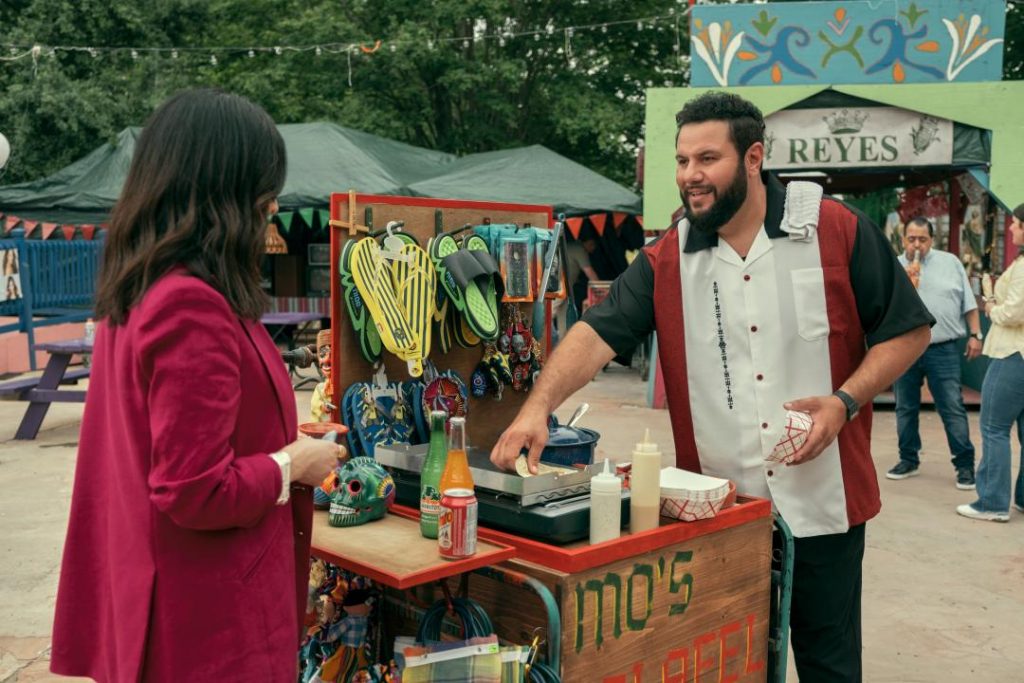
Mo Amer. Photo courtesy of Netflix
The Immigrant Experience and Multilingual Storytelling
For first generation Americans and immigrants to multicultural societies, foreign language films and TV shows represent more than entertainment – they’re a form of cultural validation and appreciation. Multilingual narratives capture the complex experience of navigating multiple cultural identities. They honor their ancestors’ home cultures while finding relevance and blending them into their lives.
These stories often explore themes of:
- Cultural displacement
- Language as identity
- Generational differences
- The challenge of belonging
- Assimilation
- Conflicting values
They reflect the small, specific gestures that English‑language cinema often files down: the cadence of a grandmother’s voice, the ritual of a holiday meal, the private vocabulary of a family that has carried a language across borders. Foreign language films demonstrate that their lives have worth and to not reduce them to convenient stereotypes.
First‑generation Americans who straddle two or more cultures see aspects of themselves in these stories. The bilingual jokes, the constant code‑switching, the thorny negotiations between parents and children as they balance the new country with the old.
Cross‑Pollination and Creative Exchange
As non‑English films gain visibility and acceptance, creative cross‑pollination gains momentum. Directors from different countries borrow pacing from each other, editors adopt new story rhythms, and writers experiment with hybrid narrative forms. Latin American magical realism influences European arthouse; Korean genre sensibilities reshape thrillers elsewhere. It’s all about stimulating and enriching storytelling rather than extracting and reducing it to a single form
Think of it as “mixed marriage” cinema with exotic children.
Streaming Platforms: Catalysts of Global Cinema
Streaming services have been instrumental in this transformation. Netflix, for instance, has made significant investments in regional content:
- $2.5 billion committed to South Korean film and TV production
- €1 billion invested in Spanish content
- Japanese titles have been viewed for 25 billion cumulative hours globally
These investments aren’t just financial – they represent a commitment to diverse storytelling and cultural representation.
The Future of Global Cinema
As we look ahead, the trend is clear. Non-English language films are not just a passing trend, but a fundamental reshaping of global entertainment. Countries like Nigeria, India, and Brazil are emerging as significant players in international cinema. As Diego Ávalos notes, “Creators must stay true to the unique voice of their community.”
We must resist the urge to standardize and homogenize global cinema and retain its intended texture.

Join the Discussion!
Related Articles



Browse our Videos for Sale
[woocommerce_products_carousel_all_in_one template="compact.css" all_items="88" show_only="id" products="" ordering="random" categories="115" tags="" show_title="false" show_description="false" allow_shortcodes="false" show_price="false" show_category="false" show_tags="false" show_add_to_cart_button="false" show_more_button="false" show_more_items_button="false" show_featured_image="true" image_source="thumbnail" image_height="100" image_width="100" items_to_show_mobiles="3" items_to_show_tablets="6" items_to_show="6" slide_by="1" margin="0" loop="true" stop_on_hover="true" auto_play="true" auto_play_timeout="1200" auto_play_speed="1600" nav="false" nav_speed="800" dots="false" dots_speed="800" lazy_load="false" mouse_drag="true" mouse_wheel="true" touch_drag="true" easing="linear" auto_height="true"]







You must be logged in to post a comment Login