
Emma Stone On Working With Director Yorgos Lanthimos In “Bugonia”

Bugonia is a film that draws its title and inspiration from the ancient myth of ‘bugonia,’ a ritual in which bees were believed to be generated spontaneously from the carcass of a sacrificed animal. This touchstone weaves into the the film’s thematic exploration of truth, reality, disconnection, and alienation.
Visionary director Yorgos Lanthimos presents a psychological thriller that delivers a pitch-black comedic window into our modern age of unshakeable echo chambers and unhinged conspiracy theories. Provocative and subversive, the film follows two conspiracy-obsessed young men Teddy (Jesse Plemons) and his cousin Don (Aidan Delbis) who kidnap soulless Michelle (Emma Stone), a high-powered CEO they believe to be an alien who has come to destroy the world. It’s also no coinicidence that Teddy also maintains several beehives.
At its heart, Bugonia wrestles with themes of power, and the search for belonging and truth in a confusing and conflicted world. The narrative blurs the line between captor and captive, reality and delusion, human and alien. Through tightly wound dialogue and surreal visuals, the film probes the nature of truth, the dangers of absolute certainty, and the absurdity of modern life.
Actress Emma Stone. who co-produced Bugonia, and worked with Lanthimos on Kinds Of Kindness and Poor Things, shares her thoughts on working on the film which was adapted from the Korean black comedy Save the Green Planet by Jang Joon-hwan.
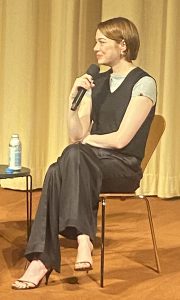
Screenwriter Will Tracy (The Menu, Succession) infused his sharp wit into Bugonia which quickly caught the attention of Yorgos Lanthimos. Within an hour of reading the script, Yorgos expressed his desire to direct, noting the script’s near perfection. This was a new experience for him, as his previous collaborations involved much longer development periods with writers like Tony McNamara. This project moved quickly; he sent the script to me right after reading it, and what you see on screen is close to what was originally written.
The script was so clear that our conversations with Yorgos quickly turned to logistics: Where would we build the house (our production designers constructed it outside London)? Who would be on the crew (mostly the same team as always, our “traveling circus”)? There was some stunt training, but not many philosophical discussions — we focused on how to make it all happen.
Unusually, we did very little rehearsal for Bugonia. Jesse Plemons and I had just finished working together on Kinds of Kindness, a project structured as a triptych, so we had already played multiple characters opposite each other. Our familiarity made it easy to jump in, and although we ran lines for a couple of days, we didn’t need the extensive rehearsal process of previous films like The Favourite or Poor Things.
Managing audience expectations was one of the most interesting challenges — walking a tightrope between revealing and withholding Michelle’s identity. Normally, I try not to think about how an audience will perceive my performance, but this role was different. I was constantly aware of the viewer, especially for those watching a second time. Yorgos and I discussed subtle tells that could be noticed on repeat viewings, but would hopefully go unnoticed initially.
Playing a CEO who is fluent in corporate-speak helped — a language that sometimes feels almost “oily” and “inhuman,” which suited the character’s possible otherworldliness. Had the character been warmer or more nurturing, the challenge would have been different. The role of Michelle was a perfect mix of ambiguity and intrigue.
I watched a lot of YouTube videos of CEOs and business leaders to absorb their speech patterns. I also fell down a rabbit hole learning about “Starseeds” — people who believe they are part alien. Their online communities are surprisingly emotional and vulnerable, which is quite different from how Michelle, my character, presents herself. The script, especially details like “leaving work at 5:30,” gave me plenty to work with in balancing these elements.
Working with Jesse was a highlight — he’s one of the best actors I’ve ever partnered with. He’s accessible, generous, and his emotional openness on screen required me to maintain my own character’s icy composure. It was a true push and pull, as our characters are two sides of the same coin, both believing they are saving the world in their own ways. His rawness and my character’s restraint created a compelling dynamic.
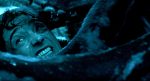
Bugonia often feels like a stage play, with long, dialogue-heavy scenes in confined spaces. The environment and the intensity of the dialogue gave it a theatrical quality — though I spent a lot of time chained to a cot, which wasn’t exactly playful. The dinner table scene was the exception; it was the most “playful” moment, as both characters let their guards down just a little, finding a rare moment of connection before conflict resumes.
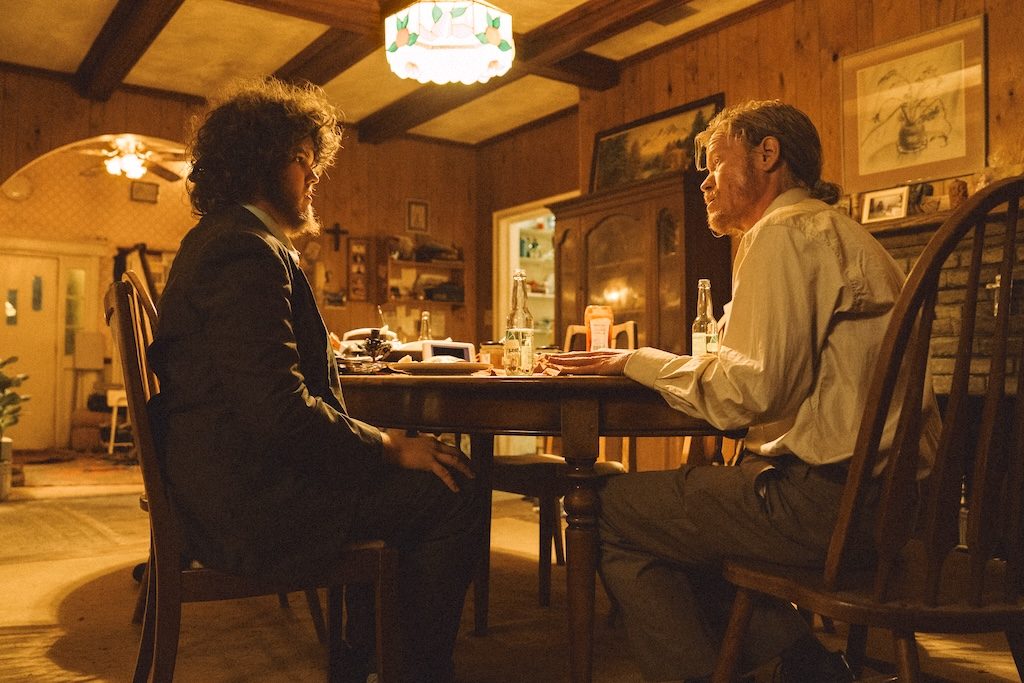
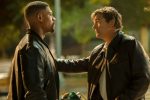
Don (Aidan Delbis) and Teddy (Jesse Plemons) as Teddy. Photo by Atsushi Nishijima/ Focus Features
The tone of the film is funnier than audiences might expect. Yorgos would remind us daily, “It’s a comedy.” He masterfully balances tonal shifts, allowing us to experiment while guiding us back if we strayed too far. The script walks a fine line between truth and absurdity, violence and humor, and I trusted Yorgos to bring out those nuances. The cast contributed improvised moments — Jesse’s line, “I’m not a sick ape,” and Aiden’s perfectly-timed “Can I go to the bathroom?” at the dinner table — added surprising, memorable touches.
The otherworldly final scenes were some of the most fun to shoot. There was a “goo pool” on set, and a rescue diver (in full scuba gear) would help me in and out because the set was so slippery. The visual absurdity — the way the aliens walked, their mitts, the “beanie crown” — all added to the surreal atmosphere. Our sound designer, Johnny Byrne, created an alien language by remixing my English lines and having me and Atsushi Nishijima (the stills photographer who played the other alien) learn and perform it. Nishijima, who had never acted before, was so devoted that he spent every spare minute rehearsing lines with me.
Producing has made it easier to watch myself on screen, even though it’s still difficult. I can step back and see the film as a whole rather than fixate on my own performance. As Yorgos edits, I’ve watched multiple cuts, though he tends to take notes only from my mother, Krista, rather than me. He really values her taste — she even has her own favorites among his films!
This film’s themes hit particularly hard, feeling relevant to our current moment. Compared to the more surreal or absurdist worlds of Yorgos’s past films, this one feels closest to reality — despite the spaceship. The story explores power, control, and codependence in a direct, emotional way. Sadly, since filming, the story’s relevance has only grown, echoing real-world tensions. Shooting in such a contained, realistic environment was a unique and sometimes unsettling experience, but ultimately a rewarding one.

Join the Discussion!

Browse our Videos for Sale
[woocommerce_products_carousel_all_in_one template="compact.css" all_items="88" show_only="id" products="" ordering="random" categories="115" tags="" show_title="false" show_description="false" allow_shortcodes="false" show_price="false" show_category="false" show_tags="false" show_add_to_cart_button="false" show_more_button="false" show_more_items_button="false" show_featured_image="true" image_source="thumbnail" image_height="100" image_width="100" items_to_show_mobiles="3" items_to_show_tablets="6" items_to_show="6" slide_by="1" margin="0" loop="true" stop_on_hover="true" auto_play="true" auto_play_timeout="1200" auto_play_speed="1600" nav="false" nav_speed="800" dots="false" dots_speed="800" lazy_load="false" mouse_drag="true" mouse_wheel="true" touch_drag="true" easing="linear" auto_height="true"]




You must be logged in to post a comment Login