
Miranda Priestly: The Anti-hero in “The Devil Wears Prada 2” Screenwriters Can’t Stop Writing About

Miranda Priestly, the iconic editor of Runway Magazine in The Devil Wears Prada and The Devil Wears Prada 2, might be considered a character archetype. The immutable lady boss knows what she wants and won’t hold her tongue to get it. Despite her abrasive demeanor, there’s a touch of humanity inside her as she takes Andy Sachs (Anne Hathaway) under her wing as a mentee of sorts. Miranda is an ice lady driven by intellect and intent. That makes it difficult for audiences to turn away as they ponder anti-heroes – characters we love to hate, but watch them anyway.
Prada is the brainchild of author Lauren Weisberger who wrote the novel and Aline Brosh McKenna who wrote the screenplays for both films.
The Enduring Power of an Unlikable Character
Miranda Priestly is not likable. Some argue she’s despicable, heartless. That’s precisely why she’s one of cinema’s most compelling characters. When Meryl Streep first stepped into those four-inch heels and a face that could carve stone in 2006, she created a female antagonist audiences invested in because of her ruthlessness.
Two decades later, as the sequel The Devil Wears Prada 2 demonstrates, Miranda’s steely appeal hasn’t faded. Instead, it’s deepened, revealing layers that screenwriters have spent twenty years trying to understand and recreate. Even as she navigates the digital marketplace, her fading fashion magazine, relevance and legacy wear her down.
What makes Miranda Priestly the gold standard for complex, morally gray characters? The answer lies in her contradictions, her vulnerability buried beneath her armor, and her refusal to soften her stance for anyone’s comfort. She’s authentic and won’t wear masks for anyone, not even herself.
Why Miranda Priestley Became Iconic: Competence Without Apology
Miranda isn’t iconic because she’s a villain. She’s iconic because she’s undeniably good at what she does. And she’s confident about it; assured not arrogant. This distinction matters enormously for screenwriters trying to craft such hardened characters that shape the cultural landscape.
The original The Devil Wears Prada film established a boss who doesn’t explain herself, doesn’t coddle her staff, and doesn’t pretend to be anyone’s friend. She’s there to do a job.
She demands impeccable sartorial excellence and creates a toxic work atmosphere where mediocrity isn’t tolerated. In the sequel, now navigating the decline of traditional magazine publishing terrain, Miranda faces existential threats to her empire without losing her edge — she simply becomes more essential precisely when the industry devalues what she represents. Therein lies her mettle. A good sailor’s worth is displayed during a storm, not at the docks.
Unlike villains who are evil for evil’s sake, or to project their issues and insecurities, Miranda is harsh because her standards are impossibly high. The gold medal is the only one worth winning. Who cares about silver and bronze? When she tears into Andy Sachs with the famous “blue cardigan” monologue, she’s not being cruel for cruelty’s sake — she’s teaching her, and Andy listens.
Meryl Streep’s performance sells this unwavering “steel fist in a Dior velvet glove” paradox without ever going soft. She delivers the role with such clarity that audiences feel both fury and respect. Love and hate. Affection and revulsion. A lesser actress might have played Miranda as one-dimensional. Streep confidently reveals that every belittling comment carries genuine intelligence and wisdom about life.
Miranda is well aware of her irritating rivals and would-be foils, but she sweeps them away with a proverbial dustpan and brush.
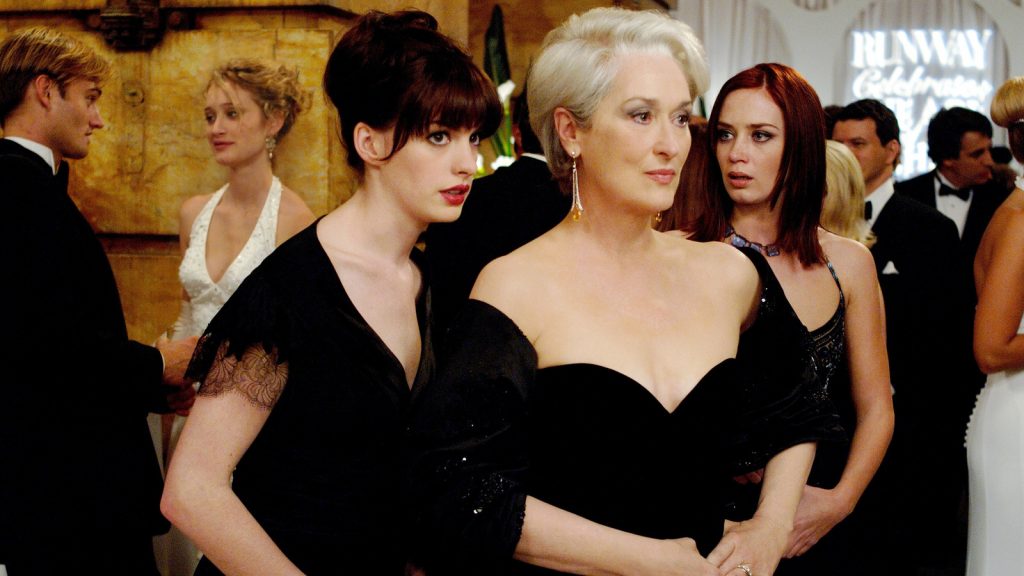
Andy (Anne Hathaway), Miranda Priestly (Meryl Streep) and Emily (Emily Blunt) in The Devil Wears Prada 2006. Photo courtesy of 20th Century Fox
The Character Traits That Make Miranda Unforgettable
Ruthless Mission
Miranda sees a ruthless reality and unshakeable vision without the rose filter many managers use. She won’t sugar-coat the truth. She recognizes that Andy doesn’t understand fashion. She knows Emily Charlton (Emily Blunt) is both brilliant and limited. She sees that Runway magazine’s days are numbered and she plans for its eventuality. She refuses to perform false optimism or pretend things are fine when they’re not.
Emotional Complexity Buried Beneath Stone Coldness
What separates Miranda from a caricature is the subtext in her composure. We never see her breakdown, but we glimpse the loneliness in her perfectly furnished apartment. We observe her marriages crumble (the sequel adds another relationship in trouble). The harshness we see isn’t sadism — it’s a shield. This distinction is what keeps audiences invested rather than simply hating her. They may not like her, but they appreciate her worldview. Miranda has an emotional depth and scar tissue that many can’t access – which makes her even more appealing.
Perfectionism as Both Strength and Weakness
Miranda’s pursuit of excellence without a release valve isn’t emotionally healthy. It’s obsessive. Destructive. The sequel reveals her grappling with her obsolescence as the magazine world crumbles, showing that her identity is shaped by her work. Her internal chaos masks her calm veneer.
Authority Maintained Through Command Without Explaination
Miranda never justifies her decisions. She barks them as facts. She doesn’t dither or change her mind. And she’s right, most of the time. Her command-like dialogue creates a specific kind of tension. When she tells Andy to fetch the “cerulean blue” coat, not any blue coat, she’s establishing that descriptions mean something specific, and Andy’s interpretation or questioning is irrelevant.
Isolation: The Price Of Power
Miranda’s ruthlessness isn’t free of consequence. Her marriages fail. She has no genuine friendships. The sequel explores this more deeply, showing how obsolescence threatens someone whose entire sense of self is tied to being indispensable and irreplaceable. Isolation is a real cost, not a trade off to being the best in show. Miranda will never have normal relationships or peace of mind. In many respects, she’s more of a tragic figure than villanous.
The Andy Sachs Dynamic: Why the Relationship Transcends Mentor-Mentee
The relationship between Miranda and Andy is the emotional backbone of both films. It’s not a traditional mentorship because Miranda doesn’t mentor intentionally. She’s simply herself, and Andy either adapts or doesn’t. It’s a dichtomous sink or swim.
In the original The Devil Wears Prada film, Andy begins as someone Miranda barely acknowledges, let alone praises. The character arc doesn’t involve Miranda becoming more sympathetic. It involves Andy becoming competent enough to be worthy of Miranda’s time or respect. By film’s end, when Andy walks out of the office, Miranda allows herself the tiniest acknowledgment that Andy has become someone worth knowing. This moment works because Streep and Hathaway have developed a genuine sliver of respect for each other.
In The Devil Wears Prada 2, their dynamic shifts. Andy has become a successful journalist and she’s achieved something beyond Miranda’s world or control. Now, the power differential changes. Miranda has become almost irrelevant to Andy in professional terms, which creates an interesting power reversal. The question becomes whether Miranda can exist outside her role as supreme authority as her world falls apart.
Another sting in their relationship is that Andy is not Miranda’s protégée molded in her image. Andy forges her owen path and leaves Miranda behind.
This relationship works because it’s built on mutual recognition without sentimentality. When they finally understand each other, it’s not through a tearful confession. It’s through the accumulation of moments where each woman sees the other’s competence, drive, humanity, and isolation. That’s far more powerful than conventional hug.
Why Miranda Priestly Endures: A Character for the Ages
Over twenty years, Miranda Priestley has become more relevant, not less. The original film worked as comedy. The sequel works more as commentary on the collapse of revered institutions and the people who built them. Miranda represents something increasingly complicated: a woman who built an empire through excellence and force of will, now watching that empire become obsolete, not because she’s failed, but because the world has changed dramatically. There’s tragedy in that. There’s also dignity in her refusal to diminish herself to fit the newly-diminished circumstances.
That’s why Ms. Priestley will still be influencing character writing a hundred years from now.

Join the Discussion!



Browse our Videos for Sale
[woocommerce_products_carousel_all_in_one template="compact.css" all_items="88" show_only="id" products="" ordering="random" categories="115" tags="" show_title="false" show_description="false" allow_shortcodes="false" show_price="false" show_category="false" show_tags="false" show_add_to_cart_button="false" show_more_button="false" show_more_items_button="false" show_featured_image="true" image_source="thumbnail" image_height="100" image_width="100" items_to_show_mobiles="3" items_to_show_tablets="6" items_to_show="6" slide_by="1" margin="0" loop="true" stop_on_hover="true" auto_play="true" auto_play_timeout="1200" auto_play_speed="1600" nav="false" nav_speed="800" dots="false" dots_speed="800" lazy_load="false" mouse_drag="true" mouse_wheel="true" touch_drag="true" easing="linear" auto_height="true"]







You must be logged in to post a comment Login