
The Boroughs Netflix: Can It Escape Stranger Things?

The Boroughs arrived on Netflix with a shadow cast over it. It premiered shortly after the highly-publicized final season of Stranger Things setting the stage with the Duffer brand who acted as executive producers. That proximity has shaped industry discourse regarding how close the shows are. Aside from the Duffer Brothers name, the show, created by Jeffrey Addiss and Will Matthews (Dark Crystal: Age of Resistance) bears thematic and genre similarities to the cultural juggernaut.
It has been described as Stranger Things for retired people. Both feature supernatural monsters, a community of misfits who band together to beat them, and secret experiments on humans. Both are essentially coming of age stories.
For writers and showrunners who care about originality, the question is not merely whether the new series borrows familiar beats from genre tropes, but whether it translates those beats into a distinct dramatic and emotional engine that gives it enough space and autonomy.
What is The Boroughs about?
The Boroughs is an eight‑episode supernatural drama set in a New Mexico retirement community where a grieving and curmedgeonly newcomer Sam Cooper (Alfred Molina) and his neighbors confront an otherworldly presence. The cast is anchored by Alfre Woodard, Geena Davis, Denis O’Hare, Clarke Peters, Bill Pullman, Jena Malone, Seth Numrich, and Alice Kremelberg rounding out a venerable ensemble.
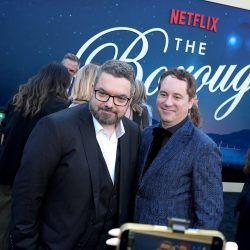
Jeffrey Addiss and Will Matthews. Photo by Gonzalo Marroquin/ Getty Images for Netflix
The Boroughs vs Stranger Things: surface echoes and structural differences
The most glaring parallels to Stranger Things are structural: a contained community, a group of outsiders who must band together, and a hidden menace that upends ordinary life for them. These are established supernatural/ horror genre scaffolds rather than proprietary inventions.
Some argue the hidden menace is resplendent of Spielberg DNA.
Where the two shows diverge is in emotional logic and the life stages of the characters – teenagers on dragster bikes compared to retirees on golf carts.
Stranger Things built its engine on adolescent belonging, 1980s pop culture nostalgia, and the specific mythos of the Upside Down. By contrast, this series centers on aging, memory, and the legal and social realities of retirement living. That shift changes the stakes: scenes that in another show would be about bike chases and Dungeons & Dragons become here about wills, caretaking, and the indignities of institutional life.
The resemblance between the two shows is not accidental. Addiss and Matthews have said the project was conceived with the Duffer team’s production backing in mind, and the Duffers themselves framed the show as a tonal cousin to their earlier work.
Related: In Conversation with the Duffer Brothers: “Stranger Things 5”
The Dufferverse question: influence versus authorship
When a production company becomes synonymous with a hit show and cultural phenomenon, everything it touches risks being blended into a branded universe. Call it the Dufferverse effect: audiences and critics map expectations and comparisons onto new projects because of shared creative DNA.
That effect is real and commercially useful. But a new show needs to forge its own path. Executive producers often provide tonal guidance, script notes, and casting leverage. But executive producing is not the same as showrunning. The creators Jeffrey Addiss and Will Matthews bring their own sensibilities and a track record in character‑driven supernatural genre work. The craft question for writers is how to preserve authorial specificity when a high‑profile producer’s name looms large. It’s a similar dilemma to the child of a Hollywood star acting in another film.
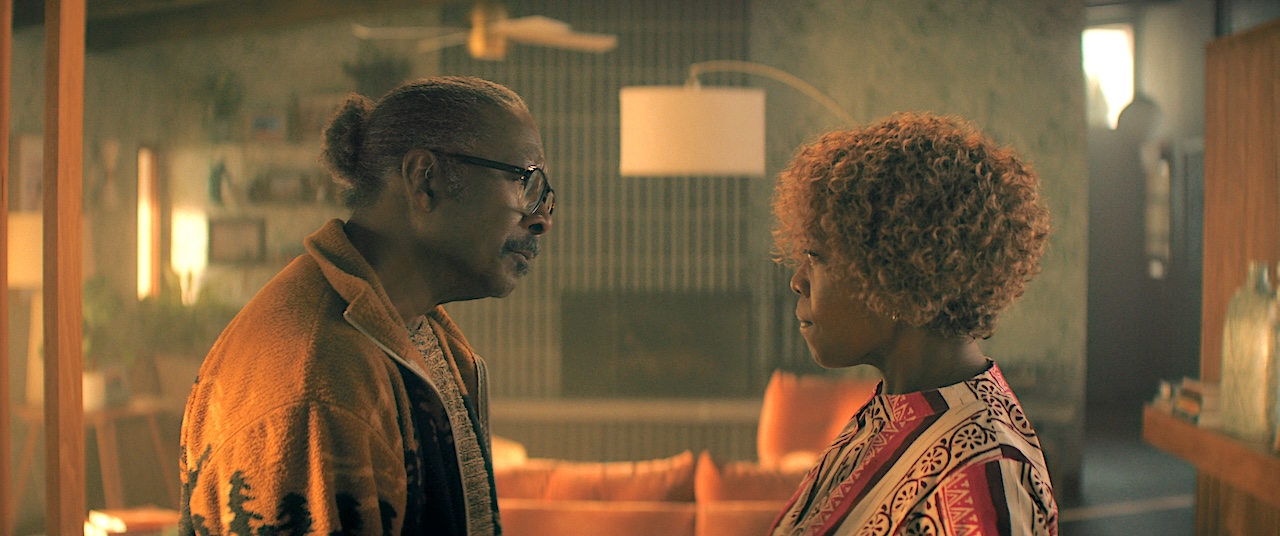
Art (Clarke Peters) and Judy (Alfre Woodard) Photo courtesy of Netflix
Practical implications for writers
If you’re drafting a spec or a pilot inspired by a popular show, identify which elements are interchangeable (characters, ensemble dynamics, mystery structure) and which are proprietary (specific mythologies, lore, world-building, and signature visual cues). Use the fungible elements to scaffold a new thematic question rather than to replicate beats. Your show is not a knockoff. That’s how you avoid being dismissed as derivative. That’s exactly what Addis and Matthews have largely achieved.
Related: Jeffrey Addiss & Will Matthews on ‘Dark Crystal: Age of Resistance’
Can the show stand on its own dramatic merits?
Yes, but conditionally. The series earns independence when scripts exploit its unique vantage: aging bodies as unreliable narrators, memory as a narrative device, and institutional bureaucracy as an antagonist. Episodes that foreground those elements feel original and unique to that world. Episodes that default to nostalgic set pieces or character tropes invite intrusive comparison.
Two writing craft tips can make the difference. First, center scenes on character decisions that only these specific characters in The Boroughs could make. A retirement community board meeting that decides whether to evict a protagonist can be as suspenseful as a monster chase if the stakes are personal and the choices morally ambiguous. Second, use genre mechanics to investigate theme. If the supernatural element is a metaphor for dementia since nobody woudl believe them, let the monster’s logic mirror cognitive decline rather than mimic an existing franchise’s rules.
Final verdict for writers
The Boroughs will live in conversation with Stranger Things for as long as the Duffers’ name carries cultural weight. That’s inevitable. But cultural association is not destiny. The show’s creators can carve a distinct identity by committing to a different thematic center and by making deliberate story choices. It should be noted that the Duffer Brothers were also executive producers who shepherded Haley Z. Boston’s Something Very Bad Is Going To Happen onto Netflix. The stylistic and thematic elements were sufficiently distinct to avoid comparisons beyond Ross and Matt Duffer name.
Now that you’ve written the pilot of your new series, it’s imperative that you have a fresh pair of eyes read it. Not only to pick up typos and story glitches you may have missed, but also to asses how it may received by the industry and get it into the best possible shape.

Join the Discussion!



Browse our Videos for Sale
[woocommerce_products_carousel_all_in_one template="compact.css" all_items="88" show_only="id" products="" ordering="random" categories="115" tags="" show_title="false" show_description="false" allow_shortcodes="false" show_price="false" show_category="false" show_tags="false" show_add_to_cart_button="false" show_more_button="false" show_more_items_button="false" show_featured_image="true" image_source="thumbnail" image_height="100" image_width="100" items_to_show_mobiles="3" items_to_show_tablets="6" items_to_show="6" slide_by="1" margin="0" loop="true" stop_on_hover="true" auto_play="true" auto_play_timeout="1200" auto_play_speed="1600" nav="false" nav_speed="800" dots="false" dots_speed="800" lazy_load="false" mouse_drag="true" mouse_wheel="true" touch_drag="true" easing="linear" auto_height="true"]







You must be logged in to post a comment Login