
Wickedly Wonderful: Dana Fox Breaks Down Her Screenplay Magic in “Wicked: For Good”

In this interview with Dana Fox, the screenwriter behind the Wicked films you’ll discover her creative process, collaboration with Winnie Holzman, and the joy of adapting a popular Broadway musical for the big screen in two parts starring Ariana Grande and Cynthia Erivo.
How did you approach writing the two Wicked movies?
It was really interesting because we planned both movies at the same time. We forced ourselves to go all the way through the story breaking part of the writing process with both movies. We outlined both movies before writing the first script.
We felt like we really knew the totality of what we were doing before we got into the minutia of what’s in each moment. We started with movie one and made sure we got all the way to the end with a full, solid, decent draft before we started working on the script of movie two. That meant that we were able to have this incredible creative freedom to look into the future and know what we were going to need and what we were going want people to feel a year later in the second movie.
Then we reverse engineered that into the first movie to make sure it hit people in the right way and make the story feel really set up. This is not something you normally have the ability to do because you don’t know you’re making a second movie when you’re writing the first one.
We were delighted that we were allowed to dream that big and pull thematic ideas across the two movies to make sure we had the right kinds of visual images that we were going to want in the second movie from the first one. We knew a big part of what we had to do was to ease people into the second movie because the story, as it’s designed in the play, is like the act break of a normal movie. Wicked: For Good is not designed to be the entire movie. We knew we needed a lot of act one stuff to make you feel like you were in a normal movie before the two and three act breaks.
Then you want to balance the tone because the first movie was so much poppier and happier. Do we have enough fun in the second movie? Is there enough lightness? Is there enough dancing? Is there enough singing? Is there enough upbeat stuff? We tried to do that without breaking the DNA of what the consequences part of the story is supposed to be. We tried to bring some of that levity into the beginning of Wicked: For Good. So, at least you felt like both movies are still in the same universe with the same people. It’s just that they’ve grown up and and things have changed.

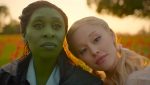
Elphaba (Cynthia Erivo) & Foyero (Jonathan Bailey) Photo courtesy of Universal Pictures
Wicked: For Good is more about the evolution of Elphaba and Galinda’s friendship. Can you describe how they evolve?
It was an interesting evolution because we wanted people to remember what they had fallen in love with. In Wicked For Good, they’re apart, but we wanted people to really feel like they were always thinking about each other and they were still very drawn to each other especially as it relates to Fiyero (Jonathan Bailey).
It was really important that you strike exactly the right balance with that because Galinda did not go stand up for her friend Elphaba. She’s not who you think she is. She feels guilty and then Elphaba steals her boyfriend who she’s about to get married to.
As a screenwriter, Winnie and I were both very interested in making sure that they remained incredibly complicated women, but you understood why each one of them was making their decisions. You felt the difficulty and the pain in those choices.
We watch them grapple with the fact that they don’t love where they are in life. The second movie is about the evolution of their friendship, the breaking of it, and then ultimately, the assertion that their friendship will have meant everything in the end. That’s very hard to do when people aren’t actually together in most scenes. Winnie Holtzman and I were constantly talking about how can we make the audience feel that they’re thinking about each other.
Discuss how the Wizard Of Oz characters like the Lion and Tin Man are introduced.
We were very aware that we wanted to touch on those characters in a very delicate way because we wanted to make sure that we were always true to the original concept of the book where the bad guy wasn’t really the bad guy, and maybe the good guy wasn’t as good as you thought they were. That central idea had to also apply to the other characters.

Dana Fox. Photo by Jordan Strauss
Legally we could not do anything that was not in the L. Frank Baum Oz books. The idea of the lion who became who he was because Elphaba tried to save him is kind of controversial. Are we really saying that a good deed could lead to something awful in the end? We really need it to solidify what Elphaba is singing about in No Good Deed – it doesn’t matter what she tries to do, something bad can come out of it.
How does Wicked: For Good explore themes of Good and Bad?
I have to give Winnie Holtzman credit for doing all of the initial profound thinking on the concept of what does good and bad mean 22 years after the musical she wrote with Stephen Schwartz. Knowing everything that the world has been through at that point deepened that question even more.
We couldn’t have known we would be where we are in the world right now. We all hate how relevant the Wicked movies feel to what’s happening with the persecution of the animals and the idea that everybody seems to need a good guy and a bad guy. Nobody can seem to see any nuance.
I think by Elphaba saying that she needs to be bad so Galinda can be good, she is acknowledging that there actually have to be shades of gray. It’s never too late to stand up and do the right thing. This is an incredibly important message right now because I think a lot of people wish they were Elphaba and stand up the minute something unfair happened rather than keep their mouths shut.
That bravery is very exciting because it does say to you there is the gray area, and within the gray area there’s a spectrum. We’re all going back and forth between it throughout our whole lives, and we’re all pushing to try to be closer to the good. Sometimes not wanting to see our feeling of vulnerability pulls us more towards the bad.

Join the Discussion!
Related Articles
Browse our Videos for Sale
[woocommerce_products_carousel_all_in_one template="compact.css" all_items="88" show_only="id" products="" ordering="random" categories="115" tags="" show_title="false" show_description="false" allow_shortcodes="false" show_price="false" show_category="false" show_tags="false" show_add_to_cart_button="false" show_more_button="false" show_more_items_button="false" show_featured_image="true" image_source="thumbnail" image_height="100" image_width="100" items_to_show_mobiles="3" items_to_show_tablets="6" items_to_show="6" slide_by="1" margin="0" loop="true" stop_on_hover="true" auto_play="true" auto_play_timeout="1200" auto_play_speed="1600" nav="false" nav_speed="800" dots="false" dots_speed="800" lazy_load="false" mouse_drag="true" mouse_wheel="true" touch_drag="true" easing="linear" auto_height="true"]




You must be logged in to post a comment Login