
Tracey Wigfield & Lang Fisher on “The Four Seasons” Season 2: How They’re Exploring Grief, Friendship, and Middle-Aged Married Drama on Netflix

Grieving together isn’t easy, but these six best friends know how to navigate life’s roughest waters. Netflix’s The Four Seasons Season 2 picks up in the aftermath of a devastating loss: Nick (Steve Carell) has died, leaving behind his pregnant girlfriend Ginny (Erika Henningsen) and his ex-wife Anne (Kerri Kenney-Silver) to rebuild their lives along with the rest of the cast.
Created by Tracey Wigfield, Lang Fisher, and Tina Fey, the comedy-drama reunites Kate and Jack (Tina Fey and Will Forte), Danny and Claude (Colman Domingo and Marco Calvani), and the strained dynamic between Anne and Ginny. As the group honors their long-standing tradition of seasonal vacations —this time venturing from the Jersey Shore to the sun-soaked coast of Italy — they grapple with purpose, marriage, parenthood, friendship and the resilient bonds that hold them together when life tests them with a fresh batch of challenges.
Wigfield and Fisher spoke with Creative Screenwriting Magazine about writing the second season of The Four Seasons.
Where does Season 2 pick up the story?

Lang Fisher, co-creator of The Fours Seasons
Lang Fisher: We pick up Season 2 at a major loss and we wanted to look at how that not only affects the individuals in the group, but the group as a whole.
Nick was a connector of these people. He was a nexus. He was the one who made people go on these vacations and he pulled everyone together. When you lose the nucleus of the group, everybody and everything, kind of fall apart.
We wanted to talk about the way everyone’s dealing with their grief in very different ways.
You see Jack really struggling after losing a best friend. You see Danny and Claude re-evaluating what they should do in the next chapter of their lives. But you you also see that the group reforms itself and changes shape. You see these new friendships budding in the wake of losing Nick. You have Anne and Ginny becoming very close and you have this very interesting new friendship at the end of the season where Claude and Jack become close.
Related: 7 Things Writers Can Learn From The TV Series “The Four Seasons”
To what extent is Season 2 of The Four Seasons both a continuation of Season 1 and the original 1981 film?
Tracey Wigfield: The real link for me is in the tone that we established. It has a warm funny, but also dramatic tone that we crib from the movie.
But now that we have moved on to a new season without a template, I think we know who these characters are. Some parts of them are very much based on the characters in the original movie.
Lang Fisher: One thing we took from the movie this season that we had never explored in Season 1, was a whole storyline with Alan Alda’s character (Jack) where Carol Burnett (Kate) accuses him of not being able to express his anger. But now, we have these characters that we are getting to know more and more, and we have creative license to go wherever we want and whatever we think feels interesting and relatable to them.
It’s a pretty grounded show that we hope takes place in the real world and people identify with the characters and see themselves in them. But we also want it to feel playful.
Related: Redefining TV Genre and Tone In The Dramedy
How do the dynamics over the couples’ relationships evolve over Season 2?

Tracey Wigfield. Co-creator of The Four Seasons
Tracey Wigfield: The most interesting part of the show is showing people who have been married for a really long time because it’s so true to my life.
Tina Fey, and many of the writers have been married for a really long time, and you would think you would always get better at communication in a linear way. But you don’t, and often there’s just patterns in the way that you communicate with each other. Some are fine, but others are really damaging and build up, and get worse over time.
With Kate and Jack, I relate to them so much because I think their surface way of communication is through humor and they make jokes with each other. Everything is kind of snipping at each other in a light way – until it isn’t.
With Danny and Claude, we’ve seen a huge improvement and shift in their communication from Season 1. It’s nice to be able to track that these two people had a very specific dynamic where they were withholding things from each other, but also, Danny calls a lot of the shots in a way that Claude likes and goes along with until Season 2.
Danny pushes the baby issue to the point where Claude says, ‘I’m not going to do this anymore’ about this issue or anything else in their marriage. We see a real shift with the two of them
Ginny and Anne came together in such an uncomfortable, weird way. They are the opposite of a couple who meets, and little by little, they get to know each other. They met the worst parts of each other and have been forming a friendship backwards.
How did you balance character development with moving the plot forward?
Lang Fisher: When you start a show, you have an idea of who your characters are. Once you cast it, your actors add a certain level of depth to those characters. When you proceed in the series, you learn more about these people.
I think Anne is a good example. When we first meet Anne in Season 1, she seems like a flighty, loosey-goosey lady who’s let life kind of pass her by. And then, you start learning more about her. She’s really quite sharp and she had this whole life before Nick where she was an edgy artist who lived in the Wast Village and was into punk rock.
Then she and Nick got together, she became this mother, and she threw herself into that.
In this season you see her trying to reconnect with this wilder, freer part of herself and it adds these layers of depth. As a writer, finding these little moments about these characters and digging into their past, really helps open you up in the writing process because you know them a little bit better. You know their deep wounds, their secret embarrassments and shames, and all that good stuff that makes writing exciting.
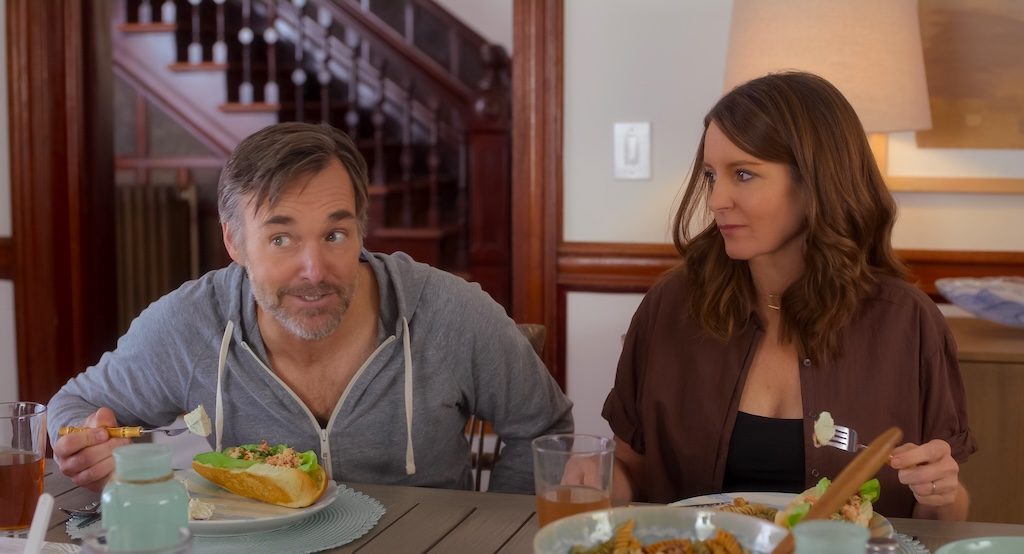
Jack (Will Forte) Kate (Tina Fey) Photo courtesy of Netflix
Related: Unlocking the Quirky Comedic Chemistry of Netflix’s “Nobody Wants This”
Why did you limit the number of episodes you each wrote in both seasons?
Tracey Wigfield: I know there are some showrunners who either write the whole season themselves like Mike White, but we don’t.
We write the show with the writers that we hired. It’s not a big room, but it’s a room of EP-level showrunners and people that we’ve worked with for a really long time. We trust our writers so much.
This is the kind of show that would be much worse if Lang and I wrote the whole thing together. It’s about relationships and how everyone’s marriages and 20-year friendships are similar in so many ways, but also very different.
People are responding to the conversations that we’re having in the writers’ room where I’m describing something that’s going on in my marriage and then another writer’s describes it from their husband’s point of view.
It’s all about perspectives and points of view.

Join the Discussion!



Browse our Videos for Sale
[woocommerce_products_carousel_all_in_one template="compact.css" all_items="88" show_only="id" products="" ordering="random" categories="115" tags="" show_title="false" show_description="false" allow_shortcodes="false" show_price="false" show_category="false" show_tags="false" show_add_to_cart_button="false" show_more_button="false" show_more_items_button="false" show_featured_image="true" image_source="thumbnail" image_height="100" image_width="100" items_to_show_mobiles="3" items_to_show_tablets="6" items_to_show="6" slide_by="1" margin="0" loop="true" stop_on_hover="true" auto_play="true" auto_play_timeout="1200" auto_play_speed="1600" nav="false" nav_speed="800" dots="false" dots_speed="800" lazy_load="false" mouse_drag="true" mouse_wheel="true" touch_drag="true" easing="linear" auto_height="true"]






You must be logged in to post a comment Login