
What Do Hollywood Script Readers Actually Look For?

Script readers are the first gatekeepers of Hollywood’s creative pipeline. They work for production companies, studios, managers, and agents, reading hundreds of submitted screenplays and manuscripts each year to identify material worth developing. In an industry that receives thousands of submissions annually, script readers filter the noise, offering coverage reports that executives rely on to greenlight projects, pass on submissions, or request revisions. They are hired across all levels ranging from unpaid internships for college credit or industry experience to development executives at major companies. This article gives screenwriters an insight into their thinking and how you can turn an “meh” into a “wow!”
What Script Readers Actually Do
Script readers spend their days immersed in screenplays — a few excellent, most middling, some awful. Their primary responsibility is to assess whether a script has commercial potential, artistic merit, or fits the current remit of who they are reading for. They read with a critical eye trained to evaluate story structure, character development, dialogue quality, marketability, and production feasibility.
Beyond reading, script readers produce detailed coverage reports that break down the manuscript into digestible components. These reports typically include a logline (one-sentence summary), a one-to-two-page synopsis, and a detailed analysis covering story strengths and weaknesses, character arcs, genre appropriateness, and overall recommendation (pass, consider, or recommend). The entire process — reading plus writing coverage — can take 2–4 hours per script.
The job is often an entry point into the entertainment industry. Many current screenwriters, producers, and executives began as script readers, using the role to build industry connections, understand what sells, and develop an eye for quality storytelling.
Related: How to Quit Your Job And Follow Your Screenwriting Dream
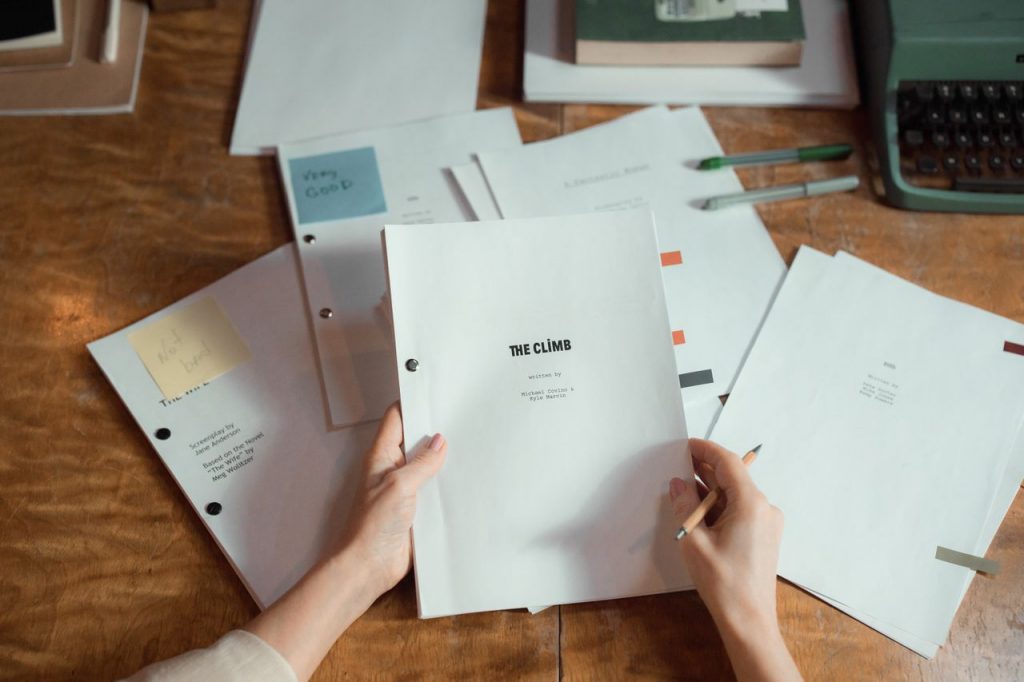
How Script Readers Make Decisions
Script readers don’t make the final greenlight decision — executives do — but their assessments carry surprising weight. A strong “recommend” can move a script up the priority pile; a “pass” often means a script never reaches the decisionmaker’s desk.
First impressions matter immediately.
Readers assess the opening pages within the first 5–10 minutes. If the writing is sloppy, the premise, world, or genre is unclear, or the character isn’t compelling, many readers will skim ahead, knowing they’ve identified a likely pass. This harsh reality reflects the volume and efficiency problem.
Story structure and execution form the backbone of evaluation. Readers look for clear three-act structure, compelling turning points, escalating stakes, and a satisfying resolution. If the plot meanders, secondary characters overshadow the protagonist, or the climax feels unearned or abrupt, those weaknesses appear in coverage.
Related: Are You Ready To Enter The Screenwriting Marketplace?
Marketability and genre clarity heavily influence recommendations. Readers ask: Who is the audience? Is this a commercial thriller, an indie drama, a family film? Can the studio market it? How could it be financed? Would an A-list actor want to play this role? A beautifully written character study might receive a “consider” instead of a “recommend” if the reader sees limited commercial appeal or an interesting writer for writing assignment.
Execution quality versus concept strength creates magnets in decision-making. A reader might love a high-concept premise (AI becomes sentient and falls in love with a human) but recognize the screenplay itself is poorly written. In that case, the coverage might recommend the concept while flagging the script for significant rewrites, signaling to executives: “The idea is gold, but this version isn’t ready.”
Timeliness is also a prevailing factor in the process – despite many films taking years to produce. Producers ask what a particular project has to say to a contemporary audience. How does this fit into the cadre of the current films on our screens? Will it saturate the market or not? More importantly, how does it address the global issues of the day?
Script readers are human, and subjectivity unavoidably creeps into every recommendation. One reader might find a slow-burn mystery compelling; another might see it as tedious. Some readers favor dialogue-heavy character dramas; others need action and spectacle to stay engaged. The industry acknowledges this by having multiple readers assess high-priority submissions, creating a consensus view that balances individual bias.
Script readers shape what gets made. They help determine which ideas get fast-tracked and which languish in the slush pile.
For writers, understanding how script readers approach their work is crucial. A script that hooks readers on page one, maintains momentum throughout, and delivers a satisfying ending has already cleared a significant hurdle before reaching executives who actually make decisions. In that sense, learning to write for the reader—not just for the audience — is a practical necessity for any screenwriter.
Script readers and creative executives often share details of what they “have to read.” Even if its a pass for one company for various reasons unrelated to quality, a reader might know someone who is looking for specific material. Other times, producers are looking for partnerships with other companies to spread the financial risk of a film.
Why the First Ten Pages Matter
The first ten pages are the single most consequential stretch of any spec. A script reader will decide whether to recommend a deeper read within that span (sometimes even earlier), so those pages must function as a promise: tone, protagonist, stakes, and a central dramatic question. Think of Aaron Sorkin’s opening of The Social Network — character revealed through choice and conflict — or Bong Joon‑ho’s Parasite, where the world is established by behavior rather than exposition.
By page ten the reader should know three things: the protagonist, the immediate problem, and the tone. Those pages should also pose the central dramatic question that the rest of the screenplay answers. For example, the opening of Jaws establishes threat and stakes in a single sequence; the reader immediately understands the film’s engine.
The writing should be confident and consistent. A script reader should feel that a screenwriter knows their story wll. It should create a sense of curiosity and intimacy with the reader, making them turn each page.
Related: How to Strategize Your Screenwriting Career
Checklist of the 10 Things Hollywood Script Readers Look For
1) A clear protagonist introduced by choice or conflict.
2) A distinct tone that matches the genre and sustains itself.
3) A central dramatic question or theme posed or implied by page ten.
4) Readable, economical description that favors images and emotions over adjectives.
5) Dialogue that reveals character and advances plot.
6) A hook that escalates stakes and illustrates individuality beyond the immediate scene.
7) Originality of premise or voice that feels producible and career-building.
8) Avoidance of clichés like waking up, dream sequences, or endless flashbacks.
9) Formatting, spelling, grammatical, and mechanical competence — sloppy pages get tossed.
10) A sense of control: the writer knows their craft – what to show.
Related: 5 Ways To Get Luckier In Your Screenwriting Career
Final Thoughts Write for the Reader Not Just the Story
A script reader is your first professional collaborator. Treat the first ten pages as a business card and a promise: show you can deliver a producible, cinematic story with a clear protagonist, tone, and dramatic question. If you want targeted feedback that mirrors what readers and execs actually decide on, consider Creative Screenwriting’s script coverage and feedback service as a next step. It provides notes focused on the first ten pages and beyond, framed in the language of development.
Related: Moving Your Mindset From Aspiring To Professional Screenwriter

Join the Discussion!



Browse our Videos for Sale
[woocommerce_products_carousel_all_in_one template="compact.css" all_items="88" show_only="id" products="" ordering="random" categories="115" tags="" show_title="false" show_description="false" allow_shortcodes="false" show_price="false" show_category="false" show_tags="false" show_add_to_cart_button="false" show_more_button="false" show_more_items_button="false" show_featured_image="true" image_source="thumbnail" image_height="100" image_width="100" items_to_show_mobiles="3" items_to_show_tablets="6" items_to_show="6" slide_by="1" margin="0" loop="true" stop_on_hover="true" auto_play="true" auto_play_timeout="1200" auto_play_speed="1600" nav="false" nav_speed="800" dots="false" dots_speed="800" lazy_load="false" mouse_drag="true" mouse_wheel="true" touch_drag="true" easing="linear" auto_height="true"]







You must be logged in to post a comment Login