
Hollywood vs. Reality: Translating Greg Cope White’s Memoir “The Pink Marine” into Netflix’s “Boots”

Netflix’s Boots brings Greg Cope White’s 2016 memoir The Pink Marine vividly to life, charting the journey of a closeted gay recruit Cameron Cope (Miles Heizer) thrust into an intense Marine Corps boot camp. Showrunner Andy Parker (Tales Of The City, Pantheon) reshapes White’s personal narrative into an ensemble dramedy, weaving humor, brotherhood, and the harsh realities of military training.
In adapting The Pink Marine into Boots, creator Andy Parker and co-showrunner Jennifer Cecil navigate the delicate equilibrium between fidelity to the source material and dramatization to entice viewers. They honor Greg Cope White’s lived experience — its humor, its peril, its triumphant assertions and declaration of identity — while sculpting an eight-episode series rich in narrative drive and thematic texture. The Marine Corps backdrop remains credible, its characters ring true even when poetically heightened, and the core message endures: transformation, self-acceptance, and brotherhood can emerge from the mud pit.
Authentic Boot Camp Representation
In both the memoir and the television series, boot camp is depicted as a crucible designed to test recruits’ physical endurance and mental resilience. It is supposed to break them and rebuild them as Marines.

Gerg Cope White
Greg Cope White recounts an extreme weight-making measure — like taping a lead pipe to his body to qualify — a story that underscores the high qualification of enlistment and personal sacrifice. Boots embraces this warrior ethos by demonstrating sleep deprivation, relentless physical drills, endless dehumanizing verbal abuse, and the iconic “kill, kill” chants that remind viewers these young men are being trained to kill.
The series’ use of visceral imagery and authentic drill instructor techniques grounds the narrative in recognizable Marine Corps tradition, conveying both the brutality and camaraderie that White experienced to accurately represent those brutal thirteen weeks. A military advisor was available during the development process of Boots.
Timeline Shift: 1979 vs. 1990 and Don’t Ask, Don’t Tell
A key adaptation decision is relocating White’s enlistment from 1979 to 1990. In reality, White joined a decade before the “Don’t Ask, Don’t Tell” policy, making his service era one of zero tolerance. Andy Parker and co-showrunner Jennifer Cecil push the timeline to 1990, creating a narrative tension and relevance on the cusp of nationwide policy change and mining nuanced attitudes among fellow recruits and instructors. As social and military attitudes were softening towards gay folks, Boots leans more into “Hint, but Don’t Tell” territory.
Maintaining The Vision: Dramedy vs. Memoir
Greg Cope White’s Boot Camp experience balances moments of dark humor with stark reflection on homophobia and combat readiness in his memoir. Boots, billed as a “comedic drama,” relies more heavily into humor early on, but gradually reveals its dramatic weight through moments of vulnerability and confession, paralleling White’s journey from fear to self-acceptance.
Andy Parker’s adaptation strategy was to mash up Full Metal Jacket with David Sedaris – style wit, a combination that spotlights both the absurdity of military rituals and the stakes of coming-of-age under fire. This tonal blend retains the memoir’s emotional flavor while broadening its appeal to audiences relishing both laughter and intensity.
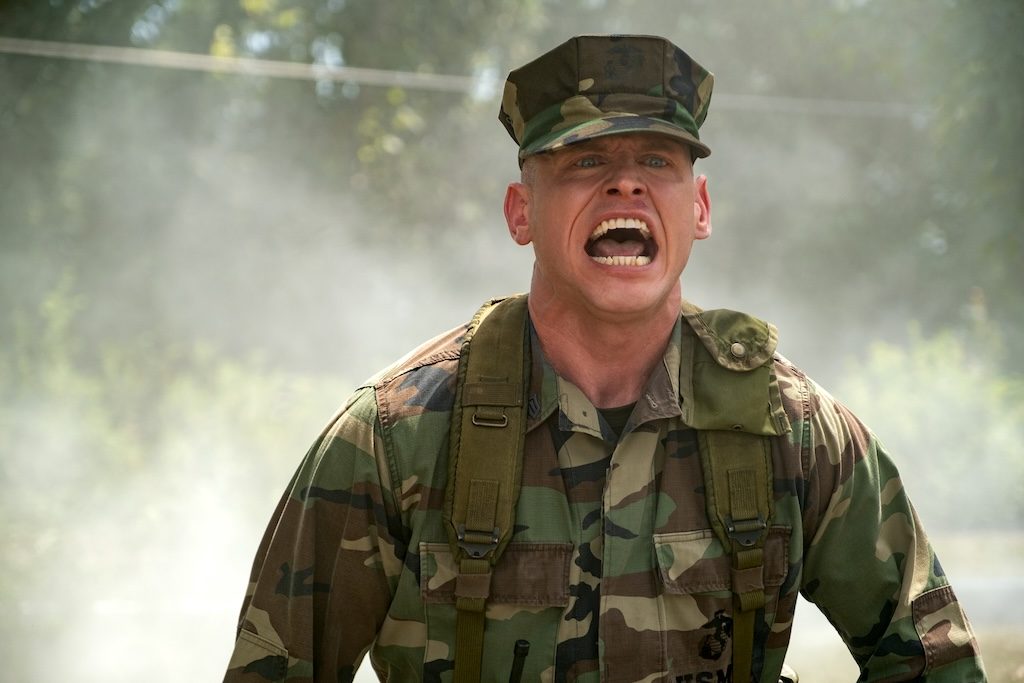
BOOTS. Sgt. Howitt (Nicholas Logan) Photo by Patti Perret/ Netflix
Characterization: Cameron Cope vs. Greg Cope White
Miles Heizer’s portrayal of Cameron Cope channels White’s introspective voice and internal monologue, but differs from The Pink Marine in some emotional registers. In the book, White internalizes his doubts; on screen, Cam externalizes them through an imaginary “shoulder angel” character, granting viewers direct access to his anxiety and wit. This device dramatizes inner conflict and enriches Cam’s arc, whereas the memoir’s first-person account relies more on narrative reflection.
Supporting Platoon Profiles: Diversity and Drama: Authentic Ensemble Dynamics
Boots fills its platoon with recruits from varying backgrounds — an African American aspiring athlete, a quiet country boy, a racially brusque recruit — capturing White’s descriptions of Marines drawn from all walks of life. Parker expands these profiles, giving side characters meaningful subplots: Ray’s (Liam Oh) anxiety disorder prompted by a father’s harsh legacy; another recruit grappling with racial bias in the Corps; an instructor haunted by personal loss. These arcs, while not pulled directly from the memoir, evoke the genuine diversity and interpersonal challenges White encountered during his time in the military.
Parental Relationships: Poetic License
In The Pink Marine, White’s interactions with his family span multiple chapters, exploring long-term dynamics. The series compresses his maternal relationship into a few poignant scenes between Cameron and Barbara (Vera Farmiga), crystallizing his need for affirmation and love before leaving home. This narrative compression trades granular detail for emotional economy, allowing viewers to quickly grasp Cameron’s vulnerability and the stakes of his enlistment. While the show omits certain family anecdotes from the book, it preserves the memoir’s thematic heart: a young man’s search for acceptance.
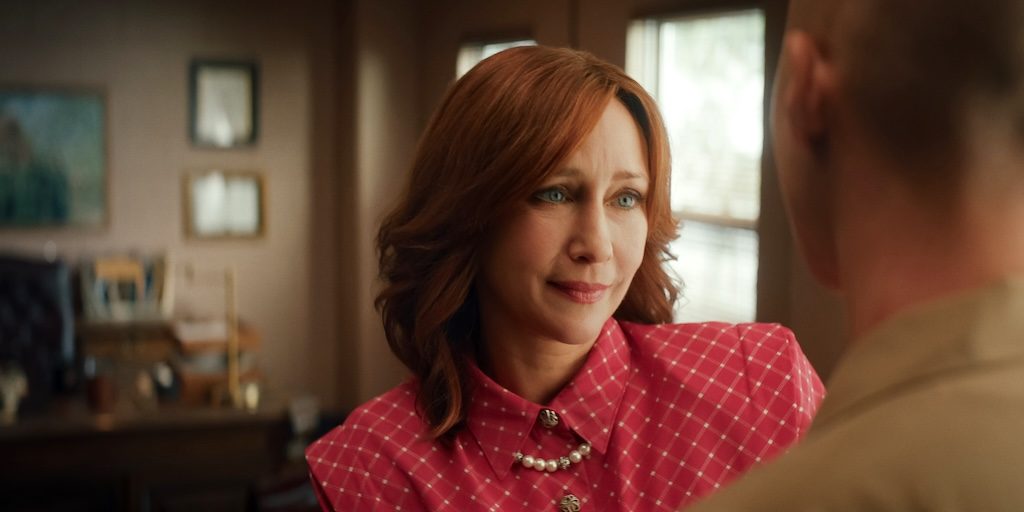
Barbara Cope (Vera Farmiga) Photo courtesy of Netflix
Drill Instructors: From Memoir Profiles to Screen Archetypes
White’s memoir depicts a range of drill instructors, from the purely punitive to those showing grudging empathy. Boots heightens these traits into more vivid archetypes: Sgt. Sullivan’s (Max Parker) measured rigor counterpoints a more unhinged Staff Sergeant Marcus McKinnon (Cedric Cooper) who sadistically pushes recruits beyond reason. These characters are composites rather than direct lifts from the book, designed to intensify dramatic conflict and economically highlight the emotional spectrum of boot camp. Though exaggerated, they reflect the memoir’s acknowledgment that drill sergeants vary widely in methods and motivations.
Key Anecdotes: Included, Excluded, and Transformed
Certain signature stories from White’s book visually make the leap to screen — his surprise meritorious promotion and the life-affirming camaraderie among platoon mates — while others are reengineered or omitted. The infamous lead-pipe weight trick, for instance, is not shown, but replaced by a more streamlined recruitment scene to maintain pacing. Conversely, Boots introduces new set pieces, such as a surreal food-fight sequence scored to Also Sprach Zarathustra, a moment absent from the memoir but emblematic of Parker’s playful sensibility. These choices balance fidelity with the tropes of episodic storytelling.
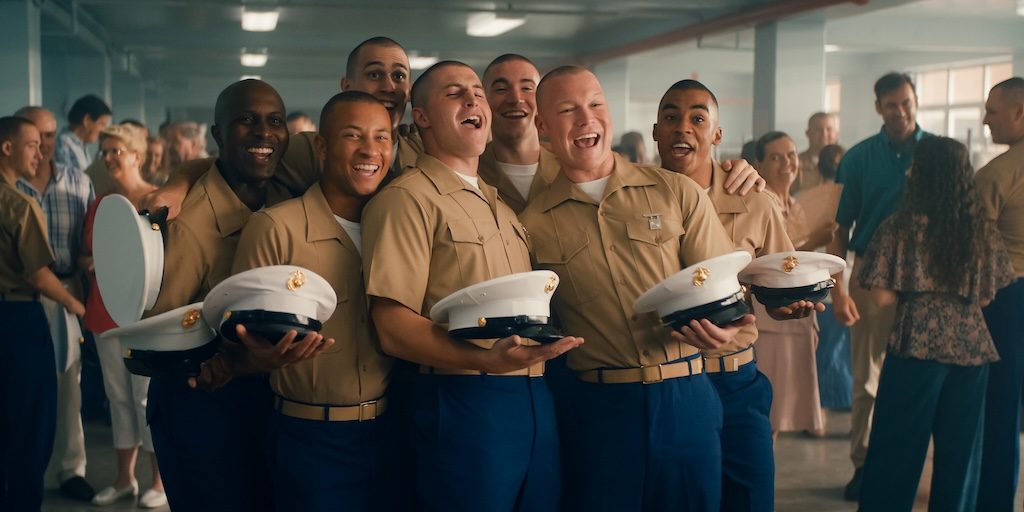
Slovacek (Kieron Moore), Hicks (Angus O’Brien) Photo courtesy of Netflix
Visual Storytelling Techniques vs. Memoir Introspection
Where White’s prose delves into personal introspection, Boots externalizes inner dialogue through cinematic techniques. Cameron’s private doubts externally manifest in visual flashbacks, voice-over arguments, and fantasy sequences — a technique that underscores his isolation and the stigma of being gay in the Corps.
Authenticity Check: Gear, Jargon, and Period Details
Parker and Cecil commit to period detail — uniforms, slang, pop culture references — grounding Boots in early ’90s authenticity. Yet they exercise license in dialed-up drama: drills escalate more quickly, clashes feel more cinematic, and life-or-death stakes loom larger than many boot camps deliver. These amplifications jolt narrative momentum and character development, condensing months of training into a slick eight episodes. The result is a heightened, compressed reality that remains recognizable to veterans and compelling to general audiences.
Showrunner Vision: Andy Parker’s Personal Inflection
Andy Parker’s own coming-of-age journey informs Boots in both overt and subtle ways. He once invited a recruiter to persuade his evangelical parents to let him sign up to the Marines — an anecdote he wove into Ray’s storyline, reframing the buddy enlistment origin of The Pink Marine. Parker shoehorns his mentor Norman Lear’s humanistic and realistic sensibility into the dialogue, ensuring humor punctuates the most harrowing moments.
Balancing Humor and Harsh Reality in a Dramedy Format
The dialogue in Boots oscillates between military jargon, youthful vernacular, and heart-felt confessions. While some lines — like the “blood-makes-the-grass” chant — are lifted from memoir memories, others echo Parker’s modern ear for sharp quips and witty banter. This blend sometimes leans into stylized speech, trading absolute realism for dramatic clarity.

Join the Discussion!



Browse our Videos for Sale
[woocommerce_products_carousel_all_in_one template="compact.css" all_items="88" show_only="id" products="" ordering="random" categories="115" tags="" show_title="false" show_description="false" allow_shortcodes="false" show_price="false" show_category="false" show_tags="false" show_add_to_cart_button="false" show_more_button="false" show_more_items_button="false" show_featured_image="true" image_source="thumbnail" image_height="100" image_width="100" items_to_show_mobiles="3" items_to_show_tablets="6" items_to_show="6" slide_by="1" margin="0" loop="true" stop_on_hover="true" auto_play="true" auto_play_timeout="1200" auto_play_speed="1600" nav="false" nav_speed="800" dots="false" dots_speed="800" lazy_load="false" mouse_drag="true" mouse_wheel="true" touch_drag="true" easing="linear" auto_height="true"]







You must be logged in to post a comment Login