
John Hoberg Interview on Working With Dan Fogelman on “Paradise:” An Aspirational, Post-Apocalyptic Western

John Hoberg (Elemental) sits at the intersection of prestige television and ambitious world-building — a space increasingly defined by showrunners who can balance emotional depth with sprawling narrative and character richness. As a key collaborator with Dan Fogelman (This Is Us) on Hulu’s Paradise, Hoberg describes this post-apocalyptic, political thriller more as a Western.
In this interview with Creative Screenwriting Magazine, Hoberg unpacks the collaborative DNA of his partnership with Fogelman and reveals how Paradise balances hope and tension in a world rebuilt from scratch.
Talk about your early conversations with Dan Fogelman about Paradise
I was brought in early with writer Scott Weinger and Jess Rosenthal, who’s Dan’s producing partner.
Dan had written the pilot. He said, ‘I’m thinking about making it a series, but I want to get a room together with a couple writers and spend, it might have been eight weeks, just sitting in a room, throwing around ideas of where the show would go.’
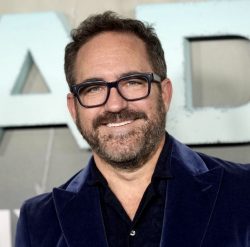
John Hoberg
Dan had written at the end of the pilot that he wasn’t 100% sure it was going to be set underground.
We started talking to futurists and city planners. We would get on these Zooms and Dan would say, ‘I want you to imagine that Elon Musk gave me unlimited funds to build an underground bunker for 30,000 people.’
We even talked to an expert on building communities and had him write up a list of rules. The question was, ‘What would make a healthy society?’
One of the fascinating things he said is that it should not be completely equal and altruistic. There needed to be different social levels so that people didn’t lose a sense of drive and wanting to achieve.
We pretended we were billionaires. We just overlooked all the rules, gave the billionaires giant houses, and had them make the kind of mistakes human beings make. And we went from there.
But we knew early on, we wanted this to be underground for the first season. And then we wanted Xavier Collins (Sterling K. Brown) to leave the bunker in search of his wife in the second season and combine underground and above ground locations.
Related: Courtney Lilly on the ‘Black-ish’ Farewell Season
What’s the Big Idea or Hook behind Paradise?
One of the big breakthrough moments was there have been a lot of apocalyptic shows and movies. When we were sitting around in that initial eight weeks, that came up pretty early.
I wanted to see what Fogelman’s take on that would be. Hulu was really interested in, Paradise wasn’t about the darkness that we reveal in humans when things go bad. At its core, it was that human beings can be really good and that kind of love and community can fight back against some of our worst instincts.
My joke early on was we should call the show, This is the Last of Us, because I personally was drawn to some of the elements that Dan Vogelman always writes about, the core of human experience.
That was exciting for Hulu too. I remember in one of the early meetings, they’re like, ‘Okay, you made an apocalyptic show aspirational somehow.’ That’s what felt fresh to them.
Related: Kat Likkel & John Hoberg On “Elemental”
How would you describe the genre of the show?
This is actually a Western above anything else, because we have this character, Xavier, who has his own code of ethics and he is unstoppable.
A lot our job as writers is to put obstacles in front of him and test his moral code. It felt like there was a really clear idea of who the lead character was. It wasn’t just going to men with guns taking over. It was going to be more hopeful than that.
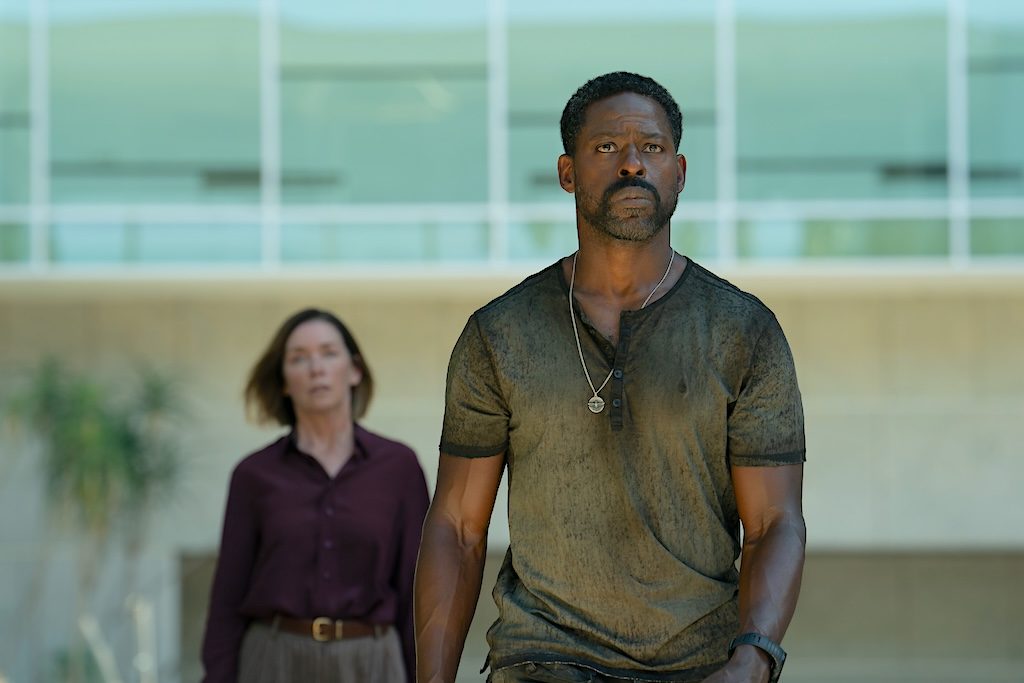
Sinatra (Julianne Nicholson) and Xavier Collins (Sterling K. Brown) Photo by Disney/ Ser Baffo
Related: Cars 3: The Third Act
How does the Paradise writers’ room work?
I run the room when Dan’s not there.
He would come in for a couple days and we would get his big ideas. Then he would step away and I would build out what those could be. How the stories might break and what what bumps we might find. Then we’d pitch it back to him. We’d all brainstorm together. And then we would fine tooth comb it.
Part of my job was, how do we make this keep feeling part of the one show, even though it is dipping its toes into different genres like political thrillers, murder mystery, and survivalism. It really was for me that Western hero.
The thing that holds it all together is Xavier. Even when you put him out on the road, it feels more like a post-apocalyptic world. It’s this same character and this same drive. That never changed.
Even in Season 3, you’ll see it’s the same thing. It is the one character holding the whole thing together. That’s honestly one of the things I love about working with Dan Fogelman, because it is truth and character where everything comes from.
It’s what that hero wants and what what we’re going to throw in the way of him.
I like to run a room that is very playful. I feel like if you’re all just pounding your heads against the wall and you’re sitting in silence, you don’t come up with the same creative takes. It’s important we have a lot of fun in that room.
But also, the main thing I’m looking for is structure – structure out of that character drive.
Dan Fogelman will come in. He comes up these twists and things that you just don’t see.
And then, part of my job is how do we build to that and make it have a scaffolding that you can actually follow in the structure? I like to let the room run with big ideas and play with things. And the meantime, I’m trying to build out the structure so we can lay this stuff on it.
It’s a balance of keeping creative flow and letting any ideas come while also trying to build structure at the same time.
Describe your working relationship with Dan Fogelman
What we have in common is we get uncomfortable around compliments or sincerity.
I think he knows what he gets is 100% of what I’ve got to give.
It wasn’t until we went to Pixar that I realized that we approach story from the same place. I think he saw that because he started his career at Pixar with Cars, and then he went on to do Tangled and all that.
The whole creative process at Pixar fits with how we work. It is basically character drives the story.
You can’t make the character lie because you want the plot to go somewhere. I think Dan saw that in our sitcom experiences. Kat and I have always found the comedy in the character as much as possible, versus just one liners. And I think he can trust that.
Dan also knows that he can trust me with a room that I’m going to listen to everybody. I have no problem taking a better idea than mine. He’s the same way.
We may be very different people, but I think we have a very similar sense of humor and outlook on the world.
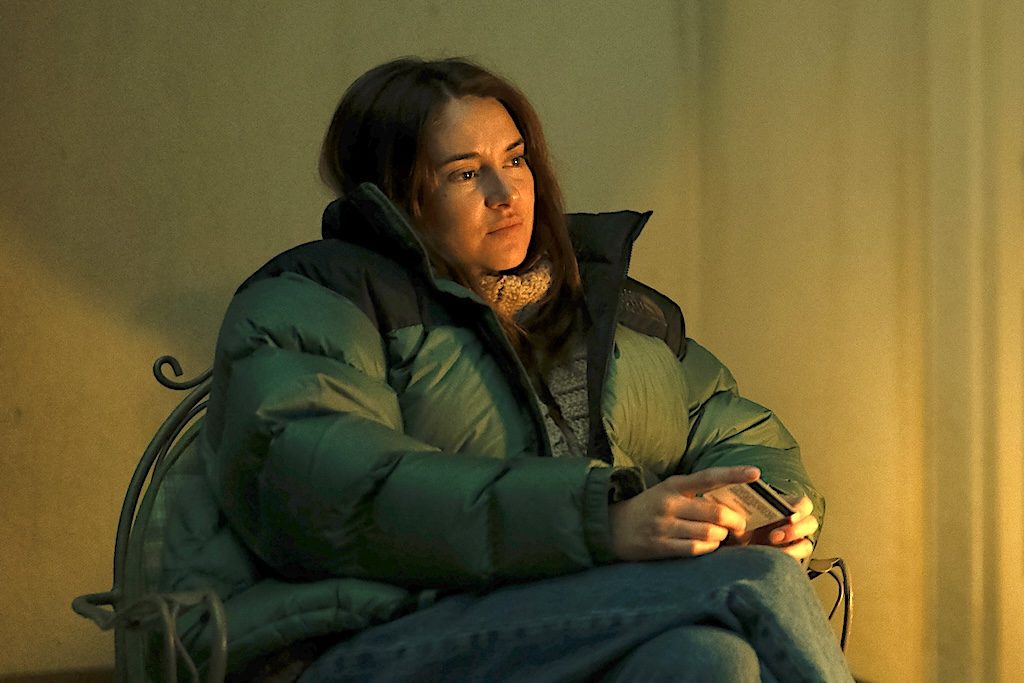
Anne Clay (SHailene Woodley) Phot by Disney/ Ser Baffo.
Related: The Last of Us Season 2 Expands Its Emotional Core & Moral Ambiguity
What were some of the surprises that came up in the writers’ room?
One of the things that that has resonated through the whole show is we didn’t 100% know what the disaster was going to be.
In that first eight week period, we just had bold strokes. We knew something happened to the world that that was going to make it uninhabitable. And as we dug into that more, I was surprised at how much this cascading effect of a natural disaster is contributed to by human fossil fuel use.
As we did our research on a disaster like that, it is because of treaties and governments with armies know that resources will get scarce. We talked to some of these experts, and they agreed that it almost inevitably that would lead to conflict, likely nuclear war.
I found this resonated through the whole thematic spine of the show. If human behavior attributed to this calamity, it’s also human behavior’s reaction to it that would make it worse.
This question is echoed through, which is, ‘Do people deserve another chance?’
And I think the show is leaning on people deserve another chance. But why do we mess things up? We make big mistakes. But so many people get back up and try to do better.
That to me, is in the DNA of the show. It’s even in the DNA of the disaster. In Episode 7, you see it all laid out in the first season. It just echoes throughout the whole show.
Related: “Writing Reluctant Heroes” David Zabel, Creator Of AMC’s ‘The Walking Dead: Daryl Dixon’
You have a highly varied background in comedy and drama. How did you adapt to writing Paradise?
This was the first straight drama I had ever worked on. Dan reached out so my wife Kat Likkel could take time off to write her novel.
I was surprised. You’re bringing in the guy who wrote Hope and Faith, a multi camera sitcom. I was looking at my own credits. I’ve done everything from Kids Sketch, to My Name is Earl to Elemental, a Pixar movie.
Dan and I, with my wife Kat, we’d all worked together on two or three shows before. Dan said to me, ‘You can do it. You’ve got that muscle.’
I learned very quickly about switching from comedy to drama, is that it’s the same thought process. You’ve got a hero with a goal that they desperately want. And now you try to put the worst things in front of them. In a comedy, a lot of times, that goal is kind of small and ridiculous, but they want it as badly as Xavier wants to get to his wife in Atlanta.
Your job as a writer is to make that as hard as possible. That was where that switch worked.
Describe your career progression
My wife Kat and I, really came up through the ranks.
We started as staff writers, and we worked at every level – story editor, co-producer, co-executive producer, and then executive producer. It’s an apprenticeship business in a way. When you’re a staff writer, you’re just there trying to provide, in a comedy, just jokes, or maybe a story idea. And as you work your way up, you’re always trying to help the showrunner see their vision through.
You’re also being told you need to go to the production meeting and make sure you can communicate with the crew what we’re trying to get done.
This influences your writing in that you realize you need to be clear, you need to be concise, and you can’t be writing things that you’re going to shoot and then cut in the edit. Once you get to executive producer level, you’re concerned about budgets. So now you have to make these big decisions too.
It constrains what you do. When you’re running a show, there’s a freedom to say, ‘This matters to me.’ I know that I’m going to keep this no matter what. We’ll find other cuts and trims if we need to.
Related: Whose Story Is It? Finding Your Main Character Through Perspective & Point Of View
What makes a great showrunner?
Early on, you learn so much if your ears are open when you work with different showrunners.
My wife and I had this gift of getting to work with Dan Fogelman, who runs the show one way. Greg Garcia from My Name is Earl who runs a different room than Victor Fresco in Better Off Ted. We got to see what they all did in common and what they’re good at. Something they all have in common is they let their writers know exactly what they’re looking for.
If you’re not getting what you want from your writers, that’s you because you’re not being clear on what you’re you’re asking from them. The thing I’m always going back to is what does the character want? It sounds so basic. And it’s so easy to forget when you’re in a writers’ room, because you get excited about plot and what things could happen.
Look at the finale of Paradise. Xavier wants to get Annie (Shailene Woodley) safely to Atlanta because he’s going to find his wife. If you watch that episode in particular, it is his single-minded goal to get to Atlanta. It’s it’s as simple as that.
And then it gets complicated because there’s this pregnant woman, Annie, who he can’t possibly leave behind. That’s his character. It’s the driver that reveals his character.
That’s one of the things I’m always thinking about in my mind. What are we focussed on as a room?

Join the Discussion!



Browse our Videos for Sale
[woocommerce_products_carousel_all_in_one template="compact.css" all_items="88" show_only="id" products="" ordering="random" categories="115" tags="" show_title="false" show_description="false" allow_shortcodes="false" show_price="false" show_category="false" show_tags="false" show_add_to_cart_button="false" show_more_button="false" show_more_items_button="false" show_featured_image="true" image_source="thumbnail" image_height="100" image_width="100" items_to_show_mobiles="3" items_to_show_tablets="6" items_to_show="6" slide_by="1" margin="0" loop="true" stop_on_hover="true" auto_play="true" auto_play_timeout="1200" auto_play_speed="1600" nav="false" nav_speed="800" dots="false" dots_speed="800" lazy_load="false" mouse_drag="true" mouse_wheel="true" touch_drag="true" easing="linear" auto_height="true"]







You must be logged in to post a comment Login