
Lee Sung Jin on BEEF Season 2: Expanding the Anthology’s Complexity Using ‘The Sopranos’ Template

Netflix’s BEEF, created by Lee Sung Jin, emerged as a cultural phenomenon following its 2023 debut. The series, an anthology drama about two strangers whose road rage incident spirals into a devastating cycle of petty grievance and revenge, captivated audiences with its unflinching examination of contemporary American rage, masculinity, and the consequences of unchecked emotion.
The first season, starring Steven Yeun and Ali Wong, received critical acclaim, earning numerous Emmy nominations and establishing itself as one of Netflix’s most compelling original series in recent years.
With the announcement of Season 2, audiences wondered how the anthology format would evolve from its closed-ended predecessor. Rather than continuing with the same characters, the new season introduces an entirely fresh narrative, new cast members, and a different setting – now a country club.
Creator Lee Sung Jin reveals how he and his team have expanded the thematic universe of BEEF while maintaining the psychological intensity and social commentary that made the first season essential viewing.
The Vision for BEEF Season Two: Evolution and Expansion
When discussing the direction for BEEF Season 2, Lee Sung Jin emphasizes the importance of honoring what made the first season resonate while pushing the creative boundaries of the series. “The first season was really about two people in a very specific moment, and how that moment can completely derail their lives,” Lee explains.
“For Season Two, I wanted to explore different kinds of conflicts, different characters, and different circumstances that could produce that same level of emotional devastation.”
“The best way we’ve been describing the conflict in BEEF is Carl Jungian shadow work – examining the darker parts of our collective consciousness and excavating them in ways that are, both triggering and cringeworthy, but also relatable,” Lee continues.
“The dominoes start to feel the same regardless of the trigger. It took a real life incident where I overheard a couple in my neighborhood arguing to unlock the season and ultimately have it become about examining love and marriage over time.” This incident became the impetus for BEEF 2.0.
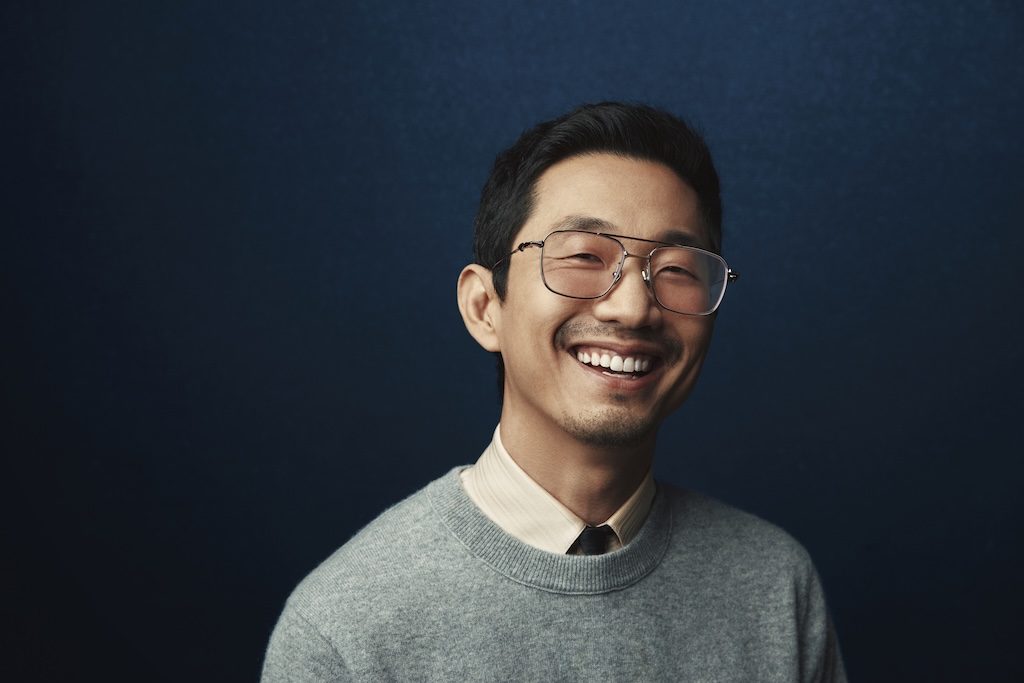
Lee Sung Jin. Photo by Sela Shiloni/ Netflix
Season 2 also fanned out further into social commentary, gentle political satire, and economic class specific problems reminiscent of Mike White’s Lotus. Lee notes that it’s difficult not to write honest, contemporary characters without some references to late stage capitalism.
The anthology format afforded Lee remarkable creative freedom. “With an anthology, you’re not beholden to the same characters or the same plot,” he notes. “You can explore completely different terrain while maintaining the DNA of what makes BEEF work as a series. The DNA is really about human behavior under pressure, about how people rationalize their worst impulses, and about the cascading consequences of conflict.”
This conceptual approach allowed Lee to examine rage and interpersonal conflict through multiple lenses. “Every season can be a different examination of the same core question: what happens when people stop being civil with each other? What happens when that dam breaks?” he asks rhetorically.
Related: Lee Sung Jin on Netflix Series ‘Beef’
Thematic Expansion: Beyond Road Rage
While season one’s inciting incident was a literal traffic altercation, Season 2 broadens the thematic scope. “Road rage was a specific window into conflict escalation, but BEEF can examine so many other triggers,” Lee says. “Economic anxiety, class dynamics, professional competition, family obligation—these are all different pressure points that can cause people to abandon their better instincts.”
The new season investigates how systemic issues — financial instability, social inequality, professional precarity — function as accelerants for personal conflict. “I’m very interested in how economic desperation changes people’s moral calculus,” Lee Sung Jin observes.
“When you’re struggling, when you feel like the system is rigged against you, it becomes easier to rationalize harmful behavior. That’s not an excuse, but it’s an explanation, and I think understanding the explanation is crucial to understanding human behavior.”
“We wanted to tackle that theme of financial disparity, but do it in the inverse. We don’t really focus on the wealthy country club members. Troy (William Fichtner) and Ava (Mikaela Hoover) are supporting characters, whereas we’re focusing on the elder millennial and the Gen Z employees of a rich setting. And seeing how a country club is such a good metaphor for society right now because most employees are millennial or Gen Z, and no matter how hard they work, there’s a feeling that they’ll never actually get to become members. We wanted to just focus on this generational battle.”
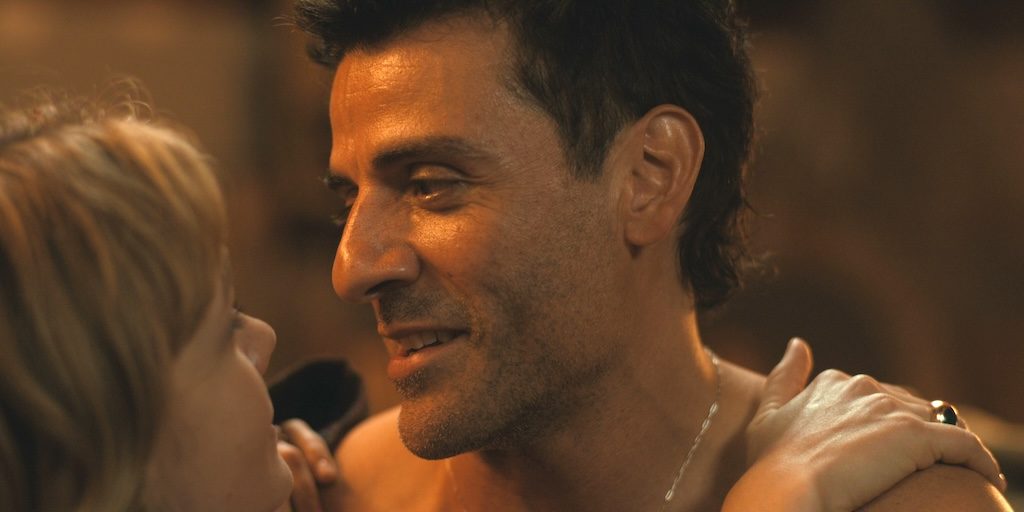
Lindsay Crane-Martin (Carey Mulligan) and Josh Isaace (Oscar Isaac) Photo courtesy of Netflix
Related: Writing the Ensemble Cast: A Screenwriter’s Guide to Balancing Multiple Characters
Writing For An Ensemble Cast
Season 2 focuses on two main couples Josh (Oscar Isaac) and Lindsay (Carey Mulligan) and Ashley (Caelee Spaeny) and Austin (Charles Melton). This presented a challenge in writing each character’s trajectories, but also modulating the relationships between characters.
Lee Sung Jin recalls that during Season 1, each scene was either Danny’s (Steven Yuen) or Amy’s (Ali Wong). During Season 2, there were episodes with up to six perspective characters, each vying for attention at different stages of their storylines.
“The story math exponentially increases where you’re not just tracking the rise and falls of each six individuals. You have to also track the rise and falls between each of those combinations,” Lee reflects.
Inside the writers’ room, Lee ensures that everyone is tonally on the same page before episodes are broken and the writing begins. He compares it to taking a writing masterclass.
He discusses the rise and fall structure of classic literature where characters encounter progression and regression. Every story can told in six or seven rise or fall beats. The writers tracked this process for each character and the season at large in a large spreadsheet.
Lee notes that since television writing staffs are becoming increasingly smaller, it’s important for him to allow the writers to get inside his head. This faciliates the cross-pollination of ideas.
“If you stopped by the writers’ room any time between the first 12 to 16 weeks of the room, it would not seem like we were writing,” Lee quips.
Related: David Chase & Lawrence Konner Talk “The Many Saints Of Newark”
Making Nasty Characters Empathetic – Ask Tony Soprano
Although, the mantra for many television series is to have likeable protagonists for audiences to love, some characters in BEEF are downright despicable. Lee Sung Jin is skeptical of this template He postulates, “Where is the bullseye that keeps people from checking out on a character?”
The writing team referenced the pilot episode of The Sopranos to make their case. Tony Soprano is still a murderous gangster, but all it took was the ducks in his swimming pool to humanize him and let audiences believe can’t be that much of a monster.
Lee examines the thorny relationship between Josh and Lindsay saying and doing despicable things to each other. Mitigating circumstances are introduced. Josh spent most of his fortune trying to pay his now dead mother’s medical bills. “There is a compassionate human deep down in there. He’s just been trampled by the weight of adult pressures of trying to even do the basics in late stage capitalism,” mentions Lee.
There is often a reason for poor behavior, so audiences should reserve judgment on characters. “They’re clearly capable of showing glimpses of being a good human, but they aren’t given the opportunity to because they’re just trying to survive.”
Related: How To Write Stronger, More Dramatic TV Shows
Spiralling The Narrative Soprano Style
Season 1 of BEEF is arguably more linear and intimate with deeper connections forged between Danny and Amy. Season 2 risks diluting that intimacy by introducing exponentionally more characters and plots. This becomes more notable because the intertia of the big fight has turned into an avalanche.
Once again, Lee Sung Jin, referenced the structure of The Sopranos to write his show. “There’s a whole esplanade arc where they’re using this construction company and the remodel of an esplanade to do some money laundering. I still can’t fully explain the plot of that season.”
“I use that template as a reference for the writers’ room. I love that the plot almost starts to spiral and I can’t really keep track of it. But emotionally, I’m still in such good hands because the plot is almost just the textures on top of the music.”
This serialized storyline ran for almost two seasons and followed the peaks and valleys of the Soprano fortune.
“It was the rise, fall of Carmela (Edie Falco) and Tony (James Gandolfini) and the rise and fall of Carmela and Chris (Michael Imperioli). As long as those inter-character dynamics are following a clean trajectory then the plot can get actually crazy and messy and hide the simplicity of the chords underneath.”
BEEF tried a similar approach during the scenes set in Korea. The show is spiralling, it’s hitting different themes, but the baseline is quite simple.
Josh and Lindsay who kicked off the show with a massive argument, started to connect in Korea. They’re almost in love again, but realize it’s too late. Ashley and Austin have done the inverse, where they shifted from a loving couple at the start of the series, but wind up unhappy even as they become managers of the country club.
We try to keep that inner character stuff simple and then kind of mess up the textures on top.
Related: What Make Gangster Films & TV Shows Work?
How Did the Writing Process Differ Between Seasons?
The first season of BEEF was a new show and the comedic tone was a little broader. There were more dialogue jokes with a setup and a punchline. It was around Episode 6 where the real tone of the series was established. It was more grounded.
The writers continued along this vein during Season 2.
“The comedy is more character based and keeping things tonally evolving rather than going backwards towards a heavier comedy bend,” Lee says.
The other key focal difference between the two seasons was the spiritual loneliness of two people in Season 1.
“Naturally the inner character dynamics feel a little bit hollow. It’s a very self-centered very Danny and Amy-centric perspective.”
“Season 2 is about love. We wanted to make sure that our inner character dynamics felt more substantive, like two way streets. Because most people who are participating in life have relationships where they aren’t just thinking about themselves. They care about the other person too,” notes Lee.
The creator felt it was a necessary thematic graduation because the characters where actively participating in life and love – even if things don’t work out.
Conclusion
Lee Sung Jin’s vision for BEEF Season 2 demonstrates his commitment to using television as a vehicle for serious exploration of human psychology, social inequality, and the consequences of unchecked conflict.
If you’ve written the next must watch television series, you need professional, constructive feedback to help maximum your vision before you circulate it to the wider industry. You might not get another chance it your work isn’t up to industry standard.

Join the Discussion!



Browse our Videos for Sale
[woocommerce_products_carousel_all_in_one template="compact.css" all_items="88" show_only="id" products="" ordering="random" categories="115" tags="" show_title="false" show_description="false" allow_shortcodes="false" show_price="false" show_category="false" show_tags="false" show_add_to_cart_button="false" show_more_button="false" show_more_items_button="false" show_featured_image="true" image_source="thumbnail" image_height="100" image_width="100" items_to_show_mobiles="3" items_to_show_tablets="6" items_to_show="6" slide_by="1" margin="0" loop="true" stop_on_hover="true" auto_play="true" auto_play_timeout="1200" auto_play_speed="1600" nav="false" nav_speed="800" dots="false" dots_speed="800" lazy_load="false" mouse_drag="true" mouse_wheel="true" touch_drag="true" easing="linear" auto_height="true"]







You must be logged in to post a comment Login