
“Mo” and the Art of Balancing Humor, Heart, and Homeland

In a television landscape overflowing with content and spoiling viewers for choice, few TV shows manage to cut through the noise. Mo, created by Palestinian-American comedians Mo Amer and Ramy Youssef, does just that — not through spectacle or political provocation, but through a surgical blend of humor, heartbreak, and deeply personal storytelling.
Based loosely on Amer’s own life as a refugee navigating the convoluted U.S. immigration system, Mo offers something that feels both urgent and timeless. Poignant and relevant. And truly hilarious. With two seasons down, it’s time to reflect on finding belly laughs in tragedy and tears in humor.
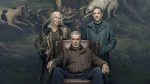
During a recent panel conversation with the creators Najjar, executive producer Harris Dannow, and lead actress Farah Bsieso (Yusra), the audience was offered a deeper look at the emotional foundation of the series and the thoughtful creative decisions behind every scene. The discussion didn’t just provide behind-the-scenes insight — it revealed how powerful storytelling can emerge from lived experience, authenticity, and a refusal to compromise.
Najjar and his family have been uprooted twice – once from Palestine and another from Kuwait. Their new home of Houston offers a new place to lay down roots.
A Personal Story with Global Resonance
At its core, Mo is the story of a Palestinian family living in Houston, Texas, caught in the limbo of the U.S. asylum process. Amer explained that one of his primary goals was to show what the immigration system actually looks like — not just the headlines of arrivals and deportations, but the years of bureaucracy, emotional strain, and impossible choices in between – and not just for the asylees.
“I think no one has had a peek into that world,” Amer says. “People just hear about the immigration system — people show up, and then people are being deported. There’s no in-between, and there’s not a full story around what that process looks like.”
The second season pushes deeper into that world. In one particular arc, Mo ends up stranded in Mexico after being kidnapped by an olive tree cartel (you read that correctly) and caught in a detention center at the border. Originally written with comedic beats, the scene where Mo is fitted with an ankle monitor unexpectedly took a darker, emotional turn on set. Amer recalls. “It messed with my head. It was suffocating.”
That moment is emblematic of the show’s emotional range — how it can pivot from comedy to poignancy with honesty and ease. And it leads to one of the show’s great creative strengths: not forcing the funny.
Let the Comedy Emerge Naturally
A common pitfall in writing dramedy is trying too hard to “lighten the mood” by acting as a tension release valve.
But in Mo, the creators resist the urge to undercut drama with punchlines. Instead, they let humor arise organically from the characters and their circumstances.
“The more of a pressure cooker the characters are in,” Amer says, “the more comedy will just reveal itself.”
The result is humor that feels earned — whether it’s trash football in a detention center (that’s a thing) or a surreal fantasy about wrestling bears in Mexico or participating in a Mexican telenovela. The show understands that laughter is often a survival tactic, especially in the face of trauma.
A Mother’s Voice, Twice Lived
Farah Bsieso’s portrayal of Yusra, Mo’s mother, is one of the most resonant aspects of the show. During the panel, Amer revealed that the connection between Bsieso and his real mother was uncanny. Bsieso didn’t just play the role — she embodied it.
Bsieso, too, drew from personal experience. Like Amer’s family, she fled the Gulf War and shares Palestinian heritage. That made the role deeply meaningful — and emotionally heavy. “I was nervous to meet Mo’s real mother,” she admits. “I kept thinking, ‘I hope I’m doing this justice.’”
The cast embodies the emotional cargo, even in the more gut-wrenching scenes like when Yusra and her daughter are humiliatingly strip-searched at the airport. As Bsieso notes, “It wasn’t just acting — it was reliving.”
[More: “Two Cultures, Three Languages & A Ton of BS” Mo Amer on Netflix’s ‘Mo’]
Writing in the Shadow of October 7
Season 2 faced a unique and sobering challenge: production resumed days before October 7, 2023, when war broke out in Gaza. As the only Palestinian-led series on American television, the team was suddenly placed under a microscope. But rather than react impulsively, they took time to assess their responsibility.
“We had to have the difficult conversations,” Amer recalls. “We were too close as a writing room not to.” They considered rewriting the season to reflect a post-October 7 reality, but ultimately chose to preserve the pre-existing narrative — to show what life looked like before the latest eruption of violence.
“It’s still a comedy,” co-creator Ramy Youssef chimes in. “We didn’t want the characters to be swallowed by didacticism. The foundation of the show is still humor, humanity, and character.”
Great writing can reflect current events — but trying to cram real-world issues into an ongoing narrative risks overwhelming the characters and their emotional arcs. Instead, Mo demonstrates the value of timelessness. The writers focused on building a story that would hold up even decades from now, showing how the Palestinian experience is one of long-standing struggle — not just reactive moments posted in headlines.
By the end of the discussion, it was clear how much of themselves the creators poured into the show. Amer even described the finale as “my life’s work coming together.”
“It hurt spiritually, mentally, physically to make this show,” he shares. “But I think it’s objectively phenomenal. I feel like I fulfilled the purpose of my life.”
That sense of purpose comes through in every detail — from the dream sequences set in Kuwait, to the archival footage of his family’s actual village, to the emotional therapy session with Mo’s autistic brother. Mo doesn’t just tell a story — it gives voice to one rarely heard.
Make It Personal — But Make It Universal
Mo is a story rooted in specificity: a Palestinian family in Texas, a Gulf War refugee, a flawed, but fiercely loving mother protecting her family. And yet it resonates with anyone who has struggled to belong, to find safety, or to hold onto identity in a world that demands assimilation. That’s the secret to great storytelling — the more honest you are about your personal truth, the more universal your story becomes.
Mo stands out as something truly sincere. It’s not trying to take political sides, though it inherently is. Is it a conflict or an occupation? It’s not trying to be preachy, though it has plenty to say about our combined humanity. It simply tells the truth — about immigration, about family, about resilience — and lets humor and humanity lead the way.
Writing Tips Recap:
- Let comedy arise from conflict – Don’t force the funny; it works best when it’s grounded in truth.
- Choose authentic collaborators – Whether it’s actors or co-writers, people who “get it” will elevate your work.
- Avoid writing to the news cycle – Timeless storytelling has more staying power.
- Mine your life experiences, but find the universal – Specificity makes stories richer, and relatability makes them last.

Join the Discussion!
Related Articles


Browse our Videos for Sale
[woocommerce_products_carousel_all_in_one template="compact.css" all_items="88" show_only="id" products="" ordering="random" categories="115" tags="" show_title="false" show_description="false" allow_shortcodes="false" show_price="false" show_category="false" show_tags="false" show_add_to_cart_button="false" show_more_button="false" show_more_items_button="false" show_featured_image="true" image_source="thumbnail" image_height="100" image_width="100" items_to_show_mobiles="3" items_to_show_tablets="6" items_to_show="6" slide_by="1" margin="0" loop="true" stop_on_hover="true" auto_play="true" auto_play_timeout="1200" auto_play_speed="1600" nav="false" nav_speed="800" dots="false" dots_speed="800" lazy_load="false" mouse_drag="true" mouse_wheel="true" touch_drag="true" easing="linear" auto_height="true"]







You must be logged in to post a comment Login