
“Ocean’s 11 Meets Discord” Ronan Corrigan on His Cyberheist Screenlife film ‘LifeHack’

LifeHack is a British screenlife action thriller written, directed, and edited by Ronan Corrigan. It follows four teenagers who pull off a Bitcoin heist from their bedrooms, only to get pulled into bigger danger online. Welcome to the world of screenlife cinema.
The main characters are Kyle (Georgie Farmer), Alex (Yasmin Finney), Sid (Roman Hayeck-Green), and Petey (James Scholz). LifeHack explores teenage energy, their hopes and aspirations in a world that doesn’t care about them, internet culture and cybercrime. Notably, the bitcoin heist is only interesting from a technical perspective since there is an astonishing depth to these characters far beyond their keyboards and screens.
Ronan Corrigan spoke with Creative Screenwriting Magazine about teaming up with Timur Bekmambetov (Searching, Mercy) to get his first film credit.
Screenlife as a Movie Platform
Ronan considers screenlife to be a film platform more than a genre – like animation.
Just like animation lends itself more to certain genres, screenlife is an ideal platform for horror and thriller films. Notably, LifeHack contains a blend of screenlife and external action which gives the filmmaker a unique sense of how these stories are told.
Screenlife movies still need to be both visually and emotionally compelling. Audiences will quickly develop viewer fatigue if their experience is restricted to reading messages, and watching talking heads and surveillance or found footage.
Ronan Corrigan knew that despite these limitations, films like Unfriended, Searching, and Host proved that screenlife films are viable.

Ronan Corrigan. Photo by Christina House/ Los Angeles Times via Contour RA by Getty Images
A Natural Progression From Found Footage Films
Ronan Corrigan was influenced by found footage films. He grew up on a movie diet of The Blair Witch Project, Cloverfield, Chronicle, and V/H/S.
“It’s such a fun technique for indie filmmaking where you can almost have bigger ideas in the limitations of the format. We wanted to do a heist film, so it really felt like the perfect format for everything,” Corrigan says. As his idea evolved, Ronan concluded that the story couldn’t be told in any other way.
Corrigan grew up as a gamer, which was further confirmation that his heist story had to be anchored in a patchwork of screens.
“I was trying to make a film about growing up gaming and all the crazy true crime elements that happen in these servers and gaming lobbies,” he says.
Writing A Contained Thriller
In terms of genre, LifeHack fits into a contained thriller category with limited locations. Most of the action occurs in Karl, Yasmin, Sid, and James’ bedrooms, although the film breaks out of these locations later.
“It was a fun limitation for a screenwriting headspace when we’re seeing how far we can push the idea, because you can’t have a car chase. You just have to think about it a bit differently than if you were doing a traditional film,” he says.
In fact, Corrigan declares that many of his favorite films have such physical constraints; just because you wrote a car chase in your script, it doesn’t mean that you have the budget to film it.
From Script to Proof of Concept to Screen
Like many projects, LifeHack started during the great lockdown.
Ronan Corrigan entered a competition at the British Film Academy (BFI) for young filmmakers. There, he met powerhouse producer Timur Bekmambetov to pitch his idea.
“It was an awkward Zoom where you had five minutes to pitch him the film. I went in with ‘Ocean’s 11’ meets ‘Discord’ server and he liked that. We made a proof of concept film to give us some money to visualize the idea.”
They put together a teaser where they built that heist scene of the itch into a whole script. It took a year to make. This allowed them to use the existing structure of heist films to flesh out the idea.
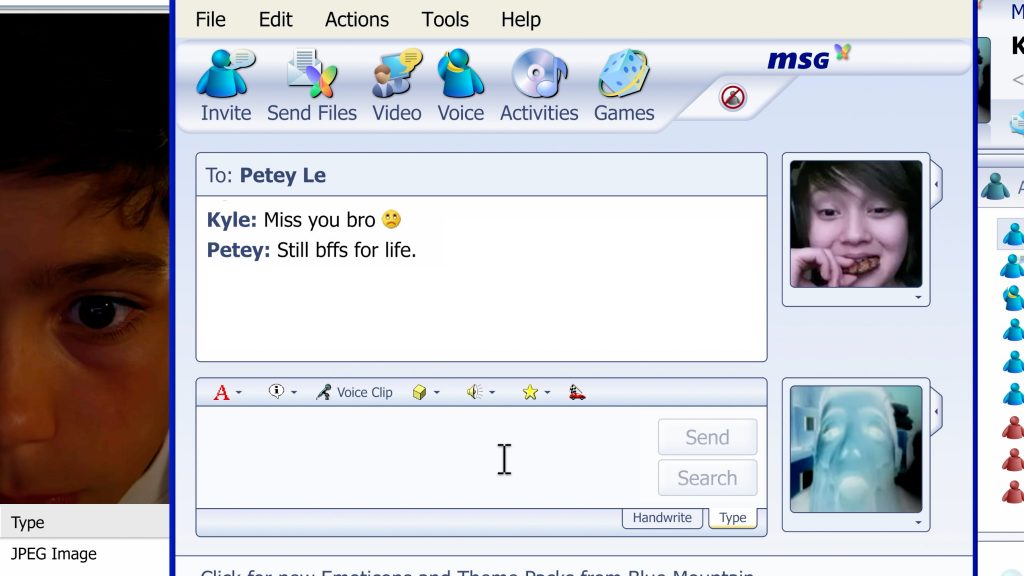
LIfeHack. Photo courtesy of Imagine Cinemas
True Crime: Based On A True-ish Story
LifeHack is based on real events. It’s not a documentary, but rather, a dramatization. These kids are dealt a dead hand by society. They don’t seek pity or necessarily, social justice. They aren’t victims, but cybercrime is one of the few ways to pay their bills. Although there is a “Robin Hood” element in their motivations because theys steal from those who can afford it, their main driver appears to be the exhiliration of the thrill. Can they do it and get away with it?
“We always wanted to tell a story about a group of teenage scam artists who pull off a crypto heist on a tech billionaire. There’s a lot of true stories to pull from. Every month, there’s a new case of some kid on one of these servers, scamming someone through a SIM swap like running a drug dealing empire from their bedroom. There’s a lot of crazy mythology and digital crime,” the filmmaker continues.
“It was building from these true crime stories and urban legends in the same way that certain directors lean into crime. Guy Ritchie pulls from the “geezer” pub lore of East London, and Scorsese pulls from Italian/ Irish mob mythology.”
Corrigan wasn’t interested in being entirely faithful to true crimes. “That was our headspace. We wanted to build a film, but we didn’t want to be too restricted by a true story. We wanted to pull from the realities of them.”
This led to many informative conversations with hackers and cyber security experts while building out the script.
Amplifying Cybercrimes To Make Them Cinematic
The main characters in LifeHack are teenagers on the cusp of adulthood. They’re still children with too much time on their hands and not enough parental supervision. They’re still learning the difficult “adult” lesson of actions having circumstances; the difference between a misdemeanor and a crime.
Ronan chalks this down to “fantasy fulfilment.” It wasn’t about greed.
“When you read these stories and see these pictures of these 15, 16 year olds getting doors kicked down by the FBI and getting arrested, that’s a different story. When we were writing this film, I was always going from my own experiences of my online friends and relationships, and then of pushing them into an an extreme scenario of the crime.”
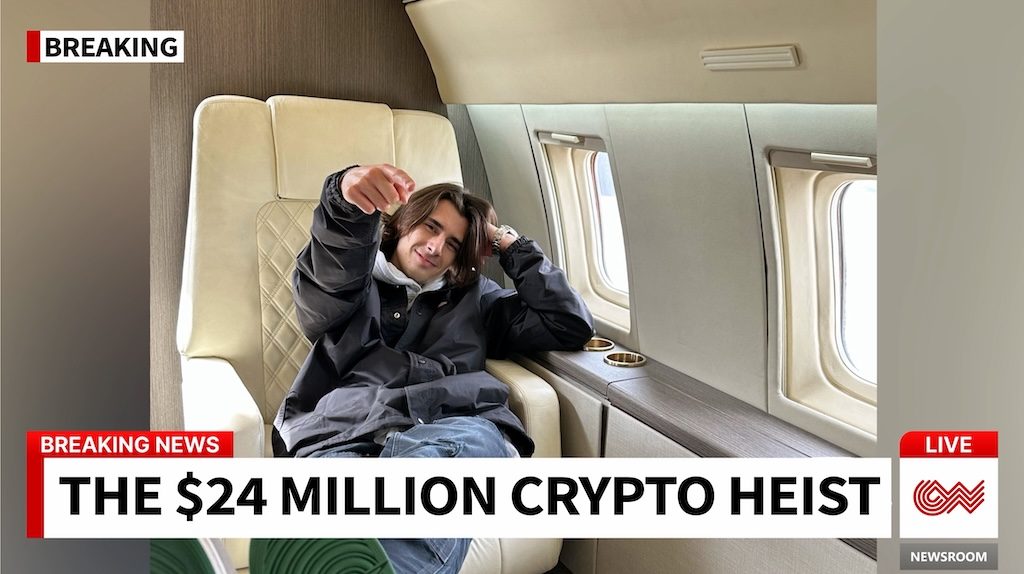
Karl (Georgie Farmer)
Meet the Gang – They’re Real People With Real Problems
Kyle, Sid, James, and Yasmin are online siblings – a found family. They know each other better than each of them and their parents know themselves.
“We wanted every character to have their own identity and not just be a gamer stereotype,” says Ronan.
“When you really dig into these Discord servers and the people that are chronically online, they usually have something they’re avoiding in the real world. Kyle is spending every night online, gaming and talking to this girl halfway across the world. What would push you to do that? And there was that coming of age moment of our own lives when we ask, ‘Do I go to uni? Do I get a job? What do I do?’ And the existentialism that comes from that.”
“I feel like that pressure has got even bigger now where we see all the possibilities all the time. You can be on Instagram and you see people on private jets and driving Ferraris. Sometimes I think life was easier when we didn’t have to see that all the time.”
The driving force was pushing each character’s reaction to that curated online life.
Online life allows them to temporarily escape from their troubles. Kyle is trying to get attention from his father, James is trying to get into university, and Yasmin has to deal with her own family issues of neglect.
Lindsay (Jessica Reynolds) is crypto billionaire Don Heard’s daughter who helps the others with the heist to rob him.
“Lindsay represents this idea of the modern social media influencer. A lot of the times films portray these characters as ditzy idiots that are looking for attention. But you do need to be savvy to work in that gig economy. Sometimes these influencers have this front-facing party girl persona, but there is a business mind to that.”
“There is a sharkiness to it that which is the key to the midpoint of the film. There’s hedonism in those spaces and definitely danger to be had. She’s playing the same game of capitalism as her father.”
Youth Rebellion/ Coming Of Age
Thematically, Ronan Corrigan examines the nihilism many gamers and hackers are driven by – a form of punk rock, giving the world a middle finger.
Corrigan harks back to films of teenagers aimlessly driving around, sipping milkshakes in diners, or procuring alcohol while underaged.
“I love American Graffiti. You have these kids hanging out in cars and parking lots; just sitting about doing nothing. Imagine that, but in a Discord lobby. So essentially, it’s the same characters, just in different generations. The conversations they have are the same, just online rather than in person.”
Karl serves some time in prison, but has taken care of his friends. His future is bright in the “gray hat” community to help companies find flaws in their systems. He’s a smart kid with a massive skillset he wouldn’t have learned in any university. He might get hired as a cybersecurity expert someday, if you ignore his criminal record.

Join the Discussion!



Browse our Videos for Sale
[woocommerce_products_carousel_all_in_one template="compact.css" all_items="88" show_only="id" products="" ordering="random" categories="115" tags="" show_title="false" show_description="false" allow_shortcodes="false" show_price="false" show_category="false" show_tags="false" show_add_to_cart_button="false" show_more_button="false" show_more_items_button="false" show_featured_image="true" image_source="thumbnail" image_height="100" image_width="100" items_to_show_mobiles="3" items_to_show_tablets="6" items_to_show="6" slide_by="1" margin="0" loop="true" stop_on_hover="true" auto_play="true" auto_play_timeout="1200" auto_play_speed="1600" nav="false" nav_speed="800" dots="false" dots_speed="800" lazy_load="false" mouse_drag="true" mouse_wheel="true" touch_drag="true" easing="linear" auto_height="true"]







You must be logged in to post a comment Login