
Horror Slasher Clichés to Queer Catharsis: How Jane Schoenbrun Rewired ‘Teenage Sex and Death at Camp Miasma’

Teenage Sex and Death at Camp Miasma is director Jane Schoenbrun’s third and most personal film after I Saw The TV Glow and We’re All Going To The World Fair.
Paying homage to the frowned-upon Camp Miasma slasher genre, the film is imbued with richly-layered with dense metaphor, interrogation, introspection, and reflection about sexuality, gender roles, and human relationships.
In Camp Miasma, young filmmaker Kris Williams (Hannah Einbinder) has been tasked with directing a film reboot of the popular Camp Miasma horror films, a fictional slasher franchise inspired by the hyper-sexualized — and often transphobic — horror films of Schoenbrun’s youth. While researching her project, Kris tracks down the first film’s “final girl” Billy Presley (Gillian Anderson), now an eccentric, Norma Desmond–like hermit, who lives on the site of the summer camp where the films were shot.
Their poignant connection leads to an electrifying emotional and sexual bond that opens up Kris in ways far exceeding the familiar mentor/ mentee realm.
Schoenbrun has constructed a meticulous homage to seminal horror movies like Friday the 13th, Sleepaway Camp and Psycho. Beneath the gore, Miasma offers a meaningful excavation of desire, pleasure, and gender – common themes running through many slasher films.
“This is the first movie I’ve made that really feels like it captures the fullness of my personality,” Schoenbrun shares. “’We’re All Going to the World’s Fair’ and ‘I Saw the TV Glow’ are both movies that I made right after coming out, reflecting on the intensity of that time in my life. Characters were using the screen to talk about dissociation, to talk about not being in one’s body, to talk about living as voyeur.”
Teenage Sex and Death at Camp Miasma is Schoenbrun’s first film inspired by post-transition, made at a moment when they started to feel like they were actually in their own body, and intimacy with another person took on a new dimension.
“Sex was trauma for me for the first 32 years of my life,” recalls Schoenbrun. “It was something that I was completely dissociative and avoidant about. How could I be present with myself when I wasn’t in the right identity and body? After transition, this dysphoria slowly started to heal, as I slowly stepped into a new identity, and a physical form that I finally felt comfortable with.”
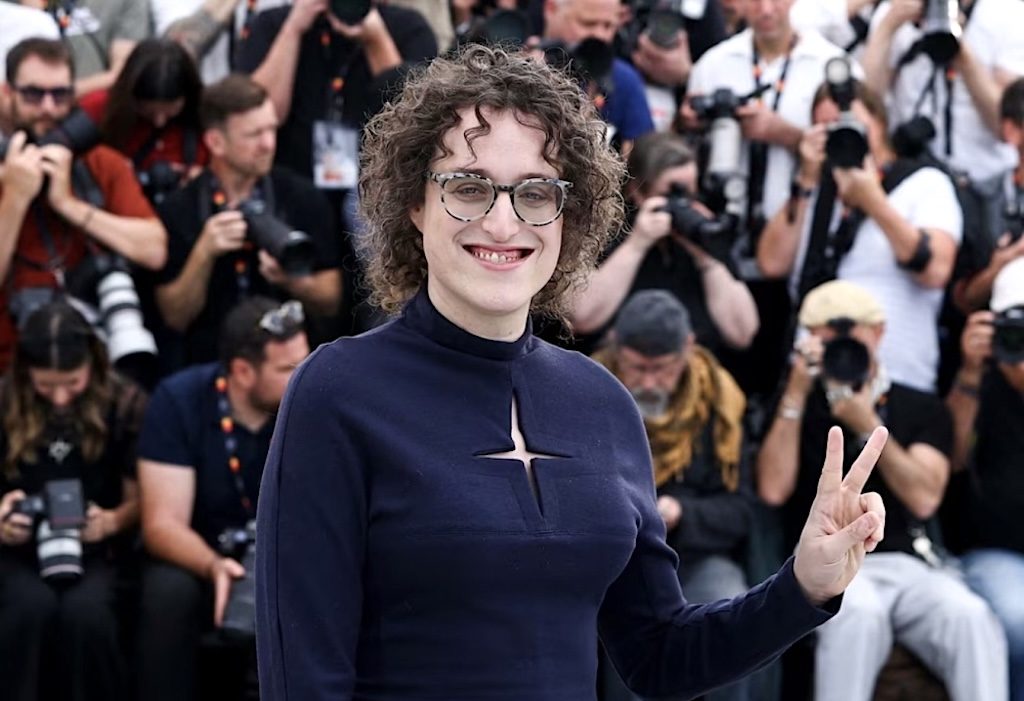
Jane Shoenbrun
The film is an exploration of “working through the oblique trauma of pre-transition life,” according to Schoenbrun. This is achieved through Hannah Einbinder’s character, Kris, a filmmaker interrogating both horror films and her own erotic identity.
“I wanted to make a movie about that mystery, and that feeling of slowly coming into oneself. And the feeling of not just watching yourself during sex from a far-away alienated place, or watching yourself from that same place, but actively existing in yourself and in the world and in your identity. Entering the film as a way of entering yourself.” Billy carefully articulates these concepts as she describes her sexual experiences to Billy – sex as both observer and participant as almost different people.
Related: Kyle Edward Ball On Childhood Fears In “Skinamarink”
Jane Schoenbrun creates worlds – and portals to other worlds and the layers within them. Crossing thresholds, being an adventurer.
“Portals invite you into a heightened space. Obviously, that’s also literally what’s happening to Hannah in this movie, that she’s being invited into this otherworldly fantasia and into this romance that will allow her to open herself up,” Schoenbrun adds.
Kris and Billy are essentiall outcasts who tantalizingly discover each other and themselves layer by layer. Their chemistry, however, isn’t immediate.
“Early on, Billy says, ‘It’s been a long time since I’ve let somebody see me, my art.’ She’s mentoring Kris throughout the movie. She tells us about her own coming to terms with sexual trauma and her own sexual awakening,” says the filmmaker. The hope is that their relationship will invite deeper cultural conversations about sexuality and gender as fluid points along a spectrum rather than distinct points. Shoenbrun doesn’t preach ideology. They question it.
Related: The Final Girls: A Slasher Movie Inspired by Woody Allen
Homage to Sexy Slashers
Jane Schoenbrun is well aware of ultra-sexualized nature of horror – scantily clad girls prancing around screaming as they hide from a heavy-breathing killer with mommy issues.
Schoenbrun says Camp Miasma is also informed by books they read in college, such as Men, Women, and Chain Saws by Carol J. Clover and Willow Maclay and Caden Mark Gardner’s book Corpses, Fools, and Monsters.
These seminal works were complimented by characters like Buffalo Bill (Ted Levine) in The Silence Of The Lambs and Lois Einhorn (Ray Finkle) in Ace Ventura: Pet Detective, which regretably, perpetuated harmful stereotypes.
A young Schoenbrun studied every Nightmare On Elm Street movie to find a way to translate their raw sexual energy to Camp Miasma.
Schoenbrun began to wonder, “How do I make a movie about my current moment of sexual awakening – this lessening of dysphoria and this coming into my own body. It seemed clear that such a movie had to be in conversation with Buffalo Bill, with Norman Bates, with this image of the trans monster — which was a big part of my self-image pre-transition, and is certainly the cultural image of me and other trans girls that still exists in many people’s eyes.”
Related: “You’re Next Movie” Review: Is This Slasher Worth Watching?
The Kris and Billy Dance For Two
The seduction between Kris and Billy plays as a two-hander – a film within a within. The each blossom into a place of clarity and vivid confidence. The egg cracks open and their eyes witness a new world.
Seemingly direct and self-assured Kris gradually lets her guard down to expand her sexual boundaries, and the initially inscrutable Billy, eventually shows her warmth, helping to open up Kris to new realms of pleasure, submission, and catharsis.
“Hannah starts the movie as the audience surrogate. Hannah’s the straight man, Hannah’s the stand-in, Hannah’s the one insisting ‘This is crazy.’ And Gillian is starting the movie in a pure genre tenor. As the movie goes on, they bring each other to a middle level that they share. Hannah grows more comfortable entering this stylized world and stops being so much this figure on the outside looking in,” says Schoenbrun.
Schoenbrun further explains the fascinating, erotic, and funny pas de deux (dance for two) of the two characters. “Billy is mentoring Kris throughout the movie. During the campfire scene, she tells us about her own coming to terms with sexual trauma. Billy has confronted that she had to rebuild herself from the ugliness and trauma of sex rather than avoid it.”
“I think it’s a different style of sexual trauma than the one that Kris is talking about, which is more oblique and about not being able to be present in her own desire. I don’t think it’s an uncommon role, especially in queer relationships, where one person is earlier on in their sexual journey. She is the ‘dommy mommy.’ I think the mystery of the movie, is the mystery of what happened to Billy and how she’s learned to live as a result of it,” they continue.
Anderson uncovers layers of warmth and vulnerability in Billy as the film progresses. “She’s showing us herself, this complex person who’s filled with love, curiosity, loneliness and sadness. The film is a mystery about who this larger-than-life person is.”
Billy Presley is dressed in Blanche Dubois extravagant cosplay. Her lush, headline-grabbing outfits and glitzy accessories are a veil to her internal frailty.
The erotic intimacy and vulnerability shared between Anderson and Einbinder becomes a central emotional pivot of the film. Jane Schoenbrun describes filming those scenes as “an emotional wallop.” They were a tightrope walk without a safety net. They had to touch the deepest emotional points between the characters without descending into melodrama.
Related: Eli Roth Interview: ‘Ice Cream Man’ & His Horror Movie Influences

Join the Discussion!



Browse our Videos for Sale
[woocommerce_products_carousel_all_in_one template="compact.css" all_items="88" show_only="id" products="" ordering="random" categories="115" tags="" show_title="false" show_description="false" allow_shortcodes="false" show_price="false" show_category="false" show_tags="false" show_add_to_cart_button="false" show_more_button="false" show_more_items_button="false" show_featured_image="true" image_source="thumbnail" image_height="100" image_width="100" items_to_show_mobiles="3" items_to_show_tablets="6" items_to_show="6" slide_by="1" margin="0" loop="true" stop_on_hover="true" auto_play="true" auto_play_timeout="1200" auto_play_speed="1600" nav="false" nav_speed="800" dots="false" dots_speed="800" lazy_load="false" mouse_drag="true" mouse_wheel="true" touch_drag="true" easing="linear" auto_height="true"]






You must be logged in to post a comment Login