
Black Rabbit: How Showrunners Zach Baylin and Kate Susman Sculpt Suspense from Family, Culinary Rituals, and the Underbelly of New York City

Zach Baylin and Kate Susman first crossed creative paths while working on The Order, a gritty, character-driven crime drama that explores the psychology of power and unwavering loyalty to a cause. Their collaboration sparked a shared fascination with morally conflicted protagonists and atmospheric storytelling, laying the groundwork for what would become Black Rabbit.
As they wrapped The Order, the duo began sketching out a new concept rooted in New York’s venerable nightlife and restaurant culture — spaces where performance, ambition, crime, and danger intersect. Baylin and Susman envisioned Black Rabbit as a natural evolution to this: a crime thriller with the intimate messiness of a family drama steeped in the underbelly of a big city.
“We wanted to put people in a place where we’re on the inside, and then juxtapose that with what those places are in the daylight,” Kate Susman says.
From Concept to Screen: The Genesis of Black Rabbit
When Zach Baylin and Kate Susman first sat down to collaborate, they weren’t specifically chasing a genre — they were chasing a feeling of a genre. The electric hum of New York nightlife, the tension that simmers beneath the surface of a packed restaurant in Manhattan, the way a single place can host glamour, secrets, and violence – all at once. Their starting point was a restaurant opening-night party gone horribly wrong.
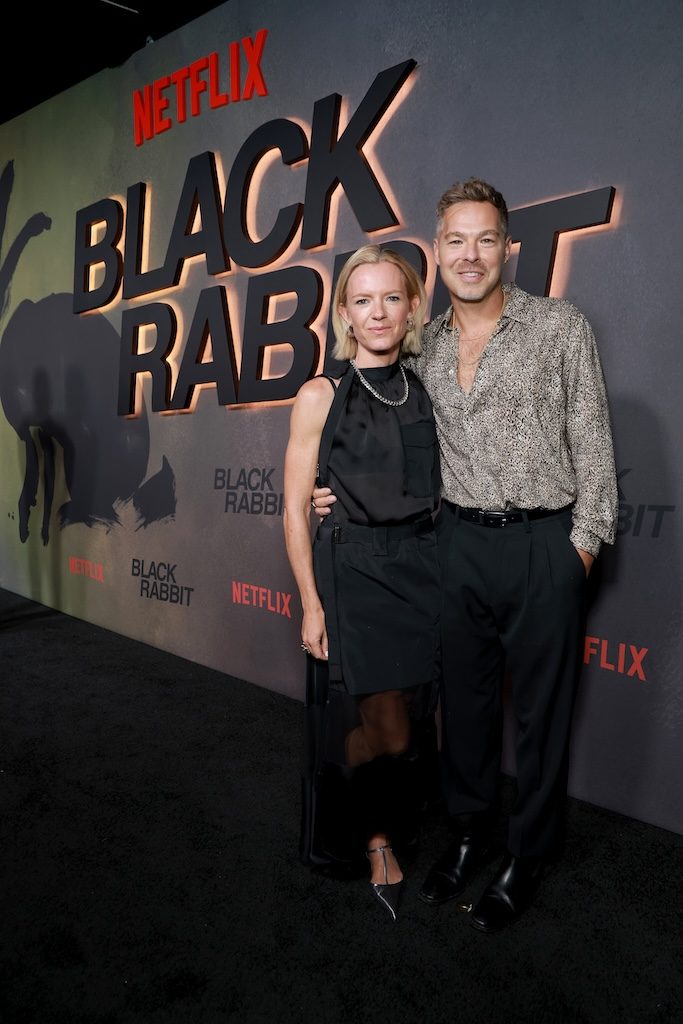
Kate Susman and Zach Baylin. Photo by Jason Mendez/ Getty Images for Netflix
What began as a character study quickly transformed into a high-stakes family crime thriller. The fictional Black Rabbit restaurant was conceived, not just as a setting, but as a crucible — a microcosm of society where class, ambition, style, family, addiction, and loyalty collide. There are winners and losers. And a few in between.
“We realized a point-of-sale loan shark felt cinematic, yet plausible,” Baylin recalls, referencing the show’s main conceit.
The duo immersed themselves in the hospitality world, interviewing restaurateurs, chefs, and service staff to understand the intricate machinations of restaurant financing, staffing hierarchies, and the never-ending hidden pressures behind the scenes.
Such details — like a vendor demanding a late repayment under threat of violence — became the scaffolding for the show’s eight-episode dramatic arc. Echoes of these themes are seen in TV shows like The Bear and Feed The Beast.
The Creative Writing Team
Zach Baylin and Kate Susman tapped into their individual complementary strengths to shape Black Rabbit.
Baylin, known for his Oscar-nominated screenplay for King Richard, brought a deep understanding of character psychology and moral ambiguity to the project. His writing often centers on men grappling with legacy, legitimacy, ambition, and emotional repression — traits that define Jake Friedkin’s (Jude Law) arc. Baylin was instrumental in crafting the show’s structural backbone, including the slow-burn pacing, flashback scenes, and the tension-building architecture that propel each episode. He also led the writers’ room with a focus on cinematic storytelling, drawing inspiration from 1970s thrillers and grounding the show’s criminal elements in emotional realism. “We wanted to tell a story where the stakes felt personal, not just dangerous,” Baylin says. “Those directors told grounded, complicated morality tales that felt urgent to their time.”
Susman adds, “We wanted to tell a story that felt alive—where the restaurant, the city, even the cuisine, is entwined with every character beat.”
Susman, infused Black Rabbit with its emotional texture and thematic depth. Her background in character-driven drama and her experience on The Order gave her a sharp sense of layered interpersonal dynamics, especially the volatile and often toxic relationship between Jake and Vince (Jason Bateman).
Susman focused on the show’s emotional beats—how addiction, loyalty, and betrayal ripple through family structures. She also led the charge on integrating the restaurant world as a metaphor for performance, image, and identity, ensuring that culinary rituals and service hierarchies mirrored the show’s criminal undercurrents. “Restaurants are theater,” she explains. “Everyone’s playing a role, and the audience never sees the chaos backstage.”
Jake is the straight arrow restaurateur who built Black Rabbit from the ground up as he visualizes their Brooklyn roots further away in his rear view mirror. He’s charming, composed, and seemingly in control — but beneath the shiny surface is a man haunted by past trauma and undulating persistent anxiety.
Vince is Jake’s older brother, a lovable screw-up whose gambling debts and addiction history threaten to unravel everything Jake has built. Bateman describes Vince as “a problem you can’t help but root for,” capturing the character’s tragic magnetism.
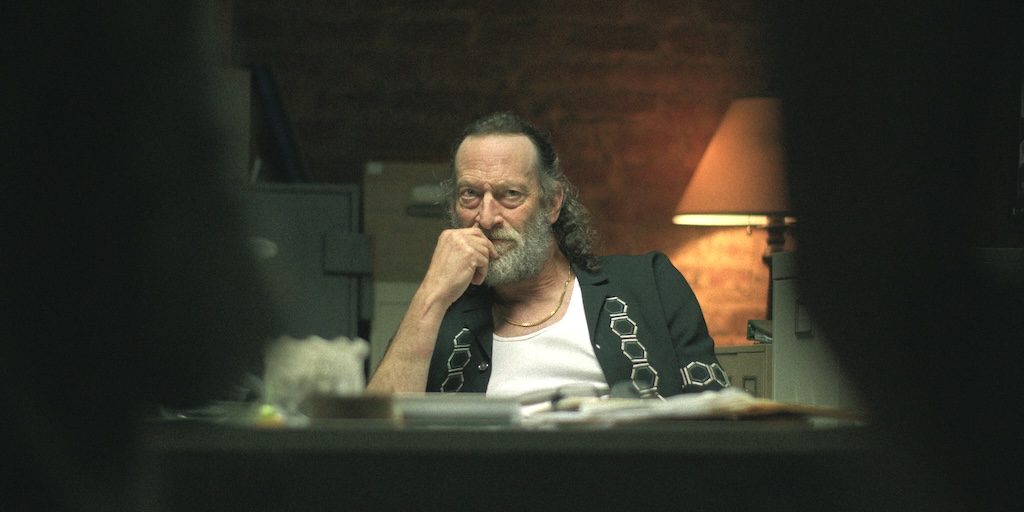
Mancuso (Troy Kotsur) Photo Courtesy of Netflix
Their conflict reaches a boiling point when Vince’s debts force Jake to consider unsavory alliances. It’s a classic tale of two sparring brothers: “same background, opposite trajectories.”
The writers’ room was built with contributions from Sarah Gubbins, Stacy Osei-Kuffour, Andrew Hinderaker, and Carlos Ríos.
Jason Bateman and Jude Law, both executive producers, brought more than star power to the show — they shaped the show’s tone and murky, visual language. Bateman directed the pilot and second episode, establishing the series’ signature tension through long telephoto shots of New York City and compressed cityscapes. Law worked closely with the writers to deepen Jake Friedkin’s emotional arc.
Directors Justin Kurzel and Laura Linney helmed mid-season episodes, each bringing distinct stylistic flourishes that kept the series visually fresh while maintaining narrative continuity.
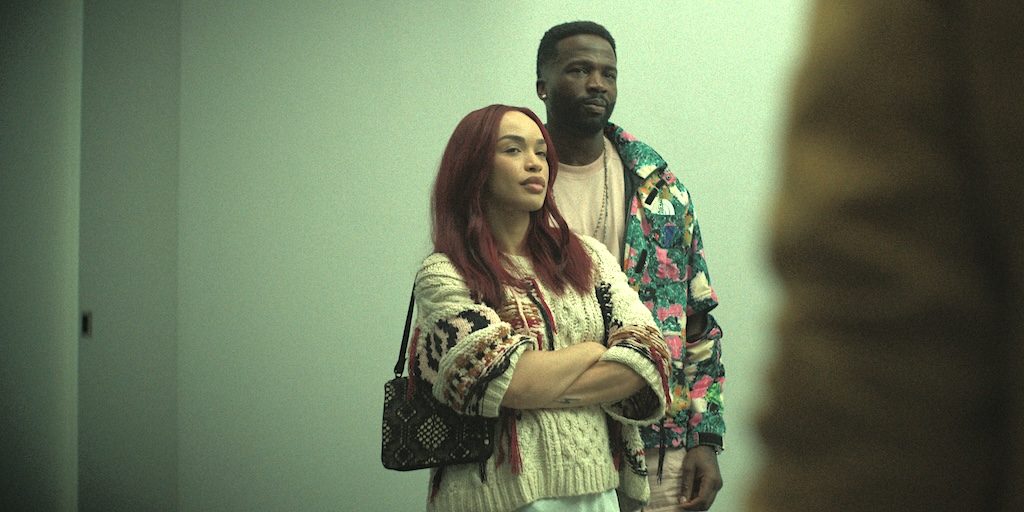
Estelle (Cleopatra Coleman) & Wes (Sope Dirisu) Photo courtesy of Netflix
Family, Addiction, and Ambition
At its core, Black Rabbit is an exploration of family — how blood ties can both bind and suffocate, bring love and hate. Jake and Vince share a traumatic childhood and a brief stint as musicians, but their paths diverged sharply into adulthood. Jake ostensiobly pursued legitimacy; Vince chased adrenaline. One had a plan, the other lived for the moment.
Addiction looms large. Vince’s relapse isn’t just a plot point — it’s a metaphor for the cyclical nature of trauma which rebounds loudly at a time when you thought you were past it. It represents how fate can rapidly shift one’s fortunes. The Black Rabbit restaurant becomes a symbol of fragile recovery and relapse: refined on the outside, rotting inside.
Class mobility is another key theme. The Black Rabbit attracts hedge-fund investors, celebrities, and street-level criminals and hustlers alike, creating a volatile mix of social power dynamics. Everyone wants their cut and they intend to get it.
Crime Drama Tropes and Original Twists
Black Rabbit embraces many familiar crime drama tropes — sibling co-dependency, ticking-clock debt, flashbacks to childhood band rehearsal formative trauma — but filters them through the lens of the restaurant world. These are staples of the crime thriller. It doesn’t seek to reinvent the wheel.
Jake’s business prowess is a veneer of entrepreneurial trappings hiding behind a wave of swelling debt. Black Rabbit is partially funded by legally dubious transactions which blurs Jake’s blurry moral code in order to survive. He’s a symbol of many people barely clinging on.
Every decision made in a hand dealing terrible cards is fraught with consequence. Every relationship is a potential powder keg. There is no right or wrong – only self-preservation.
Each episode ends with a potent moral equations — betrayal or salvation? Will Jake cut Vince loose or rescue him?

Join the Discussion!



Browse our Videos for Sale
[woocommerce_products_carousel_all_in_one template="compact.css" all_items="88" show_only="id" products="" ordering="random" categories="115" tags="" show_title="false" show_description="false" allow_shortcodes="false" show_price="false" show_category="false" show_tags="false" show_add_to_cart_button="false" show_more_button="false" show_more_items_button="false" show_featured_image="true" image_source="thumbnail" image_height="100" image_width="100" items_to_show_mobiles="3" items_to_show_tablets="6" items_to_show="6" slide_by="1" margin="0" loop="true" stop_on_hover="true" auto_play="true" auto_play_timeout="1200" auto_play_speed="1600" nav="false" nav_speed="800" dots="false" dots_speed="800" lazy_load="false" mouse_drag="true" mouse_wheel="true" touch_drag="true" easing="linear" auto_height="true"]







You must be logged in to post a comment Login