
Backrooms: Kane Parsons’ Horror Film Dives Into Some Deeply Disturbing Liminal Spaces

The Backrooms concept began with a single photograph, taken in 2003, but posted in May 2019 on a 4chan message board inviting users to submit “disquieting images that just feel ‘off’.” This mission carries through into A24’s Backrooms, the movie, written by Kane Parsons and Will Soodik.
The thread invited users to imagine what it would feel like to “noclip” out of reality and land in this canary yellow purgatory with stained carpet, humming fluorescents, and no visible exit. It wasn’t a specific monster story. It was a spatial one. A visceral one that taps into our intuitive fear more than logic.
What followed was a collaborative thrust of world‑building — an emerging mythology of nothingness shaped by anonymous voices, each adding fragments of lore, rules, and existential dread – but little meaning.
The horror that crystallized there wasn’t creature‑driven or gore‑driven. It was liminal horror: the terror of being trapped in a space that shouldn’t exist, a place seemingly designed for human use, but devoid of human presence. It’s the same uncanny discomfort you feel in an empty mall after closing and you can’t find the exit. The Backrooms took that unsettling sensation and stretched it, turning its mood and physicality into a psychological predator.
The horror came from the environment itself: a liminal nowhere/ someplace that felt both familiar, yet fundamentally wrong in its contradiction. When Kane Parsons, who directs, transformed that image into his breakout YouTube shorts, he codified a new strain of analog dread built on disorientation, architectural hostility, and the creeping suspicion that the world has slipped out of alignment without actual evidence. This is horror without catharsis, where the terror isn’t what’s chasing you but the possibility that you may never find your way back.
This became the foundation of a new strain of internet‑born horror — a liminal, architectural dread built not on monsters but on kenopsia, the eerie wrongness of an empty place meant for people, but devoid of them. The Backrooms spread rapidly across Reddit and YouTube as users expanded its “levels” and entities, but its core remained the same: horror rooted in spatial hostility, monotony, and the fear that you’ve slipped into a version of reality that refuses to let you leave.
Backrooms is true horror in its exploration of our fear of the unknown, some of which may cause harm. The film stars Chiwetel Ejiofor, Renate Reinsve, Mark Duplass, Finn Bennett, and Lukita Maxwell.
Related: Curry Barker Turned His YouTube Obsession Into A Film
Backrooms: How Kane Parsons Turns Liminal Spaces Into Feature‑Film Horror
Kane Parsons didn’t set out to reinvent analog horror. He just uploaded a short to YouTube at age sixteen — a grainy, disquieting glide through yellow‑tinted office purgatory — and inadvertantly built a modern myth. The Backrooms phenomenon now sits on the cusp of a feature adaptation, making it a case study in how internet‑native, short form storytelling can scale into a theatrical horror movie without losing the very qualities that made it viral.
For screenwriters, The Backrooms isn’t just a creepypasta (a catchall term for viral internet spread) success story. It’s a blueprint for translating liminal dread, negative space, void, and narrative ambiguity and confusion into film suspense that doesn’t rely on jump scares or well-timed reveals. Parsons’ work demonstrates how repetition, spatial disorientation, and the absence of answers can become engines of tension writing when handled with surgical precision.
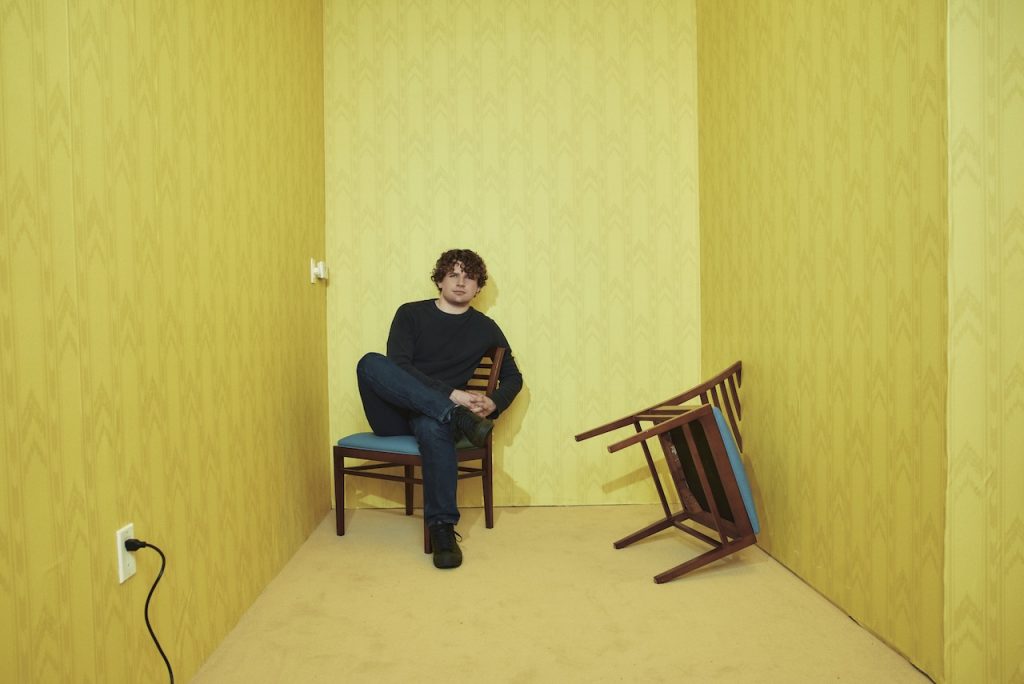
Kane Parsons. Photo by Sela Shiloni/ A24 Films
The Liminal Space: Why the Backrooms Works on YouTube
The Backrooms shorts thrive on a simple premise: a person “noclips” out of reality and into an endless maze of fluorescent‑lit rooms. The horror isn’t a monster or even a supernatural presence. It’s the space itself.
Parsons understands that liminal environments — transitional spaces designed for movement, not dwelling — trigger unease because they reject narrative purpose or meaning. There is no why – just a what? A hallway with no destination. A lobby with no people. A stairwell that leads nowhere. These are places built for function, not story, and that absence becomes the story.
The Setup Without A Setup
The first Backrooms video opens with a banal moment: a camcorder test on a film set. No foreshadowing. No lore. The protagonist falls through the floor, and the world simply… changes. It’s a hard cut into the uncanny.
For screenwriters, this is a reminder that horror doesn’t always need a prologue. Sometimes the most effective setup is the lack of one. The audience is thrown into the void alongside the character, forced to orient themselves with no guide rails or roadmap.
Repetition as a Psychological Weapon
Parsons leans on architectural repetition — identical rooms, looping corridors, copy‑paste carpeting — to create narrative claustrophobia, unbalance and vertigo. The viewer becomes trapped in the same visual rhythm as the main characters.
In a feature film adaptation, this technique can scale. Think of how Stanley Kubrick used the Overlook Hotel’s impossible geography in The Shining or how David Lynch weaponizes suburban sameness in Lost Highway. Repetition becomes a psychological attack – a firm, but unspoken statement of theme.
From YouTube to Horror Feature Film: Preserving the Void
Adapting the Backrooms into a feature means resisting the temptation to over‑explain the story world. Internet horror thrives on negative space and withholding explanations; studio horror often tries to fill it.
Few Answers, Maximum Dread
The Backrooms mythology is intentionally porous and nebulous. There are “levels,” entities, and rules, but none of it is canonized. The ambiguity and logical instability is the point. The spaces spontaneously rearrange themselves as they see fit.
This filmmaking approach mirrors the best cosmic horror. Think Annihilation or Skinamarink, where the terror comes from the sense that the world is wrong in ways you can’t articulate let alone explain. Things just happen spontaneously.
Related: Kyle Edward Ball Turned To His Childhood Fears For ‘Skinamarink’
The Meaningless Void as Theme
Backrooms isn’t about survival. It’s about existential erosion. The longer a character wanders, the more the space strips away identity, memory, and purpose. These themes are illustated through spacial degradation as rooms collapse, distortions such as flickering lights in patterns that suggest logic, and behavioral changes such as repetition, forgetting paths and doubting perception of one’s reality.
This is horror rooted in futility, not fear of death.
Tension Without Jump Scares: The Kane Parsons Way
Parsons rarely uses traditional scare mechanics. Instead, he builds dread through patience and atmospheric storytelling.
The Long Take
Many Backrooms shots linger past comfort. A hallway that should take five seconds to traverse takes twenty. The camera drifts, not because something is coming, but because nothing is. This technique forces the audience to anticipate danger that may never arrive. It’s the same principle behind the slow zooms in Hereditary or the static frames in It Follows.
The Off‑Screen Threat
In the original short, the danger is heard long before it’s seen. Its presence is defined by echoes, thuds, and Doppler‑shifted groans.
Writers can harness this by scripting sound cues as narrative beats:
– A distant hum that grows louder.
– Footsteps that stop when the protagonist stops.
– Ventilation noise that subtly shifts pitch.
The Sudden Shift in Space
One of Parsons’ most effective tricks is the abrupt transition from one environment to another — office rooms to industrial tunnels to damp concrete chambers. These shifts feel like the world glitching after hitting the hyperspace button on a video game.
In a screenplay, these transitions can function as act breaks or emotional pivots. They reset the audience’s expectations without resorting to plot twists.
Related: HOKUM is a masterclass in atmospheric horror
Influences: Analog Horror, Found Footage, and Architectural Terror
Parsons draws from a lineage of filmmakers who understand that space can be antagonistic and taunting.
Analog Horror Roots
The VHS texture, the warbled audio, the timestamp overlays — these echo works like Marble Hornets and Local 58. The analog aesthetic implies lost media, forbidden and possibly forgotten footage, and unreliable documentation.
Found Footage Discipline
Unlike many found‑footage films, Parsons respects the camera as a character. It shakes when the protagonist runs. It lingers when they hesitate. It becomes a survival tool – an emotional tracker, a fragile link to reality.
Architectural Horror
Films like Cube, Session 9, and Stalker prove that buildings can be antagonists. Backrooms belongs in this lineage. The architecture is the monster.
The Future of Liminal Horror
Backrooms proves that horror doesn’t need mythology bibles or franchise‑ready villains. It needs atmosphere, patience, and the courage to deliberately leave questions unanswered. Parsons’ work shows that YouTube‑originated storytelling can scale to theatrical scope without losing its soul — if the writer understands what made the original terrifying. In this case, Kane Parsons (aka Pixels) worked of the premise of images that feel off.
Where Screenwriters Can Go Next
Writers exploring liminal horror, analog aesthetics, or internet‑native storytelling often need structured guidance on how to translate mood‑driven concepts into feature‑length scripts. If you’ve written a script, a fresh set of eyes can help see things you may have missed.

Join the Discussion!


Browse our Videos for Sale
[woocommerce_products_carousel_all_in_one template="compact.css" all_items="88" show_only="id" products="" ordering="random" categories="115" tags="" show_title="false" show_description="false" allow_shortcodes="false" show_price="false" show_category="false" show_tags="false" show_add_to_cart_button="false" show_more_button="false" show_more_items_button="false" show_featured_image="true" image_source="thumbnail" image_height="100" image_width="100" items_to_show_mobiles="3" items_to_show_tablets="6" items_to_show="6" slide_by="1" margin="0" loop="true" stop_on_hover="true" auto_play="true" auto_play_timeout="1200" auto_play_speed="1600" nav="false" nav_speed="800" dots="false" dots_speed="800" lazy_load="false" mouse_drag="true" mouse_wheel="true" touch_drag="true" easing="linear" auto_height="true"]







You must be logged in to post a comment Login