
How BenDavid Grabinski’s “Mike & Nick & Nick & Alice” Turns Time Travel into Tight Drama

BenDavid Grabinski’s Mike & Nick & Nick & Alice is a, genre‑mashup crime thriller movie with a time‑travel, love story twist. It follows a single, violent night in the criminal underworld after a time machine upends loyalties and identities. The plot hinges on two gangsters — Quick Draw Mike (James Marsden) and Nick (Vince Vaughn) — whose tangled personal and professional lives are complicated when a future version of Nick (Vince Vaughn) appears, a time machine is destroyed, and a cannibalistic assassin called The Barron (Dolph Lundgren) is set loose. The film blends action, dark comedy, and sci‑fi mechanics to interrogate culpability, marriage, and the ethics of second chances.
Why screenwriters should study it
- Economy of setting: The film compresses action into a single night and a handful of locations, making scenes to carry both plot and character work. That’s a practical lesson in how constraints sharpen dramatic focus.
- High concept anchored by character: The time‑travel device is never an end in itself; it’s used to expose moral choices and relationship issues.
- Marketable Hook: A crime story with time travel gets executives and audiences listening.
- Balancing tones: BenDavid Grabinski blends action, dark humor, and emotion without letting any one register dominate.
- Structural misdirection: The film uses duplicate identities (present and future Nick) to create suspense and ethical ambiguity.
- Practical scenecraft: Set pieces (a botched chloroform attempt, a staged assassination) are motivated by character decisions, not spectacle.
The film is a tightly wound chamber piece that follows two couples — Mike, Nick, Nick, and Alice (Eliza González) — through a single weekend of revelations and ruptures. The narrative is built on overlapping confidences, misread intentions, and the slow accrual of consequence; its dramatic engine is less about plot mechanics than about the way dialogue and silence reveal who a character is when the lights go down.
This interview with BenDavid Grabinski will explain his screenwriting craft decisions.
Related: BenDavid Grabinski On ‘Scott Pilgrim Takes Off’

BenDavid Grabinski.
Where did the initial spark of the idea come from and how did it evolve into Mike & Nick & Nick & Alice?
I wanted to make a movie with an enlightened version of a mobster butting heads with the shittier version of himself. I liked the dramatic and comedic potential of it. Putting that approach in the middle of a “one night gone wrong” crime film felt fresh. I also wanted to make a sci-fi movie without scientists. There was one scientist… but he died. There are no characters able to give exposition about time travel nonsense. None of these characters have any business being inside this type of genre picture. All those ideas felt like they added up to one movie.
What film influences did you draw on and how did you make them your own?
There are hundreds of movies that influenced me on this project. It all gets filtered through my dumb sense of humor and point of view. If you stay true to your own instincts it will all transform into something different. Buddy action comedies. Crime movies. Hong Kong action films. You’re throwing all of that stuff into a big pot and making a new bonkers stew.
Related: Jonathan Tropper Time Travels in ‘The Adam Project’
Describe the shifting genre and tonal mix.
I love movies that juggle different tones. Some of it is silly. Some of it is thrilling. Some of it is emotional. Some of it is very sad. I care about these characters and try to never let it get too cartoonish because you need to really feel that final scene in the car. The challenge of that is really fun to me.
I really admire movies that balance different energies. The best version of it I’ve ever seen is Something Wild. I’ll never forget how it felt watching that when it turned into something much darker and scarier. This movie isn’t following Demme’s template there, but it inspired me to really go for it. I think this tone is closer to some international cinema I adore. Movies that make you laugh and cry back-to-back. I tried to be fearless in that regard.
Describe how you built the world of the movie and its rules.
The world is designed in an instinctual way. Most of it is predicated on tone. Some of it is based on style. But I tried to keep the rules of the time travel very simple because you need to be focused on the characters and not the science. Their decisions, needs, and fears are what drive the movie. My gangsters are obviously living in the shadow of so many other gangster movies. After I finished the movie I realized they’re probably closest to the Mitchum Brothers from Twin Peaks: The Return. I adore those characters and the way they shift from dangerous to charming to silly on a dime. The hope is you create this heightened world of Movie Gangsters. At no point did I reference the real life world of organized crime. That doesn’t interest me.
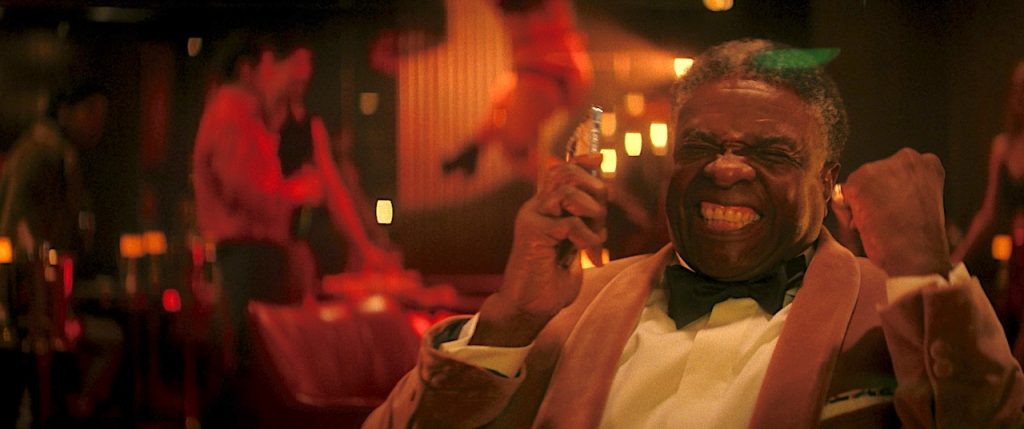
Keith David as Sosa in 20th Century Studios’ Mike & Nick & Nick & Alice. Photo courtesy of 20th Century Studios. © 2026
Related: Steven Knight on Crime Drama ‘Peaky Binders’
How did you keep the story grounded?
Everyone’s been in love. Everyone’s had a friendship that’s fallen apart. Everyone has regrets. This is what helps you connect to the characters. Relatable elements that keep the movie from floating off into outer space. You need to care about the characters on some level. You need to root for them. Or worry about them. You need to see yourself in someone in the movie. If you pull that off the genre elements and the world of these gangsters can be very heightened.
Why did you construct two versions of the same character across two time periods as opposed to using the same character?
The entire point of the movie is seeing Scrooge from the end of A Christmas Carol sharing the frame with Scrooge from the beginning of the story. That dynamic drives everything. If you don’t have that, you don’t have a movie.
Related: ‘Love Story’ on FX: The Romance between John F. Kennedy Jr and Carolyn Bessette
Why was the love triangle between Mike, Nick and Alice so important to the story?
If there’s no love triangle there’s no story. It’s what causes Nick to make a terrible decision. It’s the thing he needs to fix. But it adds so much to everything. It’s dramatic. It’s complicated. It creates a gravitational pull for these three (or four?) characters to share scenes together. It’s fundamentally a story about two people who don’t belong in this world of criminals: Mike and Alice. They’re lost. It’s about two unhappy people who find happiness in an unorthodox way and that leads to a lot of chaos.
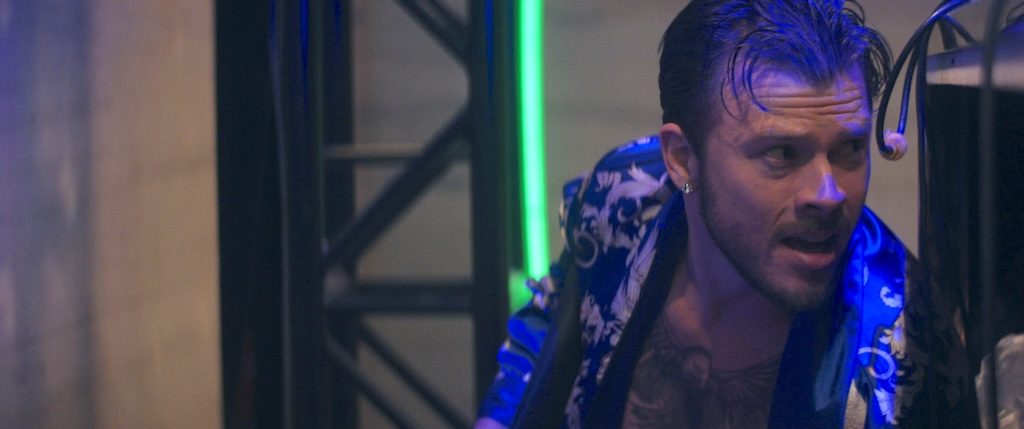
Jimmy Tatro as Jimmy Boy in 20th Century Studios’ Mke & Nick & Nick & Alice. Photo courtesy of 20th Century Studios. © 2026
What did the writing process look like? Did you do a pass for each element such as character, plot, and dialogue?
Every script is different. Some take weeks to write. Some take years. I spent a few years keeping this one on the backburner until I felt like I had a simple and contained approach to it. I didn’t want to make a movie that was an all caps TIME TRAVEL movie.
I wanted to make a buddy action comedy set in a stylized criminal underworld that just happened to have two versions of the same guy at the forefront. Figuring out how to boil it down to the simplest approach took a lot of daydreaming and brainstorming. Lots of notes in a Google Doc.
At some point I felt like I had enough of a motor to keep it going and wrote it without an outline. The final movie is extremely similar to the first draft. The structure is the same. The details shifted and evolved through development and casting but it’s the same movie. It’s always been two parallel threads that collide at the final party. The main thread follows Mike, Nick, and Alice. The secondary thread follows the gangsters at the parties.
Related: How Gangster Films & TV Shows Work
What aspects of the writing process challenged you the most?
You want the movie to be exciting and engaging, but you also want it to have a hangout vibe. Finding that balance is not easy.
There’s a version of the movie that’s very manic and feels like Snatch or Crank. There’s also a version that’s just people talking and focusing on character. The movie I wanted to make felt like it lived somewhere in between those two approaches. Finding a way to keep the movie moving, but not too fast was always in the back of my mind. How do you keep the movie propulsive but never at the expense of the characters? It can’t be a race against time but it also can’t be narratively slack. That was the challenge.
Can you reduce the theme to one sentence?
What if you could fix your biggest mistake?
Related: Interview With The Creators of The Gilmore Girls
Is there a standout scene that captures the essence of the film?
I think the Gilmore Girls scene probably has most of the key elements of the movie within one scene.
There’s been a lot of scenes in movie history with characters talking about pop culture. But the specificity of this scene is baked into the specificity of Mike & Nick & Nick & Alice. Four people are talking about a TV show. The guys are talking about who was the best love interest for Rory. But they’re really discussing who is the right partner for Alice, without even being conscious of it.
They’re also talking about a show they watched because they love her. This is Alice’s favorite show. On top of all that, Future Nick has seen more of the show than Present Nick which leads to very specific jokes. All of these different elements shape the scene and the dynamics within it. It also shifts into something sadder and more dramatic by the end which mirrors the structure of the movie itself.
That would probably be enough, but the relationship between the parent and child lead characters in Gilmore Girls also mirrors the relationship between Sosa (Keith David) and Jimmy Boy (Jimmy Tatro) on some level. The scene is dense in a very absurd way and I got to make jokes about Chilton in a big studio movie. That’s a win.

Join the Discussion!



Browse our Videos for Sale
[woocommerce_products_carousel_all_in_one template="compact.css" all_items="88" show_only="id" products="" ordering="random" categories="115" tags="" show_title="false" show_description="false" allow_shortcodes="false" show_price="false" show_category="false" show_tags="false" show_add_to_cart_button="false" show_more_button="false" show_more_items_button="false" show_featured_image="true" image_source="thumbnail" image_height="100" image_width="100" items_to_show_mobiles="3" items_to_show_tablets="6" items_to_show="6" slide_by="1" margin="0" loop="true" stop_on_hover="true" auto_play="true" auto_play_timeout="1200" auto_play_speed="1600" nav="false" nav_speed="800" dots="false" dots_speed="800" lazy_load="false" mouse_drag="true" mouse_wheel="true" touch_drag="true" easing="linear" auto_height="true"]







You must be logged in to post a comment Login