
‘Halloween’ Movies Still Matter. Screenwriters Should Study Them to Master Slasher/ Psychological Horror

Few horror franchises offer as useful a case study in how a story grows with its audience as Halloween.
John Carpenter and Debra Hill’s seminal film turned suburban routine into a source of dread. Subsequent entries into the franchise recast the masked killer through the anxieties of their own eras: supernatural occult, conspiracy, trauma, inheritance, reality television, community violence, discrimination, and the spread of grievance.
The Halloween movie franchise spans 13 films starting from Halloween (1978) to Halloween Ends (2022). Each depicts a new unknown threat centering around Mike Myers (Tony Moran) terrorizing the community.
Michael is so frightening because the script refuses to explain him into safety. His blank mask, silent behavior, and seemingly random appearances create a taunting threat that cannot be negotiated with or psychologically overcome.
For screenwriters, the Halloween series is more than a history of the genre. This slasher/ psychological horror hybrid is essential in maintaining the tonal and thematic spine of the movies while adding an emotional wrapping to coat the bloodfest.
Halloween’s original lesson: suspense is a matter of control
Carpenter and Hill’s Halloween is often discussed as a slasher template, but its most durable craft lesson is about informational control. The film withholds explanations on a tight leash, then slowly drip feeds it through deliberate framing, sound, and scene duration. Michael Myers is not constantly attacking. He is often simply present at the edge of the frame – observing, lingering, waiting, strategizing.
This menacingly deliberate restraint gives the audience time to anticipate the worst possible violence.
The screenplay makes an ordinary urban locale do the suspense work through mundane tasks. Laurie Strode (Jamie Lee Curtis) walks home, babysits, checks rooms, and moves between houses. The neighborhood is clear enough for viewers to understand where she is — and therefore to feel the danger when Michael crosses that space.
Laurie Strode, is not introduced as a genre stereotype. She is observant, responsible, and socially grounded. Her ‘final-girl’ status emerges from behavior rather than exposition. She notices details, takes her responsibilities seriously, and reacts when the threat becomes visible.
The Halloween screenplay shows an economical writing style through simple actions. Many scenes contain little dialogue, yet each beat clarifies place, character relationships, or danger. The famous stalking sequences work because the audience understands where Laurie is and what she has failed to see.
The film also makes a conscious contrast between Laurie’s attentiveness and her friends’ casual confidence – the calm before the storm. That characterization is efficient because it serves both plot and theme. Laurie’s instincts help her survive, while the group’s flippant social behavior makes the danger feel like an intrusion into everyday life, not a separate horror event.
The movie’s 1978 anxiety is specific to its time: the apparent safety of suburbia cannot guarantee protection. Nor should audiences expect it. Michael’s blankness intensifies that concept. He does not offer a motive that would make the threat psychologically manageable. He exists as the incarnation of pure evil. The less the script explains him, the more space the audience has to fear what he might do next. This unknown threat is more psychologically potent than say a monster movie, where audiences can better judge a potential attack.
Note, that Mike Myers is enigmatically referred to as “The Shape” rather than “The Silent Killer.” This modulates what the audience knows, what the characters know, and when those two inventories diverge. That gap is where suspense ruminates.
From the screenplay:
The Shape steps from behind the hedge.
Watching.
Still.
[Related: John Carpenter on Screenwriting, Horror, and the Art of Making Movies That Last]
Halloween and the craft of a contained world
Halloween II (1981), again written by Carpenter and Hill, continues the original night.
Much of the film moves into a hospital, a location that should represent care and safety, but instead becomes a labyrinth of empty corridors, isolated rooms, and malfunctioning systems. The setting narrows the story scopewhile expanding the sense of vulnerability.
The film also makes an irreversible franchise choice by revealing that Laurie and Michael are siblings. That connection gives the later films a stronger mythic engine and character dynamic, but it changes the original’s premise. The first film’s threat is frightening partly because it appears so arbitrary. A family tie now provides an explanation — and also narrows the kind of mystery the story can sustain. The revelation raises the emotional stakes, but it also reduces the original’s more disturbing ambiguity.
That tension between explaining and preserving the unknown recurs throughout the franchise. It asks whether a revelation deepens the central conflict or merely offers expositional backstory.
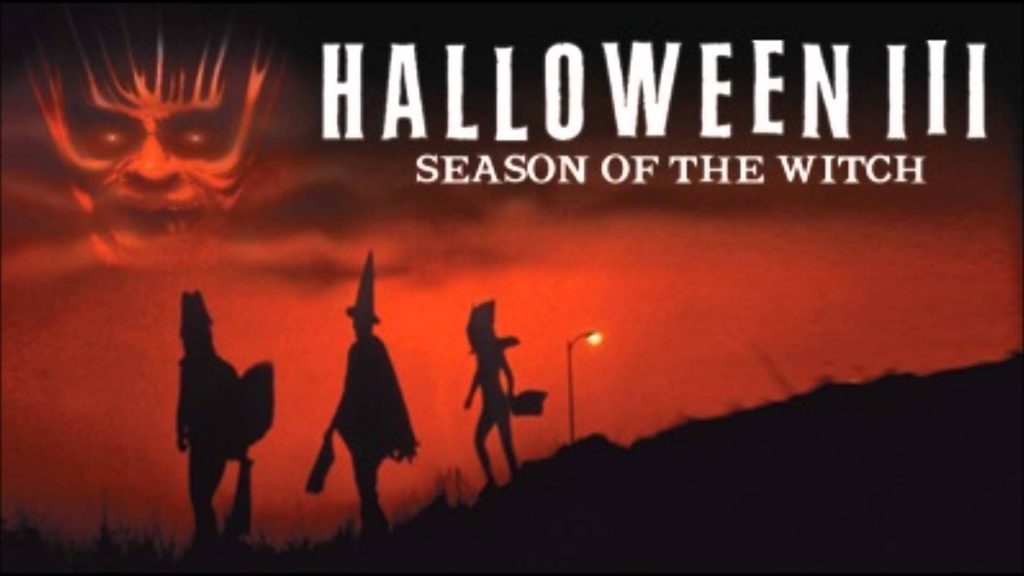
The next film, Tommy Lee Wallace’s Halloween III: Season of the Witch (1982), makes the franchise’s most radical structural move. Written by Wallace and Nigel Kneale, it largely abandons Michael Myers and Laurie Strode in favor of a standalone story about a mask manufacturer and a mass-death plot.
The masks are both toys and instruments of control. The film’s premise combines themes of corporate conspiracy, occult horror, and commercialized childhood rituals. Halloween masks become instruments of mass violence, and advertising becomes part of that mechanism. The film’s anxiety is about consumer culture, technology, and the possibility that familiar traditions have been converted into tools of social control.
The 1980s sequels increasingly turn Michael Myers into a recurring force whose history must be revealed. Halloween 4: The Return of Michael Myers (1988), written by Alan B. McElroy, shifts attention to Jamie Lloyd, Laurie’s daughter. The threat now lands on a new generation, giving the film a more straightforward and updated source of emotional stakes: a child is in danger, and the adults around her may not be able to protect her.
The sequel also illustrates an advantage of slasher storytelling. A recurring killer supplies an instantly recognizable threat, while the screenplay can refresh and reinforce the human story around him.
Halloween 5: The Revenge of Michael Myers (1989) and Halloween: The Curse of Michael Myers (1995) dive into mythology, with the latter tying Michael’s violence to an occult event. These films show the risk of neatly answering every question. A franchise can create momentum through the mystery of unanswered questions, but each new explanation may make the original menace feel smaller or more mechanical.
That does not mean lore is inherently a mistake. It means lore needs a dramatic reason to keep the audience invested. If a new rule does not change what a character must do, what they stand to lose, or how the audience understands the danger, it may be information rather than story.
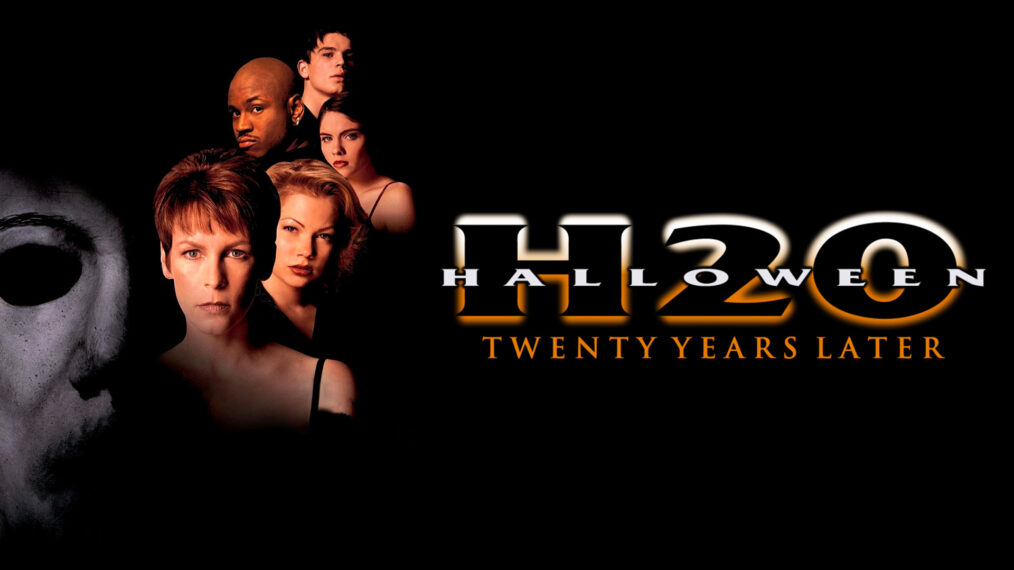
Halloween H20: 20 Years Later (1998), written by Robert Zappia and Matt Greenberg, takes a different route. It returns Laurie Strode to the center and treats the past as a continuing psychological burden. The sequel’s appeal lies in the tension between a survivor’s attempt to build a life after escaping Mike Myers and the possibility that the old threat has not been quashed and may return.
The film belongs to a late-1990s cycle of self-aware horror, but its strongest theme is about unresolved trauma. Laurie has changed her identity, built a new life working in a school, but remained emotionally trapped by the past.
Rob Zombie’s Halloween (2007) reworks the franchise through a more detailed account of Michael’s traumatic childhood. It is a marked departure from Carpenter’s unknowable figure. The remake offers social commentary and a harsher portrait of family life. That choice reflects one of the series’ recurring debates. Does explaining a monster make the horror more affecting — or does justification tame it?
Zombie’s two-film approach gives the question room to develop. Halloween II (2009) is less interested in simply repeating the first film’s chase structure than in showing what violence does to survivors.
The films are useful for script writers studying how tone and point of view can radically change the same underlying premise while still keeping it coherent.
The 2000s entry Halloween: Resurrection (2002), written by Larry Brand and Sean Hood, places the action in a reality-TV environment. Its premise connects the killer to the era’s growing appetite for surveillance and mediated danger. The camera becomes part of the story’s world: people watch events, perform for them and mistake visibility for control – hallmark of the times.
A livestream, phone or security feed should create a new vulnerability, not merely decorate the scene with spectacle.
By contrast, Halloween (2018), written by David Gordon Green, Danny McBride and Jeff Fradley, ignores the intervening sequels and follows the original as its direct lineage. Laurie has spent decades preparing for Michael’s return. The film’s strongest dramatic idea is that her survival has not ended the story. It has shaped Laurie’s identity and damaged her relationships.
This version treats trauma as both protection and cost. Laurie’s vigilance may be rational, but it has also estranged her from her family. For screenwriters, that contradiction makes a character more dramatically effective than a simple “strong survivor” label. Laurie will never be completely safe or in control.
[Related: John Carpenter Discusses “The Thing:” Behind the Scenes of the 1982 Horror Masterpiece]
Halloween, suspense and the limits of explanation
The 2018 film’s sequels turn from individual survival toward community response. Halloween Kills (2021), by Green, McBride and Scott Teems, expands the action across Haddonfield and gives the crowd a larger role. Its most pointed concern is collective panic: the town’s attempt to find and punish Michael becomes another source of danger.
That shift changes the scale of the story. The first film’s suspense depends on a small group of people moving through a comprehensible neighborhood. Halloween Kills asks what happens when fear becomes communal and action spreads faster than reliable information. The film’s repeated “Evil dies tonight” rallying cry is not subtle, but it makes the crowd’s momentum noteworthy.
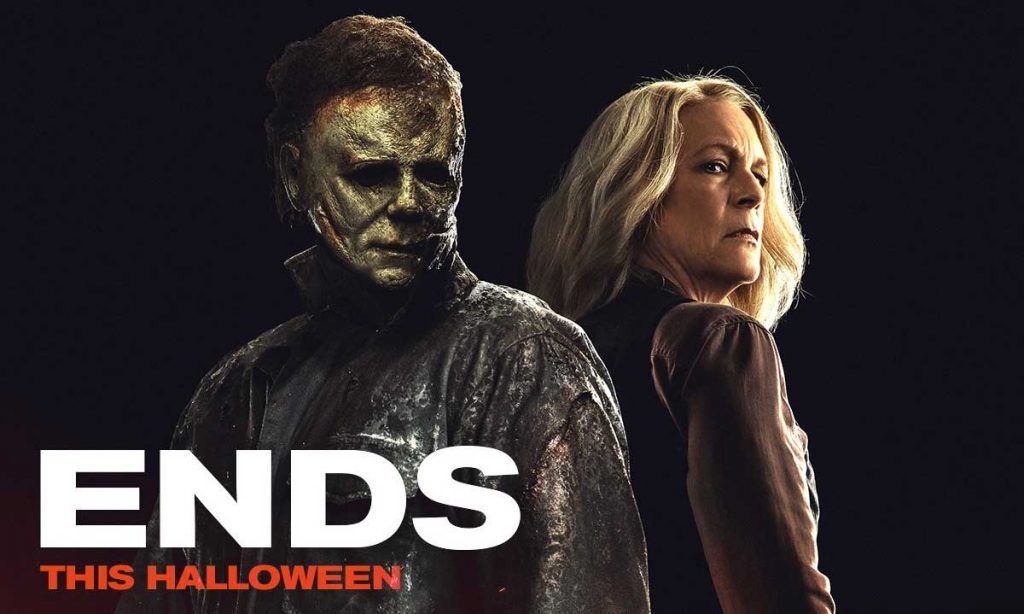
Halloween Ends (2022), also written by Green, McBride and Paul Brad Logan, makes a more striking break by giving Corey Cunningham (Rohan Campbell) a substantial role as a new human source of violence. Michael is not the only possible center of fear any longer. The story turns toward alienation, blame, and the way a community can transform a pariah into a monster.
This move leans toward psychological horror, where dread comes from identity, motive and social pressure, rather than the slasher’s familiar pursuit-and-attack pattern. The two modes are not opposites. A slasher can carry psychological depth, and a character study can still use the rhythm of a chase. The question is which engine the screenplay wants the audience to invest in.
[Related: “We Used The DNA Of The Original Movie” Chris Bernier On ‘Halloween Ends’]
[Related: “Horror Movies Should Talk About Social Ills” Says Filmmaker Joe Russo]
Slasher Versus Psychological Horror: What Writers Can Borrow
The Halloween films move between two related but distinct modes. Slasher horror is built around pursuit, vulnerability, spatial strategy, and escalating physical danger. Psychological horror is built around perception, memory, guilt, identity, and the fear that the threat has entered the protagonist’s mind or relationships. Neither mode is inherently more sophisticated. The difference is where the script locates uncertainty.
Screenwriters often confuse physical threat with dramatic momentum. A killer entering a room is a situation while an escalating psychological crisis is a story.
Slasher story mechanics prioritize body count, velocity, and inventive set pieces. In lower-tier entries of the genre, characters exist as cannon fodder, their deaths functioning as metronomic beats to wake up the audience every few scenes.
Psychological horror, by contrast, weaponizes the internal vulnerability of the protagonist. The conflict is internal: grief, guilt, moral erosion, or insanity.
The strongest entries in the franchise succeed precisely because they balance both approaches. Michael Myers operates with the merciless efficiency of a slasher antagonist, but Laurie Strode’s journey belongs to psychological drama.
A slasher film asks:
Who is being watched?
How close is the threat?
What route remains open?
What mistake will expose the victim?
Psychological horror asks:
Can the protagonist trust their perception?
Is the danger external, internal, or both?
What past event is shaping the present?
What does survival require the character to become?

Join the Discussion!



Browse our Videos for Sale
[woocommerce_products_carousel_all_in_one template="compact.css" all_items="88" show_only="id" products="" ordering="random" categories="115" tags="" show_title="false" show_description="false" allow_shortcodes="false" show_price="false" show_category="false" show_tags="false" show_add_to_cart_button="false" show_more_button="false" show_more_items_button="false" show_featured_image="true" image_source="thumbnail" image_height="100" image_width="100" items_to_show_mobiles="3" items_to_show_tablets="6" items_to_show="6" slide_by="1" margin="0" loop="true" stop_on_hover="true" auto_play="true" auto_play_timeout="1200" auto_play_speed="1600" nav="false" nav_speed="800" dots="false" dots_speed="800" lazy_load="false" mouse_drag="true" mouse_wheel="true" touch_drag="true" easing="linear" auto_height="true"]







You must be logged in to post a comment Login