
Inside the Minds of Eskil Vogt & Joachim Trier: Exclusive Interview on Crafting “Sentimental Value”

Sentimental Value (Norwegian title: Affeksjonsverdi) is directed by acclaimed filmmaker Joachim Trier (The Worst Person In The World), who co-wrote the screenplay with Eskil Vogt. The film stars Renate Reinsve as Nora, Stellan Skarsgård as their estranged father Gustav, and Elle Fanning as the ambitious American actress Rachel.
The emotionally-driven story unfolds as sisters Nora and Agnes (Inga Ibsdotter Lilleaas) grapple with their tumultuous relationship with their father, a once-celebrated director and their complex sisterhood.
Joachim Trier and Eskil Vogt spoke with Creative Screenwriting Magazine about their vision for this project.
How do you position Sentimental Value in the realm of International Cinema?
Eskil: We are deeply rooted in Scandinavian culture. We live in Oslo. We have our family history there. It’s very important to us to tell these specific stories from where the characters that are integrated in our world. But, it’s without borders. You can watch a movie from anywhere and it can touch you deeply.
What is the significance of the title?
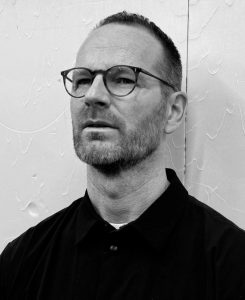
Joachim Trier
Joachim: On one level, we thought it was a beautiful title in the sense that it could be an old jazz standard or something. It feels a bit sweet and melancholic.
More importantly, this is a story of the subjective individual value that you give to a home, to a family relation, to a house. It has that sense that your sentiments are different, even though you’re in the same family.
Eskil: In our early 20s, we started making shorts and we were very skeptical of easy emotions and melodrama. Now we’re opening up to more emotion in our writing and our films. I think Sentimental Value has a bit of us opening up to that.
If it comes from a true place, you shouldn’t be afraid of it. In Europe, or Scandinavia, restraint is a very virtuous thing.
The film is set in Oslo. How does the Borg family represent people all over the world?
Joachim: Be universally specific.
You’re creating something about specific characters, specific cultural references. That’s all you can do to make it lifelike. You hope for universality, but you can’t aim for universality directly. You can’t say,“Don’t say it like that because these people won’t get it.”
You have to focus on these characters, their problems, what they are, how they behave. And that’s cinema – trying to make life in front of the camera and trying to find a formal way of leaving enough space for interpretation. You don’t stuff it down people’s throats.
We’ve made films that traveled and it’s always been fascinating to see how the movies are received in a slightly different way according to where we show them. But with this film, we get the same reactions almost everywhere. You talk to a young woman from Mumbai who says, “How did you know so much about my life?” Or a man from Nigeria or a filmmaker from Los Angeles.
It’s just been a privilege to see that you can make such specific films about characters in your reality and how that can translate in that way.
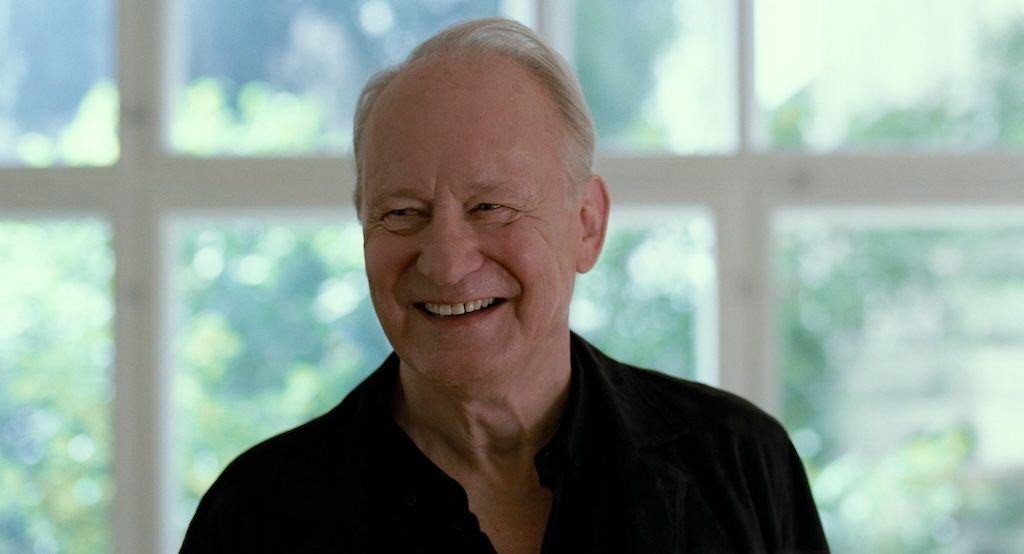
Gustav Borg (Stellan Skarsgard) Photo by Kasper Tuxen Andersen
Discuss what drives Gustav’s Borg character.
Eskil: What initially fascinated us about Gustav and a lot of artists of that generation, is that you could admire their art, films or novels. It’s full of empathy, it’s nuanced. And then you read about these people and they were brutes in real life. They stepped all over people and they couldn’t communicate their feelings except in art.
I think that was something we wanted to explore in Gustav Borg. He obviously has something to say and he wants to express it. He does it so well in his films. It’s the trauma of losing his mother at an early age that informs that. And it’s also some grief about what he missed by not being able to be there for his children. But he can’t say these things directly.
Joachim: There’s a whole generation where their parents were extremely traumatized by the Second World War and the Holocaust.
Suddenly you’re building a new society; there’s a stiff upper lip, there’s a grief that’s transferred, but not spoken about. And then there’s the dichotomy in human relations between what actually is, what emotions are at play, and what you can or cannot talk about. That was a lot of the climate after the war. Gustav Borg was born in the early 50s. I had a grandfather who was in prison during the war and survived.
I understand why it must have been very hard to speak about those things. But it affected them. I know both my mother and father had experiences of parents that were affected by the war. And I think it transfers down through generations in ways that are very tricky to put your finger or talk about in the social language.
Gustav, not only is traumatized on one hand by an area in his life that’s unspoken, but that same area of unspokenness is also where art comes from – this yearning for a different language, this yearning to express yourself. So in a way, in that realm of the non-social everyday language, there’s both grief and there is salvation. It sounds a bit abstract, but I think that the traumatic and the sublime are connected in strange ways.
Discuss the relationship between the sisters Nora and Agnes?
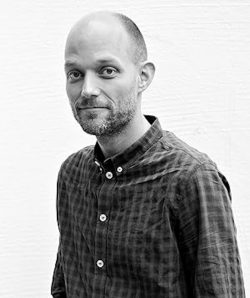
Eskil Vogt
Eskil: We started exploring this idea of the sister relationship and the idea that you can grow up in the same house with the same parents and have completely different childhoods.
What we found interesting in that relationship, is that you have the younger sister wanting to take care of the older sister.
Agness wants to protect Nora. She has become the older sister in a way. She feels she has succeeded and is more grounded than Agnes because her older sister once bore the responsibility.
Agnes was the mother, she was the parent. She took care of Nora when they were alone with their mother who probably had depression. And now the roles have changed.
How do you find moments of levity in such a melancholic film?
Joachim: I don’t think we come at it from just a speculative entertainment point of view, even though we want our films to be engaging. I think life is a mixture of sadness and joy, and it goes up and down in unusual, unexpected ways. When we have funny actors like Stellan Skarsgård or Renate, they’re really funny.
It’s such a joy to have scenes of humor. I think in our culture, we are perceived as these Scandinavian “hard rocks” and too serious. But I also think we are able to laugh at ourselves a bit to able to survive.
The characters reflect the mood of the film. I think it’s our most hopeful film in a way. I really wanted to take a risk and go a bit acoustic on this one and make a film about love. They are really yearning to connect.
The baby steps of reconciliation is what interests and moves me in the story. But let’s not forget it’s a sad film, too. It’s about deep grief.
What is the difference between a house and a home?
Eskil: The film doesn’t say either, but I think there is sentimental value attached to an object like a house. When they have to let go of that, it’s very sad. One of the most violent scenes in the movie is when the house is being redone in a completely different style, erasing all the history.
But at the same time, it’s a good thing for that family to let go of all the luggage of the past. I don’t think home is a place as much as being grounded and connected to other people.

Join the Discussion!



Browse our Videos for Sale
[woocommerce_products_carousel_all_in_one template="compact.css" all_items="88" show_only="id" products="" ordering="random" categories="115" tags="" show_title="false" show_description="false" allow_shortcodes="false" show_price="false" show_category="false" show_tags="false" show_add_to_cart_button="false" show_more_button="false" show_more_items_button="false" show_featured_image="true" image_source="thumbnail" image_height="100" image_width="100" items_to_show_mobiles="3" items_to_show_tablets="6" items_to_show="6" slide_by="1" margin="0" loop="true" stop_on_hover="true" auto_play="true" auto_play_timeout="1200" auto_play_speed="1600" nav="false" nav_speed="800" dots="false" dots_speed="800" lazy_load="false" mouse_drag="true" mouse_wheel="true" touch_drag="true" easing="linear" auto_height="true"]







You must be logged in to post a comment Login