
Andrea Berentson-Ottmar on Overcoming the Challenges of Producing “Sentimental Value” and Breaking into Film

- Interview: Lars Knudsen on Launching “Bugonia”, Indie Film Producing, and Working with Ari Aster
- Jerry Bruckheimer on “F1: The Movie,” Working with Brad Pitt, and Breaking into the Movie Business
- Guillermo del Toro’s “Frankenstein”: The Journey of Creation
- How Producer Pippa Harris Overcame the Challenges of Making “Hamnet” — And How She Launched Her Film Career
- Eli Bush on Producing “Marty Supreme”: From Columbia Economics to Period Filmmaking in New York — Challenges & Insights for Producers
- Sara Murphy on Producing “One Battle After Another”: Challenges, Beginnings, and Behind-the-Scenes Insights
- Andrea Berentson-Ottmar on Overcoming the Challenges of Producing “Sentimental Value” and Breaking into Film
- Teddy Schwarzman on Producing “Train Dreams”: The Challenges of Getting the Film Made and How He Broke Into Hollywood
- Sev Ohanian on Producing “Sinners”, Working With Ryan Coogler, and How He Got His Start in Hollywood 🎬
- Producer Miri Yoon Reveals the Challenges of Making “Weapons” and Shares Her Journey to Success in Film Production
Sentimental Value, directed by Joachim Trier, is an intimate Norwegian family drama about two sisters forced to confront their estranged father, a once-renowned filmmaker who tries to reconnect by casting one daughter in his deeply personal movie. The film stars Renate Reinsve, Inga Ibsdotter Lilleaas, and Stellan Skarsgård.
Producer Andrea Berentson-Ottmar discusses the main challenges of producing this independent film. Most of the film was shot in Oslo, though there were a few other locations as well. The team was in the middle of shooting when the pandemic hit. That was a huge disruption, but after that experience, it actually felt good to return to more typical production challenges. Time was also a crucial factor for, especially for the director. Joachim Trier values time more than anything — time to prepare, time with his actors, time to shoot. He needed adequate time for all stages of the process.
They had 64 shooting days, which is unusual for a Norwegian crew. Maintaining the crew’s momentum and energy over such a long period was a major challenge in itself. Financing the project from outside Norway was also quite complex. It had 44 sources of financing and a budget scale the crew had never worked with before. “When you raise your ambitions to this level, everything becomes bigger — especially the budgetary challenges,” Andrea says. This was all new to Andrea, but the main benefit is they maintained creative control.
The house was another major challenge they anticipated from the start. It is almost a character in itself. They needed to find the perfect house — one that would feel authentic throughout the film and that audiences would believe had been lived in from the 1890s until the present day. They found a real house at an existing location, and aimed to shoot as much as possible there. But they also knew they would have to return for various small scenes pickups throughout the shoot. This meant redressing the entire house multiple times and adapting it for winter, fall, and spring.
The team built the entire first floor in a studio. About half the film was shot on location, and the other half was filmed in the studio using virtual production. They had to recreate the exterior environment to match different historical periods, using period-appropriate cars and extras, and ensure the two settings blended seamlessly.
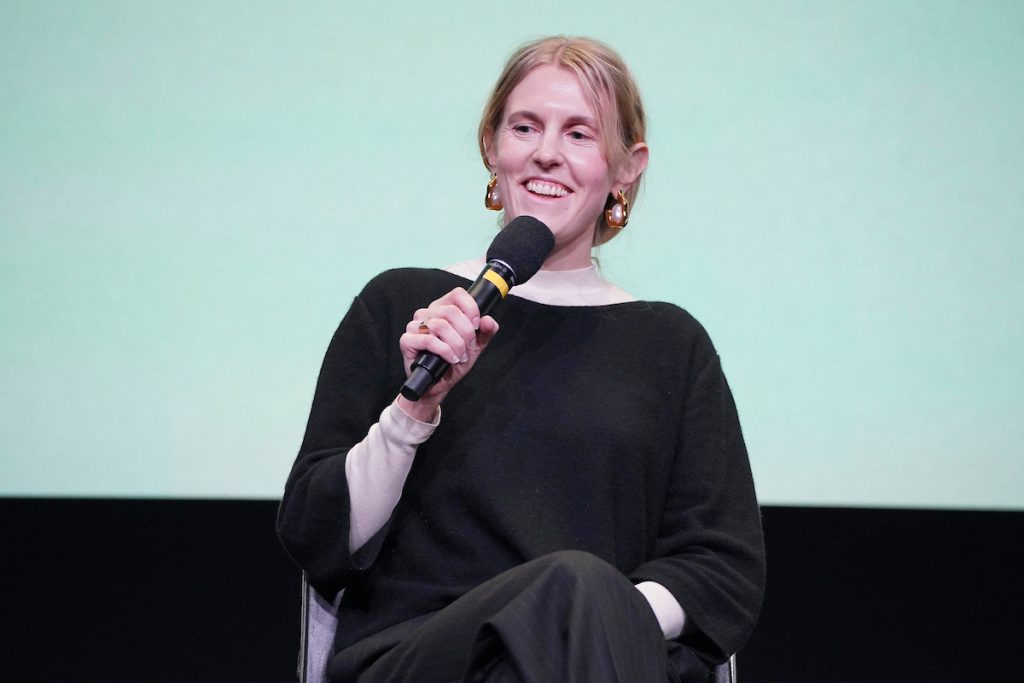
Andrea Berentsen-Ottmar, Photo by Jordan Strauss
Breaking into the film business
Andrea has one memory that really started it all, back when she was 14. She was curious about the film industry and knew someone working in film. She was lucky enough to attend a premiere where she saw everyone come on stage. They were so moved, some even in tears. She wondered, “What did they do to bring all these people together?” That sparked her curiosity and career progression.
The filmmaker also remembers traveling to Japan with her family that year because her mother had grown up there with her missionary parents. Andrea decided to document the trip with a home video camera. When they returned, she edited the footage herself and showed it to her mother. It ended up as a half-hour documentary. Her mother started to cry, but Andrea didn’t understand why at the time. She later realized that she had captured moments between her and her parents — conversations about things they never discussed again. That experience stayed with Andrea as a powerful lesson in the emotional impact of filmmaking. It made her want to pursue thepath.
Later, Andrea began working on short films and music videos. Making music videos became her film school. It was a great way to learn teh craft by doing. That introduced her to a lot of talented people along the way. She grew into the industry alongside many talented actors and directors.

Join the Discussion!
Related Articles
 Inside the Minds of Eskil Vogt & Joachim Trier: Exclusive Interview on Crafting “Sentimental Value”
- Eli Bush on Producing “Marty Supreme”: From Columbia Economics to Period Filmmaking in New York — Challenges & Insights for Producers
- Producer Miri Yoon Reveals the Challenges of Making “Weapons” and Shares Her Journey to Success in Film Production

Browse our Videos for Sale
[woocommerce_products_carousel_all_in_one template="compact.css" all_items="88" show_only="id" products="" ordering="random" categories="115" tags="" show_title="false" show_description="false" allow_shortcodes="false" show_price="false" show_category="false" show_tags="false" show_add_to_cart_button="false" show_more_button="false" show_more_items_button="false" show_featured_image="true" image_source="thumbnail" image_height="100" image_width="100" items_to_show_mobiles="3" items_to_show_tablets="6" items_to_show="6" slide_by="1" margin="0" loop="true" stop_on_hover="true" auto_play="true" auto_play_timeout="1200" auto_play_speed="1600" nav="false" nav_speed="800" dots="false" dots_speed="800" lazy_load="false" mouse_drag="true" mouse_wheel="true" touch_drag="true" easing="linear" auto_height="true"]






You must be logged in to post a comment Login