
John Wells on Directing “The Pitt” – Especially The Season 2 Finale

Executive producer and director John Wells reflects on shepherding HBO Max’s medical drama The Pitt through two seasons of intensive, real-time storytelling, where each 15-hour shift demands absolute narrative continuity with no room for error.
Working alongside creator and showrunner Scott Gemmill and star Noah Wyle — his collaborators from ER — Wells emphasized the show’s commitment to keeping audiences fully engaged. Each season requires storyboarding all episodes in sequence before production, in order to maintain the serialized format that allows viewers to invest deeply in characters’ arcs as they unfold.
The sophomore season, set on July Fourth, tackles urgent contemporary healthcare crises including artificial intelligence in medicine, immigration enforcement in emergency rooms, and the mounting trauma of overworked medical staff. The explosive season two finale concludes with a desperate confrontation between Dr. Robby (Noah Wyle) and Dr. Abbott (Shawn Hatosy), delivering the emotional payoff this real-time constraint allows.
John Wells discusses the rigors of producing such an intensive show, and especially the culmination to the realistic, emotionally-charged Season 2 finale.
Related: 4 Ways To A Better TV Writers’ Room
Moving Dr. Robby so quickly through such a long emotional journey
We spend a lot of time working with the actors on the specifics of the scripts.
The performances are very much theatrical in the sense that they’re more like directing theater. We have a lot of conversations about what we’re going to do before we start filming. When we start, the pace is getting the camera up and moving, much like a live performance as if it was in front of a live audience.
Scott Gemmill wrote this finale episode and we spent a lot of time talking to Noah Wyle about the scene of delivering a baby – Jane Doe. So when we got to it, it was really a performance. We did it in four or five takes in about a week. There were no real cuts in there.
Filming the medical procedure scenes
We shoot in continuity. We start with the first scene in the episode and we shoot all the way through, except for the outside scenes.
My conversation with Noah during this was, ‘What’s the place that you want to get to? Here’s the place that I would like you to get to. How many takes do you think you have in you to get there?’ We had a large conversation about the entire episode which is really shot from his point of view.
It feels oftentimes like there’s no point of view in the scenes and that you’re following everything. But if you watch it, you’ll see that there’s always one character that the scene’s really about. And so in this entire episode, the closer shots are always on Noah through the entire episode, whatever the scenes are.
We’re conscious of following him as our central character.
Related: 10 Ways To Write Nail-Biting Cliffhangers
A podcaster referred to that as The Pitt’s version of the bank robbery scene in Heat.
I’ve done a lot of big action stunts and they take the exact same kind of planning. We start planning about three months in advance because the prosthetics, and the other things that get built take a long time.
That took about three days to shoot. The uterine bag that we cut, we only had four of them.
Once we put the animatronic baby inside and then put the goo on it, the amniotic fluid that was inside dissolved all the stuff that was on the baby then we couldn’t get it out.
We’ll have two or three separate puppeteers who are in the rooms underneath they gurney. The resets are very difficult because the woman giving birth is wearing a huge prosthetic belly and most of her body is underneath the gurney.
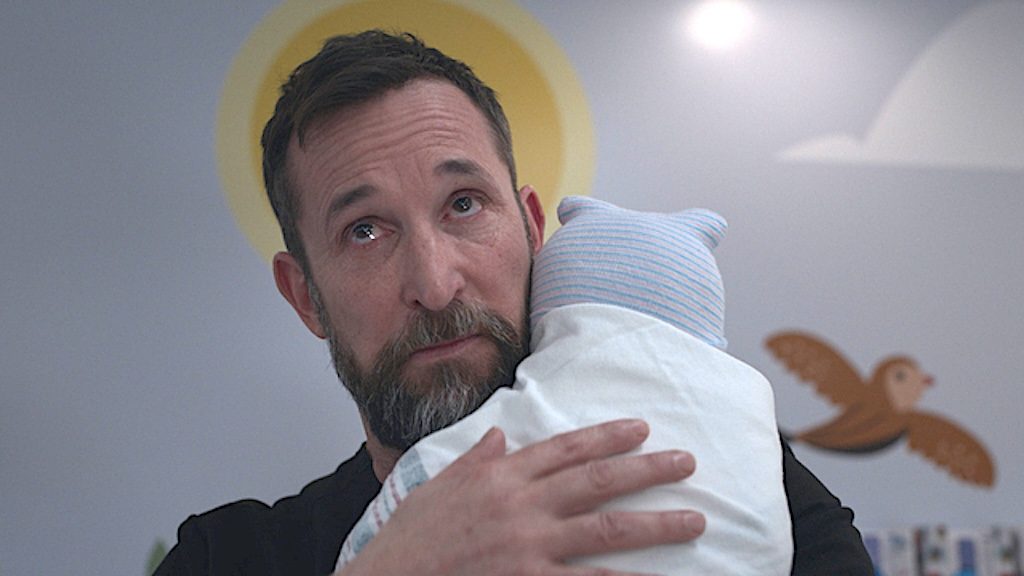
Dr. Robby (Noah Wyle) Photograph by Warrick Page/ HBO Max
We have anywhere between four to six practising ER nurses who are there and they work their shifts around our schedules.
We’ve got a full-time ER physician who’s always on set. We have four of them and they rotate between episodes and then we have our three writers who are ER physicians who are on the writing staff.
So you have a lot of technical support for what giving birth would actually look like. But it’s a piece-by-piece process, much like building a complicated stunt. And you need to make sure that everybody’s safe because there are real scalpels that are being used, so there’s a lot of safety concerns.
There are only three or four things in there that were actually done with visual effects. One is the baby’s mouth moving.
We use a lot of real footage to plan what we’re gonna do.
We’ll shoot seven or eight pages in a morning with four or five pages at a time.
If Noah’s gonna spend three days on big scenes like that where he gets stuck in the trauma room, you gotta do some 10, 11 page days.
We have as many as 100 background artists on set. Many of them who are in the beds sign on for the entire seven months of shooting.
They have their own stories and their own medical backgrounds. We have two continuity script supervisors, one who’s just doing the background and one who’s doing the foreground dialogue and everything else. Because we’re shooting in depth, the entire crew wears scrubs because they’re constantly getting caught in the shots.
Related: 5 Ways To Sharpen Your Scene Descriptions
Outdoor Shoots – Writing Certain Episodes after Certain Scenes have Been Written
When we shoot in Pittsburgh at certain time of year, the lantern bugs get in there everywhere.
The crew gets very excited when we leave the sound stage to shoot, but we really only do that on the first and the last episode, and then occasionally in the ambulance bay, which is shot at St. Joe’s in Burbank.
And occasionally on the roof, we film a week in Pittsburgh that we have to do for the entire series because it’s one day. We can’t go back to these places a couple of different times and risk that there are differences in the trees or anything. So it’s a real challenge for the actors and for the writers, because oftentimes we’re writing scenes for the last episode, months before the entire episode’s actually written.
Engaging with real life ER physicians
The writers and all of us talk to a lot of emergency room physicians and healthcare professionals and ask them what their experiences are, and how does that feel at the end of the shift? How do you feel when you come in on a shift? And that gets written into the scripts, and that’s what we tell the actors.
The sessions that we do with the real emergency room physicians, nurses and technicians are very emotional for everybody. One of the nicest things that people have said to us about the show is people in the medical profession feel as if their family knows now what they do and feel.
They’ve felt seen by that, and sometimes that gets very emotional.
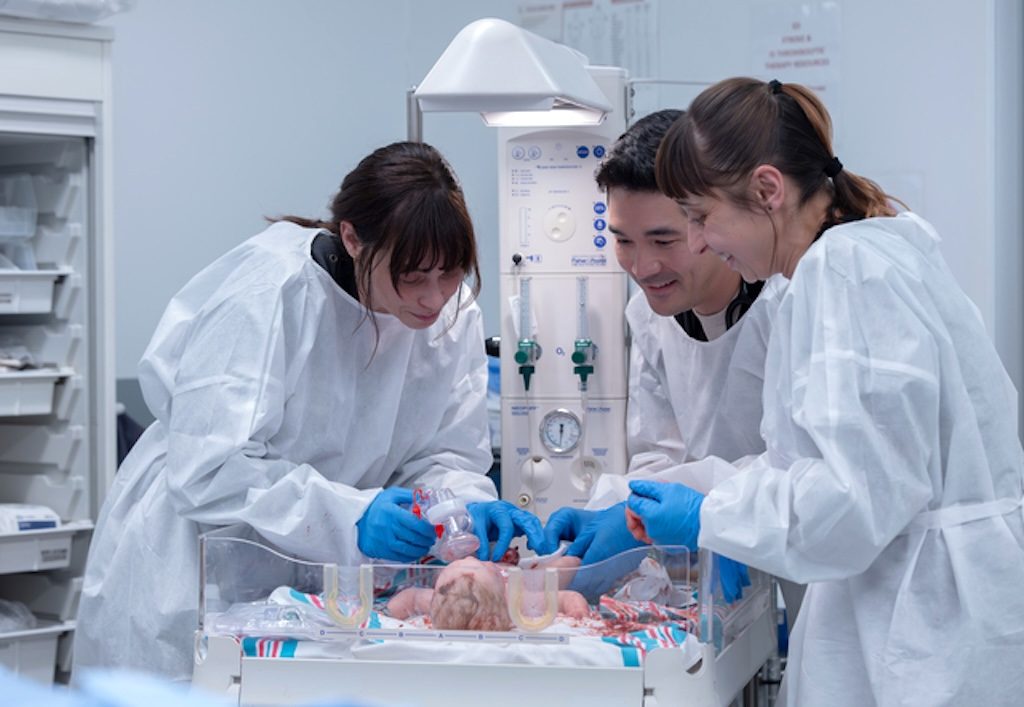
Dr. Cassie McKay (Fiona Dourif), Dr. John Shen (Ken Kirby) & Dr. Nazely Toomarian (Sofia Hasmik) Photograph by Warrick Page/HBO Max
Related: 4 Ways To Show Emotions On The Page
The Final Dr. Robby Scenes In Season 2
They do a fantastic job in the writers’ room.
We chose about as intimate a scene as you could really film on a show like this. Scott Gemmell had this idea that Dr. Robby should end with the baby and we should not tell people exactly what happens.
We have a protocol for working with young infants where it’s very quiet and structured on the set. We’ve already blocked out exactly what we’re gonna do with the cameras. And then we bring the baby in and we just shot those scenes in single takes.
That’s two separate takes with two separate babies but those are real babies throughout. And that’s just Noah doing a live performance of this scene, which is a gift as a director.
Related: 4 Ways To Create Atmosphere In Your Screenplay
What to Expect In Season 3
The third season’s about an urban hospital in crisis. Because that’s what the show’s about.
It’s not romances. It’s just people’s lives, and we meet them one day a year, or one day every six months, and see where they are and what’s happening, and you learn about them that way.
We have a lot of conversations about what has happened in that interim period to them and how much would you actually say.
Who knows what about who, so that we can drop into these workplace days and have it not feel as if we’re doing a lot of exposition. The audience finds out in the same way that you would in a normal workplace. So, that’s a very difficult writing assignment.
Related: Are Your Scenes Boring? 8 Ways To Change That

Join the Discussion!
Related Articles


Browse our Videos for Sale
[woocommerce_products_carousel_all_in_one template="compact.css" all_items="88" show_only="id" products="" ordering="random" categories="115" tags="" show_title="false" show_description="false" allow_shortcodes="false" show_price="false" show_category="false" show_tags="false" show_add_to_cart_button="false" show_more_button="false" show_more_items_button="false" show_featured_image="true" image_source="thumbnail" image_height="100" image_width="100" items_to_show_mobiles="3" items_to_show_tablets="6" items_to_show="6" slide_by="1" margin="0" loop="true" stop_on_hover="true" auto_play="true" auto_play_timeout="1200" auto_play_speed="1600" nav="false" nav_speed="800" dots="false" dots_speed="800" lazy_load="false" mouse_drag="true" mouse_wheel="true" touch_drag="true" easing="linear" auto_height="true"]







You must be logged in to post a comment Login